
The Council’s presidency reached an agreement with the European Parliament’s negotiators on the directive establishing the European disability card and the European parking card for persons with disabilities.
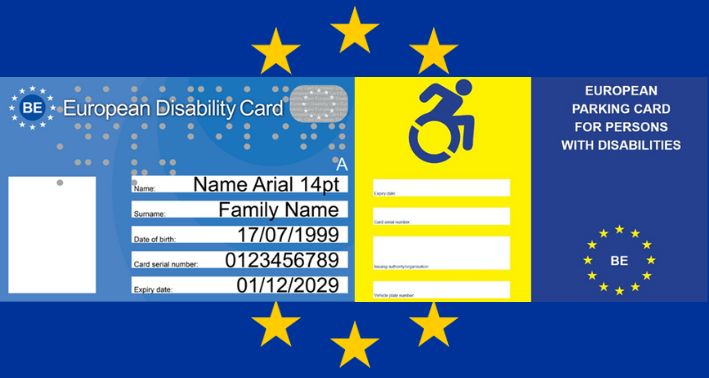
National authorities will be responsible for issuing physical and digital European disability cards, in an accessible format. The cards will be recognised throughout the EU as proof of disability or entitlement to specific services based on a disability.
Main elements of the compromise text
The provisionally agreed text maintains and reinforces the aim of the directive, which is to ensure equal access to special conditions or preferential treatment provided to persons with disabilities during short stays across the EU, such as reduced or zero entry fees, priority access, assistance and reserved parking spaces.
Further elements agreed upon during interinstitutional negotiations include the following:
- member states shall extend the usage of the European disability card for periods longer than a short stay in the context of EU mobility programmes, and may also choose to do so in other instances
- the European Disability card will be issued and renewed free of charge, except in cases of loss or damage; member states may choose to charge a fee relating to the administrative costs for the issuance or renewal of the European Parking Card
- the letter A can be added to the European Disability Card for persons with disabilities with an increased need for support or who are entitled to support by a personal assistant
- both cards will contain a QR code to prevent fraud
- an EU website, available in all languages and in accessible formats, will provide relevant information on the two cards; member states will also have to provide information on the cards to the public in accessible formats
- the digital format of the European Parking Card for persons with disabilities will remain optional for member states
Commission proposes European Disability and Parking Card valid in all Member States |
Background and next steps
The Commission proposal was adopted in September 2023 and the Council reached its negotiating stance in November 2023. Intensive negotiations on the final shape of the directive were launched on 17 January 2024 and were successfully concluded with today’s deal, within less than one month.
Work will continue at a technical level to finalise the text. The provisional agreement will then have to be confirmed by the Council and the Parliament, followed by legal-linguistic check of the directive and its formal adoption by both institutions.
The two co-legislators agreed that member states will have 2.5 years to adapt their national legislation and 3.5 years to apply the directive. Organisations representing persons with disabilities will be involved in the implementation and evaluation of the European Disability Card and the European Parking Card for persons with disabilities.
More information: Council of the European Union
Publicaciones relacionadas:
 Vaccine (in)equity – no right of way for persons with disabilities in the EU
 European Parliament to host “Afghan Women Days”
 Countries with legislated quotas could achieve gender balance in parliaments by 2026, those without may take close to 20 years
 2023: a year for skills and inclusion
 Parliament approves new transparency rules on the gender pay gap
Leave a Reply