• Skip to primary navigation
  • Skip to main content
  • Skip to primary sidebar
  • Skip to footer
  • Bluesky
  • Facebook
  • Instagram
  • Twitter
  • YouTube
CDE Almería – Centro de Documentación Europea – Universidad de Almería

CDE Almería - Centro de Documentación Europea - Universidad de Almería

Centro de Documentación Europea de la Universidad de Almería

  • HOME
  • WHAT´S ON
    • EU NEWS
    • Activities
    • EU Calls and Awards
    • Radio Program «Europe with You»
  • DOCUMENTATION
    • EU Media Collection
      • Web Space
      • MEDIATHEQUE REPOSITORY
  • Europe on the net
    • Institutions
    • EU Representation in Spain
    • European information network of Andalusia
  • ABOUT US
    • Presentation
    • Services
    • People
    • Contact
  • Spanish
  • English

Communiqués from the European Public Prosecutor’s Office on Spain

Inicio » EU News » Institutional Affairs » Regiones de los Estados Miembros » Communiqués from the European Public Prosecutor’s Office on Spain

30 de March de 2022

According to its press release, the EPPO regrets the controversy that has arisen concerning the competence adjudication over a particular case in Spain. As a general rule, the EPPO does not comment on specific cases but considers that this particular one has broader implications.

The point of any EPPO investigation is to establish the facts in order to conclude whether there is enough evidence of a criminal offence affecting the financial interests of the European Union having been committed. It is to avoid duplication and in the interest of the defense that the EPPO regulation establishes a priority competence for the EPPO to investigate all the facts linked to a possible fraud affecting the financial interests of the European Union.

In this context, given our unprecedented nature and the complex interaction between national and European laws under which we operate, the EPPO would like to recall that in a situation of conflict of competence, a referral to the European Court of Justice should always be considered.
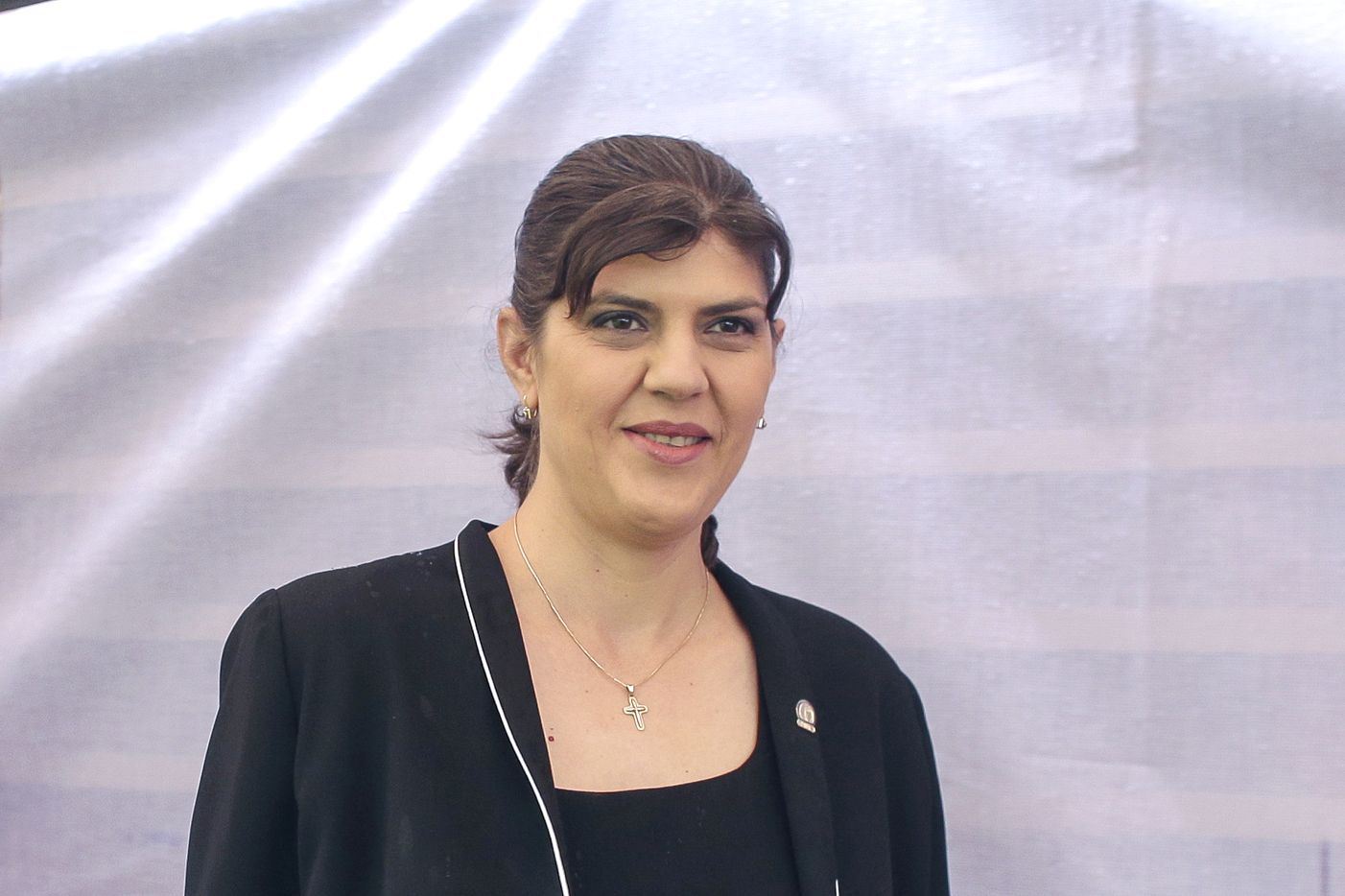
Laura Kövesi confirmed as European Chief Prosecutor

The European Public Prosecutor’s Office (EPPO) has taken note of the decision of 28 March 2022 by the Fiscal General del Estado to divide the competence over the same facts between the Fiscalia Anticorrupcion and the EPPO. The EPPO is of the view that this decision is not in line with EU law and will continue its investigation.

Specifically, the decision on a conflict of competence between a national body and a European body has been taken by the Fiscal General del Estado who is the hierarchical superior of the national body and thus partial to the ongoing proceedings. Furthermore, the decision has been taken without hearing both parties to the conflict of competence during the meeting of the Fiscales de Sala.

Finally, the Spanish law regulating this procedure, which concerns the interpretation and application of Union law, does not provide for any remedy.

This prevents the European Court of Justice from exercising its exclusive mandate to ensure the correct interpretation of EU law and thus constitutes a challenge to the supremacy of EU law.

Sources: 

EPPO – Press released

EPPO – Press released 

Publicaciones relacionadas:

Parlamento EuropeoThis week in Brussels: long-term budget, climate law, COVID-19 Foreign Affairs Council (Trade), 12 March 2020 The first 100 days of the new Comission Laboratory research by two male scientists in laboratory using a microscope and laboratory glassware for scientific researchCoronavirus: MEPs call for solidarity among EU member states Revise Parliament’s calendar as a precautionary health-related measure

EU News,  Institutional Affairs,  State Members

“This is a space for debate. All comments, for or against publication, that are respectful and do not contain expressions that are discriminatory, defamatory or contrary to current legislation will be published”.

Reader Interactions

Leave a Reply Cancel reply

Your email address will not be published. Required fields are marked *

This site uses Akismet to reduce spam. Learn how your comment data is processed.

Primary Sidebar

Footer

  • CDE Almería
  • Biblioteca Nicolás Salmerón – Universidad de Almería
  • Planta: 1ª, Despacho: 1.05.0B.
  • Ctra. Sacramento s/n. Almería (Spain)
  • Teléfono: (+34) 950 015266

HOME
NEWS
DOCUMENTATION
EUROPE ON THE NET
ABOUT US

  • LEGAL NOTICE
  • PRIVACY POLICY
  • COOKIE POLICY
  • ACCESSIBILITY
  • SITEMAP

Copyright © 2026 CDE Almería · Creative Commons LicenseThis work is licensed under a Creative Commons Attribution-NonCommercial 4.0 International License.

<p>El Centro de Documentación Europea de la Universidad de Almería utiliza cookies propias y de terceros para facilitar al usuario la navegación en su página Web y el acceso a los distintos contenidos alojados en la misma. Asimismo, se utilizan cookies analíticas de terceros para medir la interacción de los usuarios con el sitio Web. Pinche el siguiente enlace si desea información sobre el uso de cookies y como deshabilitarlas. </p>

Politica de privacidad

El Centro de Documentación Europea de la Universidad de Almería utiliza cookies propias y de terceros para facilitar al usuario la navegación en su página Web y el acceso a los distintos contenidos alojados en la misma. Asimismo, se utilizan cookies analíticas de terceros para medir la interacción de los usuarios con el sitio Web. Pinche el siguiente enlace si desea información sobre el uso de cookies y como deshabilitarlas. <a href="/politica-de-cookies" rel="noopener" target="_blank">Más información</a>

Cookies estrictamente necesarias

Las cookies estrictamente necesarias tiene que activarse siempre para que podamos guardar tus preferencias de ajustes de cookies.

Básicamente la web no funcionara bien si no las activas.

Estas cookies son:

  • Comprobación de inicio de sesión.
  • Cookies de seguridad.
  • Aceptación/rechazo previo de cookies.
Cookies de terceros

Esta web utiliza Google Analytics, Google Tag Manager y Yandex Metrika para recopilar información anónima tal como el número de visitantes del sitio, o las páginas más populares.

Dejar estas cookies activas nos permite mejorar nuestra web.

Política de cookies

Pinche el siguiente enlace si desea información sobre el uso de cookies y como deshabilitarlas. Más información