
During today’s EU-LAC Business Round Table as part of the EU-CELAC Summit, President Ursula von der Leyen has presented the EU-LAC Global Gateway Investment Agenda (GGIA), which revolves around the following pillars: a fair green transition, an inclusive digital transformation, human development and health resilience and vaccines. She also announced that Team Europe has committed over €45 billion to support the reinforced partnership with Latin America and the Caribbean until 2027.
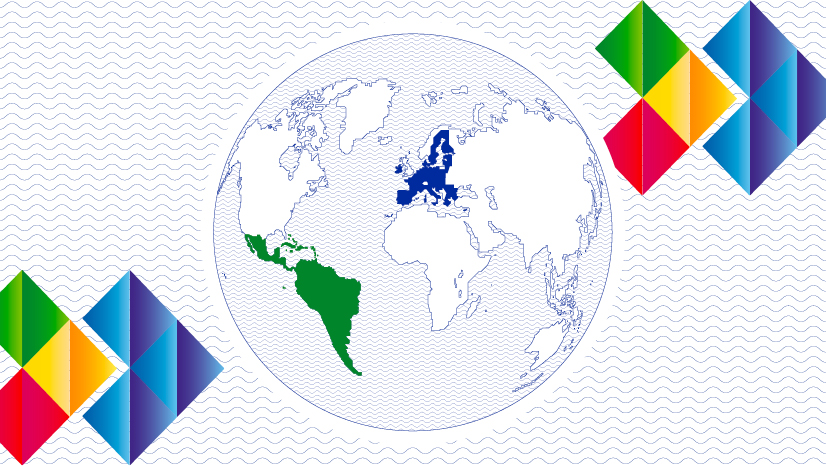
The GGIA includes a list of more than 130 projects to make the fair green and digital transition a reality on both sides of the Atlantic. The list has been composed in close cooperation with the Spanish Presidency and is the basis for further dialogues with the Latin American and Caribbean partners.
Some examples of projects
- The EU will work with LAC partners on Critical Raw Materials (such as lithium and others) in the region (Argentina, Chile), as well as with the Critical Raw Materials Club to strengthen sustainable supply chains.
- Brazil: the EU will collaborate with the Brazilian government and EU private sector to expand telecoms networks in the Amazon region.
- Costa Rica: The EU and will help with the electrification of public transport. Conversion of urban bus fleet to electric: 40 public e-vehicles contributing to a reduction of 5000 CO2 ktons per year.
- Colombia: Construction of a metro line.
- Jamaica: Deployment of 5G to reach island-wide broadband access.
- Paraguay: Upgrade of the electricity networkwith support to the Administración Nacional de Electricidad.
- EU-LAC Digital Alliance: EU-LAC digital cooperation activities are underway such as the extension of the BELLA cable and the creation of two regional Copernicus centres for disaster risk reduction, climate change, land and marine monitoring.
- In Chile, the EU has developed a Team Europe Initiative (TEI) on Green Hydrogen (GH2), to promote investment opportunities.
- The GGIA will support LAC countries’ policies towards a climate-neutral economy and a resilient society that lives in harmony with nature. The EU and its Member States have pooled their resources to jointly establish the Team Europe Initiative ‘Brazil Tropical Forests’. The EU will also contribute to the Amazon Fund.
- LAC-Health Resilience initiative, supporting the development of local medicines and vaccine manufacturing and health systems resilience, including regulatory frameworks.
- LAC-Global Green Bonds Initiative, fostering the development of the green bond market in LAC, thus mobilisingcapital for financing a sustainable transition.
- In Panama, the EU supports a joint project on universal access to energy.
- ‘Inclusive Societies’ programme to tackle inequalities, reduce poverty and social exclusion, and enhance social cohesion within Latin American and Caribbean countries. It will promote gender and social policies, education and skills development, protection and social inclusion, with a specific emphasis on women and youth and focus.
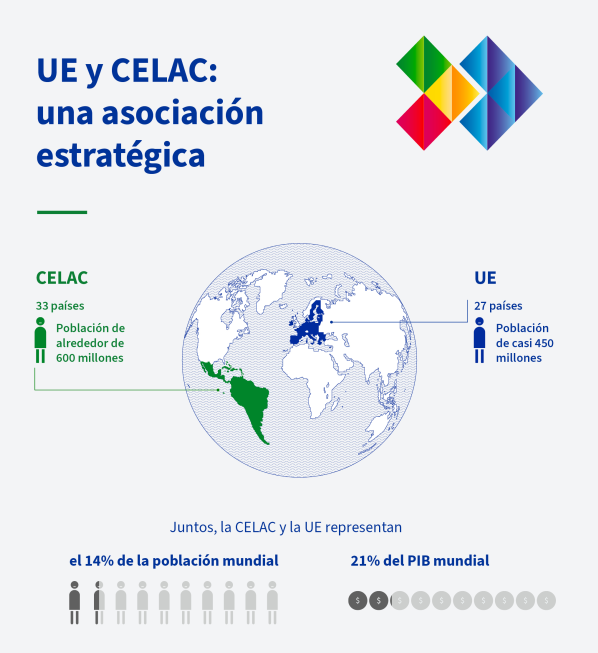
Infografía – Relaciones UE-CELAC: hechos y cifras |
Background
The European Union, Latin America and the Caribbean (LAC) are key partners in strengthening the rules-based international order, standing together for democracy, human rights and international peace and security.
This is more true in 2023 than ever before: The fast-changing global context, with its increasing geopolitical challenges, makes this a critical moment to renew this partnership and enhance bi-regional cooperation to tackle the global climate and environmental crises, to harness technological changes and to combat rising inequalities.
The EU-LAC Global Gateway Investment Agenda will be delivered through Team Europe initiatives: the EU, its Member States, development financing institutions including the European Investment Bank (EIB), export credit agencies and all other public sources of funding will be working together in public-private partnerships with the private sector.
The EU-LAC Business Round Table was co-organised with the Inter-American Development Bank and the Development Bank of Latin America, who have also been crucial in preparing the GG IA with the Spanish government and the Commission.
More information: European Commission


Leave a Reply