
In 2022, the unemployment rate of people aged 15-74 in the EU was 6.2%. However, the rate varied across the EU regions.

The lowest unemployment rates were recorded in Central Bohemia (1.2%), Prague (1.6%), South-East and South-West in Czechia as well as Central Transdanubia in Hungary (all 1.7%).
At the opposite end of the scale, the highest unemployment rates were registered in the Spanish regions of Ceuta (28.4%), Melilla (21.6%) and Andalusia (19.0%), along with the outermost region Guadeloupe in France (18.6%).
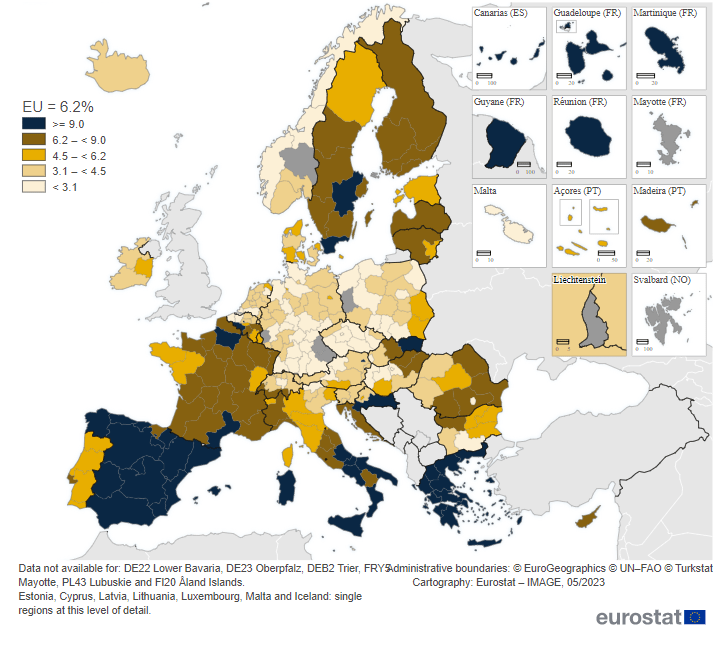
Around four out of 10 EU regions had an unemployment rate higher than the EU average
In 2022, among the 236 EU regions for which data are available, 94 had an unemployment rate (for people aged 15-74 years) higher than the EU average (6.2 %), and 25 regions had an unemployment rate double than the average (12.4 %); of these, nine regions were in Greece and in Spain, four in France and three in Italy (see Map 1).
By contrast, 50 regions had an unemployment rate of at most 3.1 %, half that of the EU: 19 regions were in Germany, eight in Poland, six in Czechia, four in Hungary, three in the Netherlands, two in Belgium, Romania and Austria each, and one in Bulgaria, Slovakia, Malta and Italy.
Regional unemployment rates differ between men and women
Regions with the highest and lowest unemployment rates vary across sex. In 2022, the 10 highest male unemployment rates were in Spanish, French (outermost) and Italian regions and the three regions with the highest male unemployment rates were the Spanish regions of Ceuta (23.9 %) and Melilla (17.7 %), as well as the French outermost region of Réunion (19.9 %). The highest female unemployment rates were mostly in Spanish and Greek regions, and the three with the highest female unemployment rates were the Spanish regions of Ceuta (34.6 %) and Melilla (25.8 %) as well as the Greek West Macedonia (24.4 %).
By contrast, the lowest unemployment rates were mostly recorded in Poland, Hungary, Czechia, and Belgium for women, and in Czechia, Italy, Hungary and Poland for men. The Czech regions of Central Bohemia (1 %), South-West (1.3 %) and South-East (1.4 %) had the lowest male unemployment rates in 2022. The lowest female unemployment rates were recorded in the Polish region of Wielkopolskie (1.4 %), followed by the Hungarian region of Central Transdanubia (1.5 %) as well as the Central Bohemia region and Prague both with 1.6 % in Czechia. By way of comparison, the EU unemployment rate was 5.9 % for men and 6.5 % for women in 2022.
Regional differences more pronounced in Spain, Italy and France
When comparing the unemployment rates across regions in each country, Spain has the largest gap among its regions, the difference between the highest and lowest unemployment rates in 2022 was 19.8 percentage point (pp). Italy and France followed with gaps of 14.8 pp and 12.7 pp respectively.
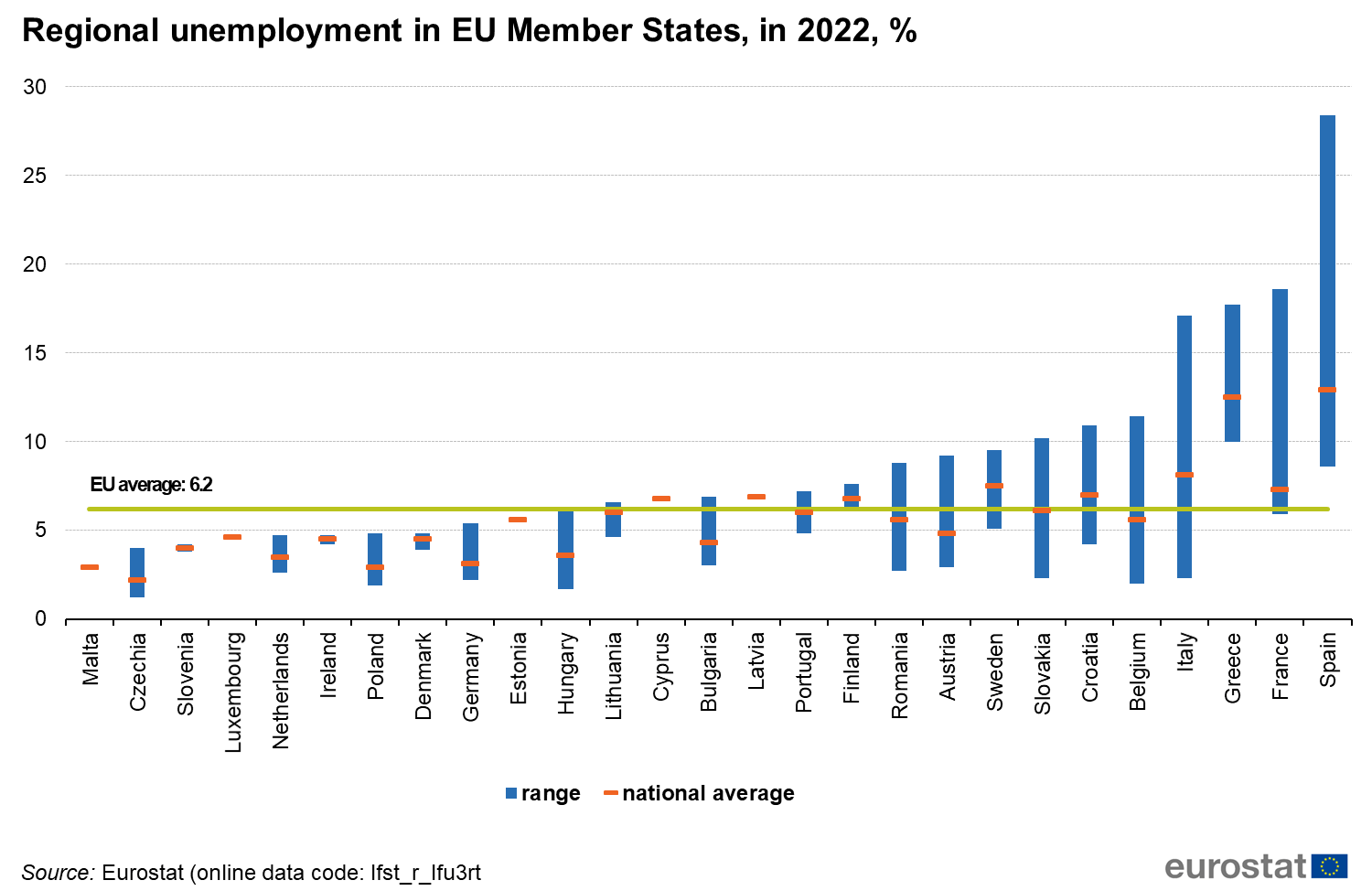
Figure 2 shows that all Spanish and Greek regions had an unemployment rate above the EU average (6.2 %), together with those of Finland as well as Cyprus and Latvia (both only one region in the country). By contrast, unemployment was below the EU average for all regions in Malta (one region), Czechia, Slovenia, Luxembourg (one region), the Netherlands, Ireland, Poland, Denmark, Germany and Estonia.
Decrease in unemployment after recovery from COVID-19
EU unemployment fell from 7.0 % in 2021 to 6.2 % in 2022 – a decrease of 0.8 pp After the COVID-19 outbreak, EU unemployment started to decrease after having increased in the majority of the EU NUTS 2 regions in 2020 compared with 2019 due to COVID-19.
Compared with 2021, the highest increases in the unemployment rate were registered in the Spanish regions of Melilla and Ceuta (both +1.8 percentage points; pp), as well as in the outermost region of Guadeloupe in France (+1.5 pp). The highest decreases were recorded in the South Aegean region in Greece (-8.1 pp), the Canary Islands region in Spain (-5.6 pp) and Western Greece (-4.9 pp).
Youth unemployment drops
In 2022, the EU average unemployment rate for young people aged between 15 and 29 was 11.3% (-1.7 pp compared with 2021).
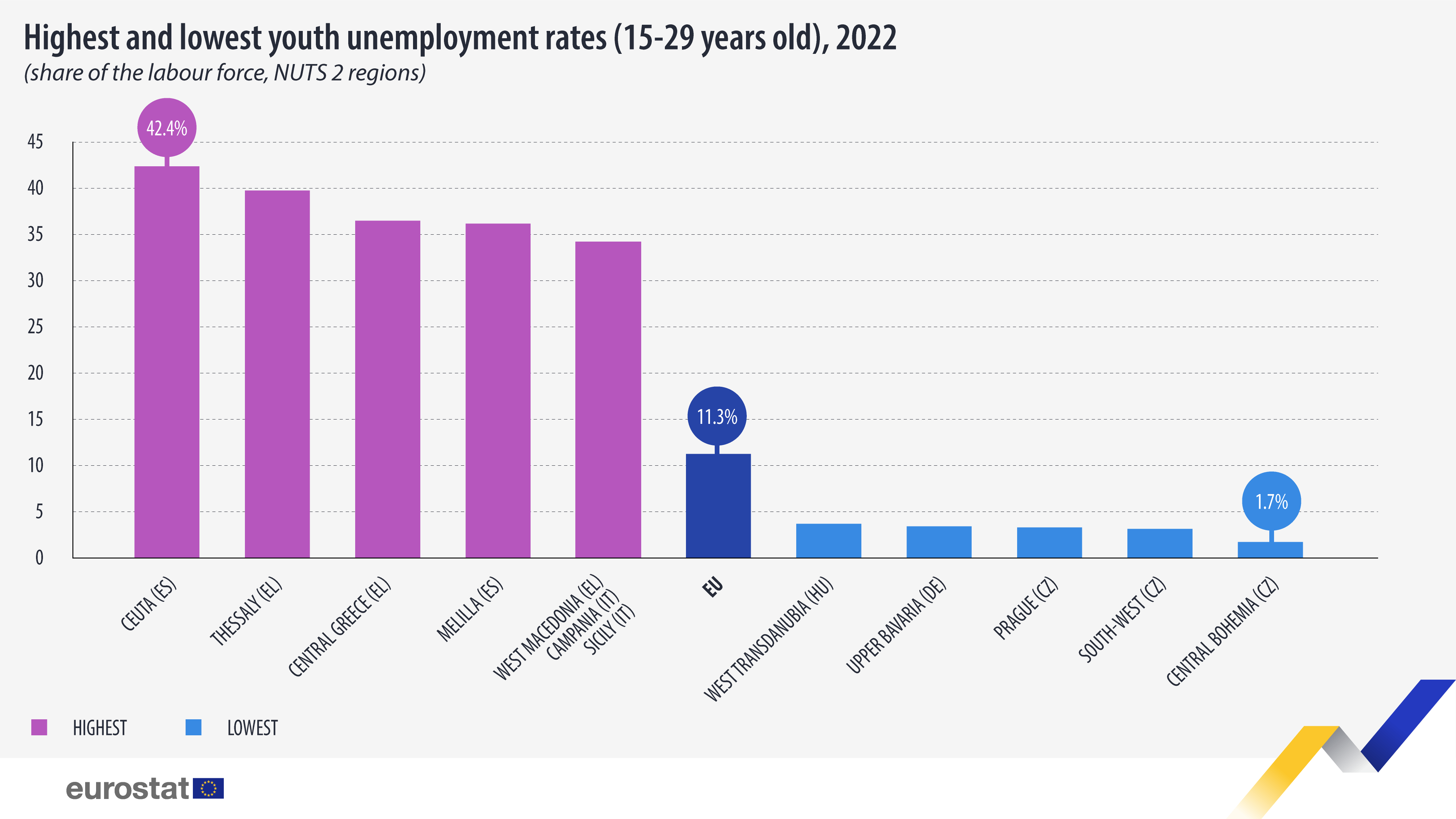
However, there were marked regional differences in the unemployment rates for young people. The regions with the lowest rates were Central Bohemia (1.7%), South-West (3.1%) and Prague (3.2%) in Czechia, Upper Bavaria in Germany (3.3%), closely followed by West Transdanubia in Hungary (3.6%).
In contrast, the highest rates were recorded in Ceuta in Spain (42.4%), the Greek region of Thessaly (39.8%), Central Greece (36.5%), and another region in Spain, Melilla (36.1%). Campania and Sicily in Italy (both 34.2%) and West Macedonia in Greece (34.3%) also had high rates of unemployment among young people.
More information: Eurostat





Leave a Reply