• Skip to primary navigation
  • Skip to main content
  • Skip to primary sidebar
  • Skip to footer
  • Bluesky
  • Facebook
  • Instagram
  • Twitter
  • YouTube
CDE Almería – Centro de Documentación Europea – Universidad de Almería

CDE Almería - Centro de Documentación Europea - Universidad de Almería

Centro de Documentación Europea de la Universidad de Almería

  • HOME
  • WHAT´S ON
    • EU NEWS
    • Activities
    • EU Calls and Awards
    • Radio Program «Europe with You»
  • DOCUMENTATION
    • EU Media Collection
      • Web Space
      • MEDIATHEQUE REPOSITORY
  • Europe on the net
    • Institutions
    • EU Representation in Spain
    • European information network of Andalusia
  • ABOUT US
    • Presentation
    • Services
    • People
    • Contact
  • Spanish
  • English

An EU-funded proyect will unveil some of the Universe’s greatest mysteries

Inicio » EU News » An EU-funded proyect will unveil some of the Universe’s greatest mysteries

8 de February de 2020

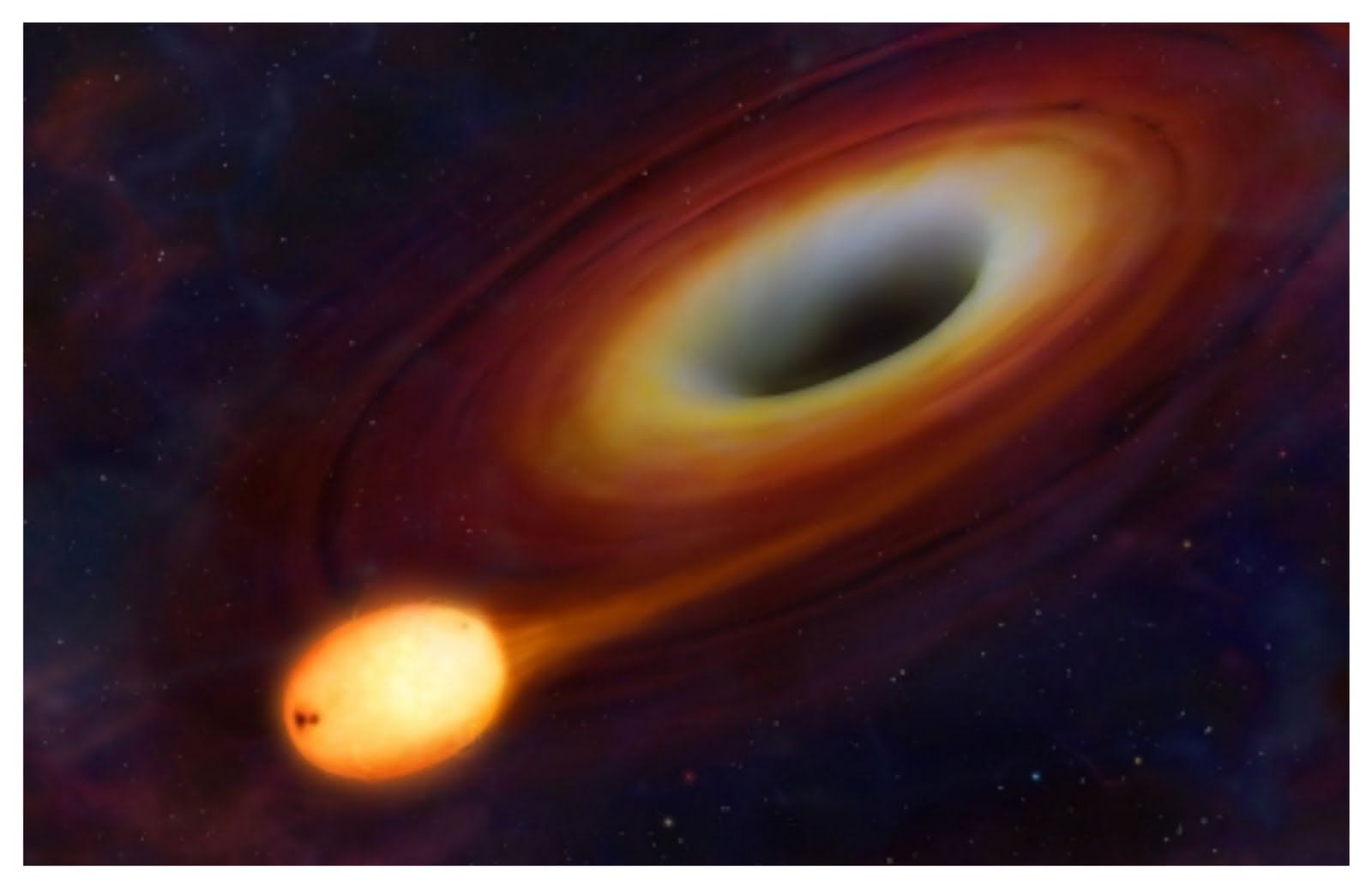
Gamma rays are 10 trillion times more energetic than visible light and our Universe generates a lot of them in association with extreme events. A next-generation telescope array will soon be probing the cosmos for this signal to solve mysteries about phenomena from black holes to supernovas.

The electromagnetic (EM spectrum) is the continuous and infinite range of frequencies and corresponding wavelengths of all types of EM radiation, ‘carried’ by particles called photons with corresponding energies. Visible light is only a small part of the middle of the EM spectrum. Gamma rays are at the high-frequency end – in fact, the frequency range for gamma radiation is so vast and unknown that it does not have a well-defined upper limit.

CTA Project

The Universe is the greatest gamma-ray generator. While current infrastructure for high-energy measurements has revealed tantalising hints at the mysteries hidden in the cosmic radiation, it has also suggested that we have barely seen the tip of the iceberg. The spectacular Cherenkov Telescope Array (CTA) will provide a new window on the most extreme events in the Universe. The EU-funded CTA-DEV project is moving CTA from design to implementation, addressing the infrastructure construction, governance and outreach.

CTA will be the first ground-based gamma-ray observatory open to the global scientific community. Actual observations will be carried out by operators and the data and analysis tools will then be made available to the principal investigator in common data formats.

With its more than 100 telescopes at 2 sites in the northern and southern hemispheres, in Spain and Chile, and its ability to cover an enormous range in photon energy from 20 gigaelectronvolts to 300 teraelectronvolts (TeV), CTA will significantly enhance performance and potential relative to current instruments.

The scientific potential of CTA is tremendous, seeking new insight into cosmic sources of gamma rays including black holes, supernova remnants, pulsars, binary systems and even elusive dark matter. “We will be able to see gamma-ray sources in greater detail, identify new sources and possibly unveil some of the Universe’s greatest mysteries such as the nature of dark matter. Of course, the most exciting discoveries will be those that are unexpected!” concludes Ferrini.

More information

Full news

Cherenkov Telescope Array (CTA)

Site in Spain

Site in Chile

Publicaciones relacionadas:

Mini robots to create patterns inspired by nature Proyect ABBI unique bracelet for visually-impaired children Imminent anti-metastatic vaccine for prostate cancer New technology is recognising affective states Pharmaceuticals in the environment: Commission defines actions to address risks and challenges



EU News Investigación

“This is a space for debate. All comments, for or against publication, that are respectful and do not contain expressions that are discriminatory, defamatory or contrary to current legislation will be published”.

Reader Interactions

Leave a Reply Cancel reply

Your email address will not be published. Required fields are marked *

This site uses Akismet to reduce spam. Learn how your comment data is processed.

Primary Sidebar

Footer

  • CDE Almería
  • Biblioteca Nicolás Salmerón – Universidad de Almería
  • Planta: 1ª, Despacho: 1.05.0B.
  • Ctra. Sacramento s/n. Almería (Spain)
  • Teléfono: (+34) 950 015266

HOME
NEWS
DOCUMENTATION
EUROPE ON THE NET
ABOUT US

  • LEGAL NOTICE
  • PRIVACY POLICY
  • COOKIE POLICY
  • ACCESSIBILITY
  • SITEMAP

Copyright © 2026 CDE Almería · Creative Commons LicenseThis work is licensed under a Creative Commons Attribution-NonCommercial 4.0 International License.

<p>El Centro de Documentación Europea de la Universidad de Almería utiliza cookies propias y de terceros para facilitar al usuario la navegación en su página Web y el acceso a los distintos contenidos alojados en la misma. Asimismo, se utilizan cookies analíticas de terceros para medir la interacción de los usuarios con el sitio Web. Pinche el siguiente enlace si desea información sobre el uso de cookies y como deshabilitarlas. </p>

Politica de privacidad

El Centro de Documentación Europea de la Universidad de Almería utiliza cookies propias y de terceros para facilitar al usuario la navegación en su página Web y el acceso a los distintos contenidos alojados en la misma. Asimismo, se utilizan cookies analíticas de terceros para medir la interacción de los usuarios con el sitio Web. Pinche el siguiente enlace si desea información sobre el uso de cookies y como deshabilitarlas. <a href="/politica-de-cookies" rel="noopener" target="_blank">Más información</a>

Cookies estrictamente necesarias

Las cookies estrictamente necesarias tiene que activarse siempre para que podamos guardar tus preferencias de ajustes de cookies.

Básicamente la web no funcionara bien si no las activas.

Estas cookies son:

  • Comprobación de inicio de sesión.
  • Cookies de seguridad.
  • Aceptación/rechazo previo de cookies.
Cookies de terceros

Esta web utiliza Google Analytics, Google Tag Manager y Yandex Metrika para recopilar información anónima tal como el número de visitantes del sitio, o las páginas más populares.

Dejar estas cookies activas nos permite mejorar nuestra web.

Política de cookies

Pinche el siguiente enlace si desea información sobre el uso de cookies y como deshabilitarlas. Más información