• Skip to primary navigation
  • Skip to main content
  • Skip to primary sidebar
  • Skip to footer
  • Bluesky
  • Facebook
  • Instagram
  • Twitter
  • YouTube
CDE Almería – Centro de Documentación Europea – Universidad de Almería

CDE Almería - Centro de Documentación Europea - Universidad de Almería

Centro de Documentación Europea de la Universidad de Almería

  • HOME
  • WHAT´S ON
    • EU NEWS
    • Activities
    • EU Calls and Awards
    • Radio Program «Europe with You»
  • DOCUMENTATION
    • EU Media Collection
      • Web Space
      • MEDIATHEQUE REPOSITORY
  • Europe on the net
    • Institutions
    • EU Representation in Spain
    • European information network of Andalusia
  • ABOUT US
    • Presentation
    • Services
    • People
    • Contact
  • Spanish
  • English

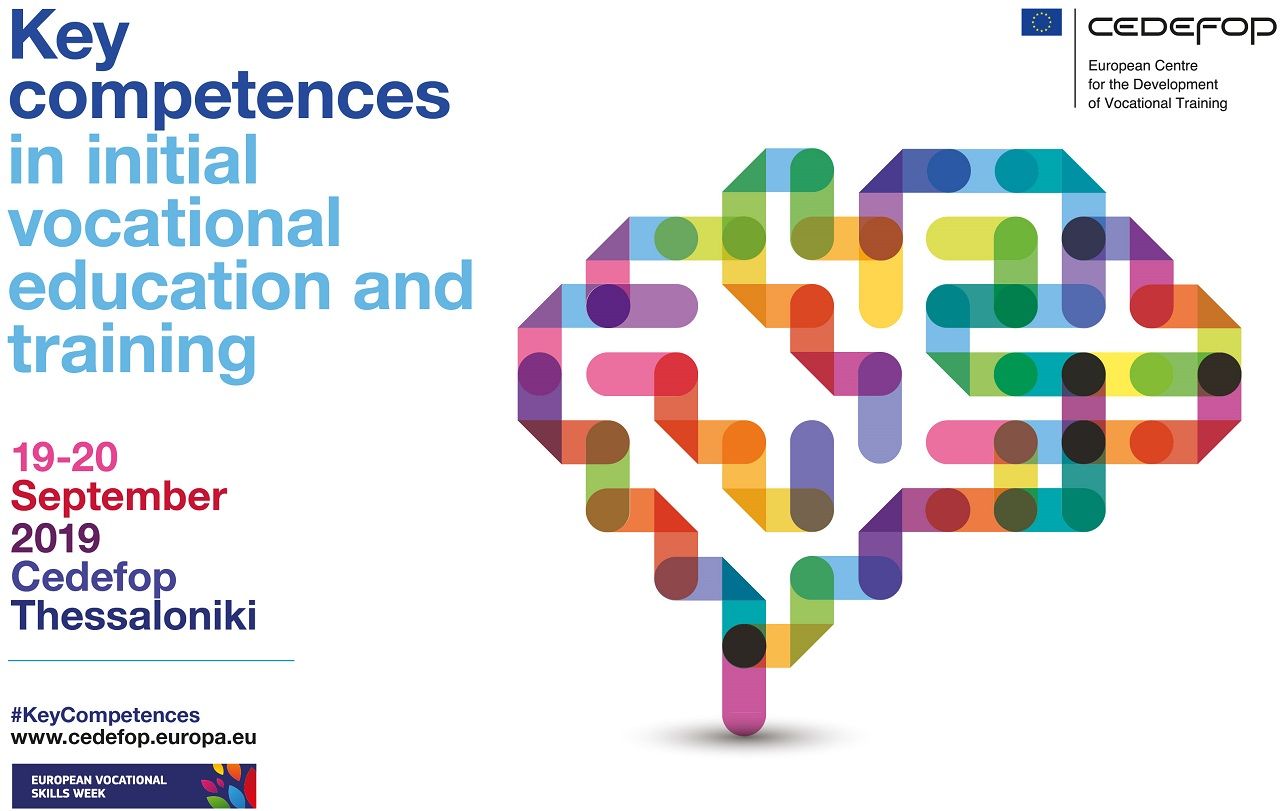
Workshop on key competences in initial vocational education and training: digital, literacy and multilingual

Inicio » EU News » Workshop on key competences in initial vocational education and training: digital, literacy and multilingual

12 de September de 2019

The European centre for the development of vocational training (Cedefop) is analysing in-depth how key competences are integrated and promoted in vocational education and training (VET). In the period 2018-2019 a study focuses on 3 key competences: literacy, languages, and digital.

This workshop will share and discuss the results of the study with more than 50 participants including policymakers mainly from national authorities, the European Commission, the European Training Foundation (ETF), UNESCO, and researchers.

It will also be an opportunity to identify challenges and remedies in implementing policies supporting key competences and define questions/topics that stakeholders would like Cedefop to provide evidence on in the future.

Key competences in vocational education and training

The aim of the project is to support in-depth analysis of how key competences are integrated and promoted in vocational education and training (VET).

Purely occupation-specific skills are not enough for VET learners to adapt to new life situations and career shifts, manage change, take initiative and risk, innovate, and engage in further learning; they also require key competences. Key competences are essential for personal fulfilment and development, active citizenship, social inclusion, lifelong learning, and employment.

In VET, the distinctive feature of key competences is that they are not directly linked to a specific qualification but can be used flexibly in different situations, both in further learning and in the labour market. Key competences often overlap with competences directly linked to a specific sector/occupation. For example, using foreign languages may not be a standard requirement for road construction technicians, while most qualifications in the tourism industry require knowledge of at least one foreign language. In the first case, a foreign language is a key competence sensu stricto; in the second, it can be seen as a key competence that overlaps with a vocational competence.

More information

Workshop

Study

Publicaciones relacionadas:

Employment and social developments in Europe: Record number of people in employment, but more investment in skills needed €250 million available to support healthy eating habits for European schoolchildren 2019 U-Multirank university ranking: European universities performing well Education and climate change How can schools support the development of our democracies?



EU News Educación,  education

“This is a space for debate. All comments, for or against publication, that are respectful and do not contain expressions that are discriminatory, defamatory or contrary to current legislation will be published”.

Reader Interactions

Leave a Reply Cancel reply

Your email address will not be published. Required fields are marked *

This site uses Akismet to reduce spam. Learn how your comment data is processed.

Primary Sidebar

Footer

  • CDE Almería
  • Biblioteca Nicolás Salmerón – Universidad de Almería
  • Planta: 1ª, Despacho: 1.05.0B.
  • Ctra. Sacramento s/n. Almería (Spain)
  • Teléfono: (+34) 950 015266

HOME
NEWS
DOCUMENTATION
EUROPE ON THE NET
ABOUT US

  • LEGAL NOTICE
  • PRIVACY POLICY
  • COOKIE POLICY
  • ACCESSIBILITY
  • SITEMAP

Copyright © 2026 CDE Almería · Creative Commons LicenseThis work is licensed under a Creative Commons Attribution-NonCommercial 4.0 International License.

<p>El Centro de Documentación Europea de la Universidad de Almería utiliza cookies propias y de terceros para facilitar al usuario la navegación en su página Web y el acceso a los distintos contenidos alojados en la misma. Asimismo, se utilizan cookies analíticas de terceros para medir la interacción de los usuarios con el sitio Web. Pinche el siguiente enlace si desea información sobre el uso de cookies y como deshabilitarlas. </p>

Politica de privacidad

El Centro de Documentación Europea de la Universidad de Almería utiliza cookies propias y de terceros para facilitar al usuario la navegación en su página Web y el acceso a los distintos contenidos alojados en la misma. Asimismo, se utilizan cookies analíticas de terceros para medir la interacción de los usuarios con el sitio Web. Pinche el siguiente enlace si desea información sobre el uso de cookies y como deshabilitarlas. <a href="/politica-de-cookies" rel="noopener" target="_blank">Más información</a>

Cookies estrictamente necesarias

Las cookies estrictamente necesarias tiene que activarse siempre para que podamos guardar tus preferencias de ajustes de cookies.

Básicamente la web no funcionara bien si no las activas.

Estas cookies son:

  • Comprobación de inicio de sesión.
  • Cookies de seguridad.
  • Aceptación/rechazo previo de cookies.
Cookies de terceros

Esta web utiliza Google Analytics, Google Tag Manager y Yandex Metrika para recopilar información anónima tal como el número de visitantes del sitio, o las páginas más populares.

Dejar estas cookies activas nos permite mejorar nuestra web.

Política de cookies

Pinche el siguiente enlace si desea información sobre el uso de cookies y como deshabilitarlas. Más información