• Skip to primary navigation
  • Skip to main content
  • Skip to primary sidebar
  • Skip to footer
  • Bluesky
  • Facebook
  • Instagram
  • Twitter
  • YouTube
CDE Almería – Centro de Documentación Europea – Universidad de Almería

CDE Almería - Centro de Documentación Europea - Universidad de Almería

Centro de Documentación Europea de la Universidad de Almería

  • HOME
  • WHAT´S ON
    • EU NEWS
    • Activities
    • EU Calls and Awards
    • Radio Program «Europe with You»
  • DOCUMENTATION
    • EU Media Collection
      • Web Space
      • MEDIATHEQUE REPOSITORY
  • Europe on the net
    • Institutions
    • EU Representation in Spain
    • European information network of Andalusia
  • ABOUT US
    • Presentation
    • Services
    • People
    • Contact
  • English

Volunteering – Solidarity projects – Various countries

Inicio » Uncategorized » Volunteering – Solidarity projects – Various countries

30 de January de 2025

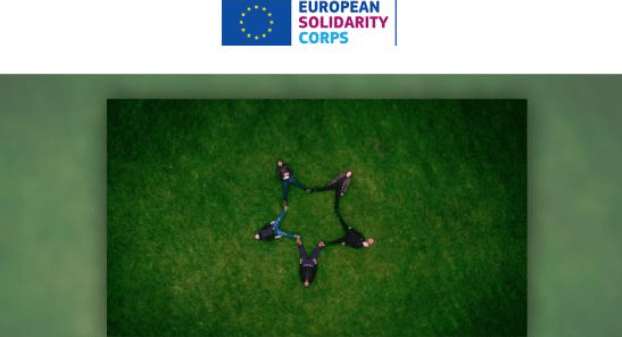
A Solidarity Project is a non-profit solidarity activity initiated, developed and implemented by young people themselves over a period of 2 to 12 months. It offers a group of at least 5 young people the opportunity to express their solidarity by taking responsibility and committing themselves to bring about positive change in their local community, although some of them may also address regional or even national issues..

LSolidarity projects must address key challenges within communities, where relevant, including those jointly identified in border regions, and must also present a European added value.


Who can participate
A group of at least 5 young people, aged between 18 and 30, legally residing in the same EU Member State or in a third country associated to the Programme and registered in the European Solidarity Corps Portal.

How it works

Solidarity projects should address key challenges within communities, but should also clearly present a European added value.
Participation in a solidarity project is an important non-formal learning experience through which young people can enhance their personal, educational, social and civic development.

A solidarity project usually consists of the following phases:

– Planning;
– Preparation;
– Implementation of the activities;
– Follow-up (including evaluation of the activities as well as dissemination of the project results).

The activities will take place in the participants’ country of residence, which will facilitate the participation of young people with fewer opportunities who may find it difficult to take part in transnational activities.

In cases where the project addresses cross-border challenges, project activities may also take place in cross-border regions of EU Member States, third countries associated to the Programme and third countries not associated to the Programme which share a border with the applicant’s country.

One of the participants will assume the role of legal representative who will be responsible for submitting the application (unless an organisation submits the application on behalf of the group).

Young people carrying out Solidarity Projects must design accessible and inclusive activities, taking into account the needs of participants with fewer opportunities.
Special funding is available for the participation of young people with fewer opportunities, both for the members of the group and for the target group.

Solidarity Projects should promote environmentally responsible and sustainable behaviour among participants, raising awareness of the importance of acting to reduce or offset the environmental footprint of activities.


Projects should also make use of digital tools and learning methods to complement physical activities.
Projects should also provide relevant opportunities for young people to engage and actively participate in democratic life.


Organisation

A group of young people planning a solidarity project can also apply for support from an organisation, which can be any public or private body.

An organisation can apply on their behalf for a grant under the European Solidarity Corps.

The role of the organisation should be primarily administrative, to support the group in the administrative and financial tasks of the project lifecycle. However, it can also offer support and guidance in identifying and documenting learning outcomes.


Coach
Young people carrying out a Solidarity Project can count on the support of a coach, a volunteer or professional, who might have work experience in the youth field, to accompany groups of young people and support their participation.

Financing

630 EUR per month.

Who can apply
The group that will implement the project. One of the young people in the group assumes the role of legal representative and the responsibility for submitting the application.

Any public or private body which, on behalf of the group, will implement the project, must submit the application to the National Agency of the country where the applicant is legally resident.


Further instructions on how to apply can be found in Part E of the European Solidarity Corps Guide.

Deadlines

– 20 February at 12:00 (midday Brussels time) for projects starting between 1 June and31 December of the same year;

– (optional shift) 7 May at 12.00 noon (Brussels time) for projects starting between 1 August and 31 December of the same year;

– 1 October at 12:00 (midday Brussels time) for projects starting between 1 January and31 May of the following year.

National Agencies can organise three selection rounds with three deadlines as above or only the first (20 February) and the last (1 October).


Please consult the website of the National Agency in your country.
More information: EURODESK.

Publicaciones relacionadas:

Worldpackers Model European Union Strasbourg UNICEF Internships Proyect ABBI unique bracelet for visually-impaired children H2020: Secure, clean and efficient energy. Demonstration of advanced biofuels production from aquatic biomass

Uncategorized Eurodesk,  Solidarity,  Volunteering

“This is a space for debate. All comments, for or against publication, that are respectful and do not contain expressions that are discriminatory, defamatory or contrary to current legislation will be published”.

Reader Interactions

Leave a Reply Cancel reply

Your email address will not be published. Required fields are marked *

This site uses Akismet to reduce spam. Learn how your comment data is processed.

Primary Sidebar

Footer

  • CDE Almería
  • Biblioteca Nicolás Salmerón – Universidad de Almería
  • Planta: 1ª, Despacho: 1.05.0B.
  • Ctra. Sacramento s/n. Almería (Spain)
  • Teléfono: (+34) 950 015266

HOME
NEWS
DOCUMENTATION
EUROPE ON THE NET
ABOUT US

  • LEGAL NOTICE
  • PRIVACY POLICY
  • COOKIE POLICY
  • ACCESSIBILITY
  • SITEMAP

Copyright © 2026 CDE Almería · Creative Commons LicenseThis work is licensed under a Creative Commons Attribution-NonCommercial 4.0 International License.

<p>El Centro de Documentación Europea de la Universidad de Almería utiliza cookies propias y de terceros para facilitar al usuario la navegación en su página Web y el acceso a los distintos contenidos alojados en la misma. Asimismo, se utilizan cookies analíticas de terceros para medir la interacción de los usuarios con el sitio Web. Pinche el siguiente enlace si desea información sobre el uso de cookies y como deshabilitarlas. </p>

Politica de privacidad

El Centro de Documentación Europea de la Universidad de Almería utiliza cookies propias y de terceros para facilitar al usuario la navegación en su página Web y el acceso a los distintos contenidos alojados en la misma. Asimismo, se utilizan cookies analíticas de terceros para medir la interacción de los usuarios con el sitio Web. Pinche el siguiente enlace si desea información sobre el uso de cookies y como deshabilitarlas. <a href="/politica-de-cookies" rel="noopener" target="_blank">Más información</a>

Cookies estrictamente necesarias

Las cookies estrictamente necesarias tiene que activarse siempre para que podamos guardar tus preferencias de ajustes de cookies.

Básicamente la web no funcionara bien si no las activas.

Estas cookies son:

  • Comprobación de inicio de sesión.
  • Cookies de seguridad.
  • Aceptación/rechazo previo de cookies.
Cookies de terceros

Esta web utiliza Google Analytics, Google Tag Manager y Yandex Metrika para recopilar información anónima tal como el número de visitantes del sitio, o las páginas más populares.

Dejar estas cookies activas nos permite mejorar nuestra web.

Política de cookies

Pinche el siguiente enlace si desea información sobre el uso de cookies y como deshabilitarlas. Más información