• Skip to primary navigation
  • Skip to main content
  • Skip to primary sidebar
  • Skip to footer
  • Bluesky
  • Facebook
  • Instagram
  • Twitter
  • YouTube
CDE Almería – Centro de Documentación Europea – Universidad de Almería

CDE Almería - Centro de Documentación Europea - Universidad de Almería

Centro de Documentación Europea de la Universidad de Almería

  • HOME
  • WHAT´S ON
    • EU NEWS
    • Activities
    • EU Calls and Awards
    • Radio Program «Europe with You»
  • DOCUMENTATION
    • EU Media Collection
      • Web Space
      • MEDIATHEQUE REPOSITORY
  • Europe on the net
    • Institutions
    • EU Representation in Spain
    • European information network of Andalusia
  • ABOUT US
    • Presentation
    • Services
    • People
    • Contact
  • Spanish
  • English

Ukraine: Council extends the mandate of the EU Military Assistance Mission for two years

Inicio » EU News » Defence & Security » International Safety and Defence Politics » Ukraine: Council extends the mandate of the EU Military Assistance Mission for two years

11 de November de 2024

On 8 November, the Council adopted a decision extending the mandate of the European Union Military Assistance Mission in support of Ukraine (EUMAM Ukraine) for a further two years, until 15 November 2026, with a budget allocation of nearly €409 million for the period from 14 November 2024 to 15 November 2026.
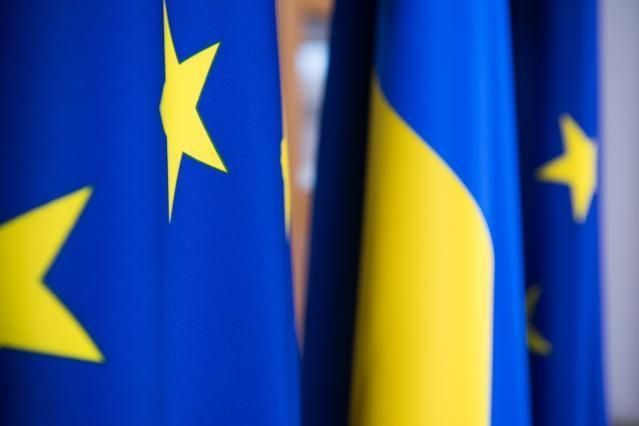
EUMAM Ukraine remains a key tool for EU’s military support to Ukraine, with its core objective of contributing to enhancing the military capacity of Ukraine’s Armed Forces.

In line with today’s decision, EUMAM Ukraine will cooperate with NATO, in particular the NATO Security Assistance and Training for Ukraine (NSATU), and exchange information with the latter in a transparent, reciprocal and inclusive manner.

Background

On 17 October 2022, the Council adopted a decision establishing EUMAM Ukraine with an initial duration of two years. The strategic objective of the mission is to contribute to enhancing the military capacity of Ukraine’s Armed Forces (UAF) to regenerate and to effectively conduct operations, in order to allow Ukraine to defend its territorial integrity within its internationally recognised borders, effectively exercise its sovereignty and protect the civilians from Russia’s armed aggression.

EUMAM Ukraine has trained 63 000 UAF soldiers so far, which is an equivalent of ten brigades. The mission will train additional 15 000 troops in coming months, bringing the total number of soldiers trained to 75 000 by the end of winter 2024/2025.

EUMAM Ukraine provides individual, collective and specialised training to the UAF within European Union territory, along with coordination and synchronisation of member states’ activities delivering training. The training is supported by the provision of equipment for lethal and non-lethal purposes to the UAF. EUMAM is financed from the European Peace Facility.

The future training targets of EUMAM Ukraine will be continuously adjusted in terms of number of troops to be trained and skills, according to combat needs expressed by Ukraine, and in coordination with partners. Provision of military training to Ukraine is one of the activities under the joint security commitments between Ukraine and the EU, signed in June 2024.

More information: Council of the EU

Publicaciones relacionadas:
Statement by the North Atlantic Council on Russia’s attack on Ukraine sancionesEU adopts 11th package of sanctions against Russia for its continued illegal war against Ukraine EU-Russia Crisis: ‘Spheres of influence’ have no place in 21st century G7 Leaders’ Statement on the invasion of Ukraine by armed forces of the Russian Federation Aggression is confrontation with Europe: speech of President Metsola on Ukraine


Defence & Security,  EU News,  International Conflicts,  International Safety and Defence Politics Council of the EU,  EUMAM Ukraine,  military,  military assistance,  NATO,  ukraine,  war

“This is a space for debate. All comments, for or against publication, that are respectful and do not contain expressions that are discriminatory, defamatory or contrary to current legislation will be published”.

Reader Interactions

Leave a Reply Cancel reply

Your email address will not be published. Required fields are marked *

This site uses Akismet to reduce spam. Learn how your comment data is processed.

Primary Sidebar

Footer

  • CDE Almería
  • Biblioteca Nicolás Salmerón – Universidad de Almería
  • Planta: 1ª, Despacho: 1.05.0B.
  • Ctra. Sacramento s/n. Almería (Spain)
  • Teléfono: (+34) 950 015266

HOME
NEWS
DOCUMENTATION
EUROPE ON THE NET
ABOUT US

  • LEGAL NOTICE
  • PRIVACY POLICY
  • COOKIE POLICY
  • ACCESSIBILITY
  • SITEMAP

Copyright © 2026 CDE Almería · Creative Commons LicenseThis work is licensed under a Creative Commons Attribution-NonCommercial 4.0 International License.

<p>El Centro de Documentación Europea de la Universidad de Almería utiliza cookies propias y de terceros para facilitar al usuario la navegación en su página Web y el acceso a los distintos contenidos alojados en la misma. Asimismo, se utilizan cookies analíticas de terceros para medir la interacción de los usuarios con el sitio Web. Pinche el siguiente enlace si desea información sobre el uso de cookies y como deshabilitarlas. </p>

Politica de privacidad

El Centro de Documentación Europea de la Universidad de Almería utiliza cookies propias y de terceros para facilitar al usuario la navegación en su página Web y el acceso a los distintos contenidos alojados en la misma. Asimismo, se utilizan cookies analíticas de terceros para medir la interacción de los usuarios con el sitio Web. Pinche el siguiente enlace si desea información sobre el uso de cookies y como deshabilitarlas. <a href="/politica-de-cookies" rel="noopener" target="_blank">Más información</a>

Cookies estrictamente necesarias

Las cookies estrictamente necesarias tiene que activarse siempre para que podamos guardar tus preferencias de ajustes de cookies.

Básicamente la web no funcionara bien si no las activas.

Estas cookies son:

  • Comprobación de inicio de sesión.
  • Cookies de seguridad.
  • Aceptación/rechazo previo de cookies.
Cookies de terceros

Esta web utiliza Google Analytics, Google Tag Manager y Yandex Metrika para recopilar información anónima tal como el número de visitantes del sitio, o las páginas más populares.

Dejar estas cookies activas nos permite mejorar nuestra web.

Política de cookies

Pinche el siguiente enlace si desea información sobre el uso de cookies y como deshabilitarlas. Más información