
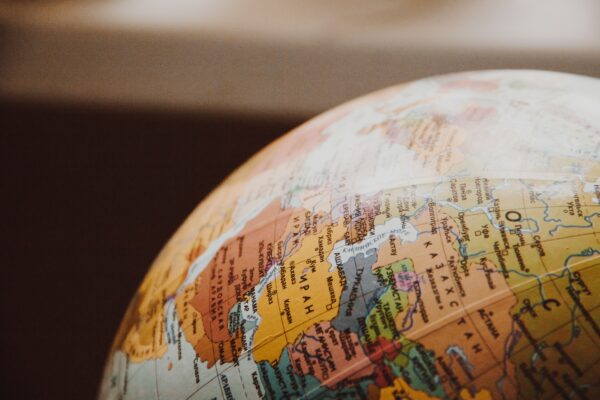
Last April 4, Commission President Ursula von der Leyen, along with António Costa, the President of the European Council, met the five Presidents of the Central Asian republics for the first ever EU-Central Asia Summit.
During the Summit, which was hosted in the historical city of Samarkand, in Uzbekistan, the Leaders decided to establish a Strategic Partnership between the two regions, marking a new phase in relations.
President von der Leyen described the new partnership during her speech at the summit plenary, when she said: “We are moving closer together. This Partnership will make deeper connections between our two regions. It will lead to new opportunities for cooperation. Be it in the energy sector or security, from digital to tourism. And it will bring people together from across our regions. Reliable partners have never been so important.”
The new era of cooperation with the Central Asian countries will be articulated around topics such as transport, critical raw materials, energy, climate, and connectivity.
The Trans-Caspian Transport Corridor, which aims to connect both regions and to which the EU pledged €10 billion in 2024, will get a renewed impulse. President von der Leyen announced that an Investors Forum will be organised in Uzbekistan this year to further mobilise private investment for the corridor.
At the same time, the leaders endorsed a Joint Declaration of Intent on Critical Raw Materials that will also attract private investment and generate true added value in the region.
On this, President von der Leyen underlined what makes the EU apart from others: “Some are only interested in exploiting and extracting. Europe’s offer is different. We also want to be your partners in developing your local industries. Our track-record speaks for itself. European companies are already involved in raw materials here in Uzbekistan, with a €1.6 billion investment at the Almalyk copper mine. They do not just contribute to extracting minerals but also to processing them on site. This creates local jobs and local added value.”
Further cooperation is also envisaged in the development of dams and clean energy across the region, as well as in giving access to high-speed internet, including in schools and villages.
In this context, the President announced a Global Gateway Investment Package worth €12 billion, which will accelerate progress in all strands in a Team Europe approach, bringing together EU institutions, Member States, and finance institutions.
Tackling climate change together
In the margins of the Summit, President von der Leyen also participated in the Samarkand Climate Forum.
Addressing the Forum, she highlighted the shared challenges that the EU and Central Asia face, from raising temperatures to water supply; but she also spoke of the potential for climate cooperation: “We are creating a new green belt in the Aral Sea basin, bringing life back to what is now a salty desert. And we are helping Central Asia’s farmers adapt to a drier climate, using technology to save water and monitor its usage. This is the same transition that many farmers in the European Union are also going through,” the President said in her speech.
The Global Gateway Investment Package will dedicate almost €9 billion to priorities such as water, energy, climate, and critical raw materials, boosting the regions capacity to address climate change.
More information: European Commission
Publicaciones relacionadas:
 President Ursula von der Leyen in Uzbekistan to take the EU-Central Asia partnership to the next level
 Commission presents EU-Chile agreement to Council for signature authorisation
 The Commission and the High Representative present a strategic and forward-looking report on the state of play of EU-Türkiye relations
 July infringements package: key decisions related to Spain and Environmental matters
 Commission welcomes Joint Statement to provide affordable, accessible and transparent remittance services to Ukraine
Leave a Reply