• Skip to primary navigation
  • Skip to main content
  • Skip to primary sidebar
  • Skip to footer
  • Bluesky
  • Facebook
  • Instagram
  • Twitter
  • YouTube
CDE Almería – Centro de Documentación Europea – Universidad de Almería

CDE Almería - Centro de Documentación Europea - Universidad de Almería

Centro de Documentación Europea de la Universidad de Almería

  • HOME
  • WHAT´S ON
    • EU NEWS
    • Activities
    • EU Calls and Awards
    • Radio Program «Europe with You»
  • DOCUMENTATION
    • EU Media Collection
      • Web Space
      • MEDIATHEQUE REPOSITORY
  • Europe on the net
    • Institutions
    • EU Representation in Spain
    • European information network of Andalusia
  • ABOUT US
    • Presentation
    • Services
    • People
    • Contact
  • Spanish
  • English

The European Committee of the Regions’ perspective on the European Union

Inicio » Noticias UE » Asuntos Institucionales » The European Committee of the Regions’ perspective on the European Union

3 de April de 2025

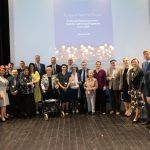
Sesión plenaria del Comité de las Regiones

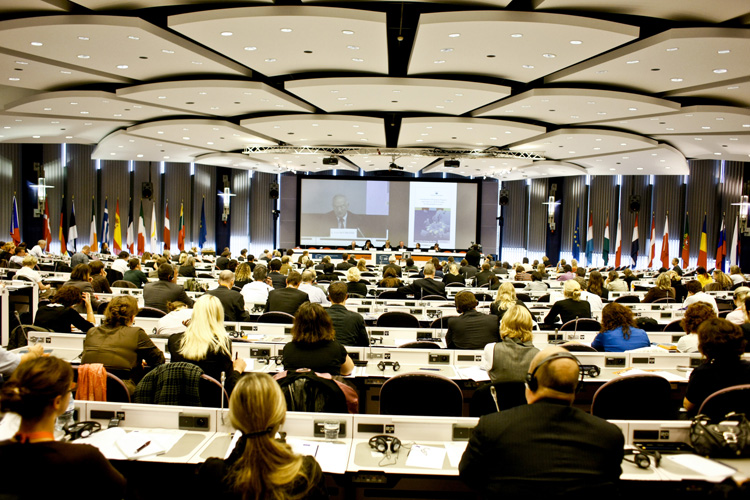
The European Committee of the Regions is holding the second plenary session of its new term of office on 2 and 3 April, with debates focusing on economic growth, EU enlargement and the priorities of the Polish Presidency of the Council of the European Union.

Raffaele Fitto, the European Commission’s Executive Vice-President for Cohesion and Reforms, will discuss reprogramming and reforms of regional development funds, while former Italian Prime Minister Enrico Letta will debate his proposals for making the EU more competitive. Members of the European Committee of the Regions (CoR) will offer a local and regional perspective on growth in a number of critical sectors, through a resolution on the automotive sector and opinions on the EU’s emerging Oceans Pact and on agricultural competitiveness. CoR members have also asked to take the floor to discuss the possible impact of the new US tariff policy on European agri-food products.

Marta Kos, European Commissioner for Enlargement, will discuss EU enlargement with CoR members against a background of major political unrest in Turkey and the Western Balkans and in the context of efforts to create the conditions for a just, comprehensive and lasting peace in Ukraine. CoR members will adopt a resolution on the arrest of Turkish mayors and the assault on local democracy in Turkey and will set out their perspective on the EU-related reform efforts of the Western Balkan countries and of Ukraine, Moldova, Georgia and Turkey.

Key debates

2 April, 15:05: Debate on the priorities of the Polish Presidency, with the participation of Jan Szyszko, Secretary of State for Development Funds and Regional Policy. The Presidency’s agenda focuses on strengthening European security in all its dimensions: external, internal, information, economic, energy, food and health.

2 April, 16.45: Local EU affairs, with statements by CoR members on the imposition of tariffs on European agricultural products by the United States and on improving connectivity with the EU’s islands.

2 April, 5.30 p.m.: Debate on local and regional perspectives of enlargement, with the participation of Marta Kos, European Commissioner for Enlargement. The debate will also be an opportunity to reflect on how enlargement affects local life, with contributions from the first joint cross-border European Capital of Culture: Samo Turel, Mayor of Nova Gorica (Slovenia), and Rodolfo Ziberna, Mayor of Gorizia (Italy).

3 April, 9.30 a.m.: Speech by Raffaele Fitto, Executive Vice-President for Cohesion and Reforms of the European Commission. National ministers adopted initial conclusions on cohesion and cohesion policy after 2027 on 28 March.

3 April, 11.45 a.m.: Debate on a local approach to competitiveness, with Enrico Letta, former Italian prime minister and author of “Much more than a market”, a report commissioned by the EU on the future of the single market. Following the debate, CoR members will adopt a resolution on a “Competitiveness Compass for the EU”.

More information: European Committee of the Regions
Publicaciones relacionadas:

EUROPEAN AGENDA: Institutionals Affairs EU-US: A new transatlantic agenda for global change EASO operations expand to all major EU countries of first arrival EU statements on trials and sentences in Cuba The European Union Delegation and the Jerusalem Foundation Mark Yom HaShoah 2022

EU News,  Institutional Affairs CoR,  Debates,  EU,  european committee of the regions,  European Union,  News,  noticias,  Sessions

“This is a space for debate. All comments, for or against publication, that are respectful and do not contain expressions that are discriminatory, defamatory or contrary to current legislation will be published”.

Reader Interactions

Leave a Reply Cancel reply

Your email address will not be published. Required fields are marked *

This site uses Akismet to reduce spam. Learn how your comment data is processed.

Primary Sidebar

Footer

  • CDE Almería
  • Biblioteca Nicolás Salmerón – Universidad de Almería
  • Planta: 1ª, Despacho: 1.05.0B.
  • Ctra. Sacramento s/n. Almería (Spain)
  • Teléfono: (+34) 950 015266

HOME
NEWS
DOCUMENTATION
EUROPE ON THE NET
ABOUT US

  • LEGAL NOTICE
  • PRIVACY POLICY
  • COOKIE POLICY
  • ACCESSIBILITY
  • SITEMAP

Copyright © 2026 CDE Almería · Creative Commons LicenseThis work is licensed under a Creative Commons Attribution-NonCommercial 4.0 International License.

<p>El Centro de Documentación Europea de la Universidad de Almería utiliza cookies propias y de terceros para facilitar al usuario la navegación en su página Web y el acceso a los distintos contenidos alojados en la misma. Asimismo, se utilizan cookies analíticas de terceros para medir la interacción de los usuarios con el sitio Web. Pinche el siguiente enlace si desea información sobre el uso de cookies y como deshabilitarlas. </p>

Politica de privacidad

El Centro de Documentación Europea de la Universidad de Almería utiliza cookies propias y de terceros para facilitar al usuario la navegación en su página Web y el acceso a los distintos contenidos alojados en la misma. Asimismo, se utilizan cookies analíticas de terceros para medir la interacción de los usuarios con el sitio Web. Pinche el siguiente enlace si desea información sobre el uso de cookies y como deshabilitarlas. <a href="/politica-de-cookies" rel="noopener" target="_blank">Más información</a>

Cookies estrictamente necesarias

Las cookies estrictamente necesarias tiene que activarse siempre para que podamos guardar tus preferencias de ajustes de cookies.

Básicamente la web no funcionara bien si no las activas.

Estas cookies son:

  • Comprobación de inicio de sesión.
  • Cookies de seguridad.
  • Aceptación/rechazo previo de cookies.
Cookies de terceros

Esta web utiliza Google Analytics, Google Tag Manager y Yandex Metrika para recopilar información anónima tal como el número de visitantes del sitio, o las páginas más populares.

Dejar estas cookies activas nos permite mejorar nuestra web.

Política de cookies

Pinche el siguiente enlace si desea información sobre el uso de cookies y como deshabilitarlas. Más información