
The European Commission and the Government of the United Kingdom reach a political agreement in principle on the Windsor Framework.
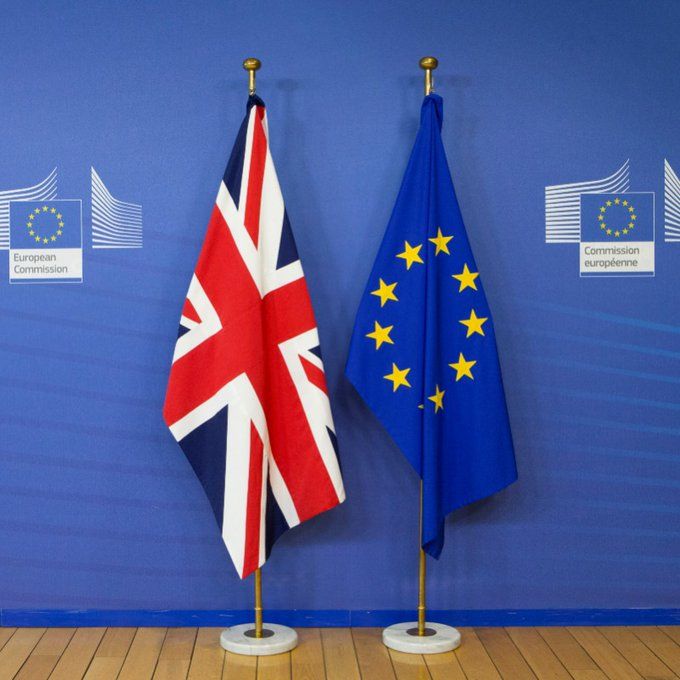
The European Commission and the Government of the United Kingdom has reached a political agreement in principle on the Windsor Framework. This constitutes a comprehensive set of joint solutions aimed at addressing, in a definitive way, the practical challenges faced by citizens and businesses in Northern Ireland, thereby providing them with lasting certainty and predictability.
The joint solutions cover, amongst other things, new arrangements on customs, agri-food, medicines, VAT and excise, as well as specific instruments designed to ensure that the voices of the people of Northern Ireland are better heard on specific issues particularly relevant to the communities there. These new arrangements are underpinned by robust safeguards to ensure the integrity of the EU’s Single Market, to which Northern Ireland has a unique access.
Today’s political agreement in principle allows the two sides to open a new chapter in our partnership, based on mutual trust and full cooperation, also allowing to unlock the full potential of their relationship.
President Ursula von der Leyen said: “The Windsor Framework was made possible by genuine political will and hard work guided by the fundamental principle that the interests and needs of people should always come first. Supporting and protecting the hard-earned gains of the Good Friday (Belfast) Agreement was the prerequisite of our endeavour. Today, our achievement allows us to put forward definitive solutions that work for people and businesses in Northern Ireland and that protect our Single Market. It also allows us to turn the page towards a bilateral relationship that mirrors the one of close allies standing shoulder to shoulder in times of crisis.”
The joint solutions, found within the framework of the Withdrawal Agreement, are based on the following starting points:
- A comprehensive, cross-cutting and definitive solution, addressing practical difficulties in the operation of the Protocol;
- A balance between flexibilities for the movement of goods for end use in Northern Ireland and effective safeguards guaranteeing the protection of the EU’s Single Market;
- A clear distinction between goods at risk and goods not at risk of entering the EU’s Single Market.

EU and UK agree on fishing opportunities for 2023 |
In the sanitary and phyto-sanitary (SPS) area, the joint solutions ensure that the same food will be available on supermarket shelves in Northern Ireland as in the rest of the UK. In practice, agri-food retail products for end consumption in Northern Ireland will be able to move from Great Britain with minimal certification requirements and controls. UK public health standards will apply for those agri-food retail goods for end consumption in Northern Ireland, whilst EU plant and animal health rules remain applicable for the protection of the EU Single Market. This arrangement is commensurate with a set of existing and new safeguards, including SPS inspection facilities and labelling which will be introduced gradually. When these safeguards are fully in place, identity checks will be reduced to only 5%. Physical checks will follow a risk-based and intelligence-led approach. Moreover, travelling with pets will be easy, thanks to a simple pet travel document, a microchip, and a declaration by the owner that the pet will not travel to the EU.
New arrangements in the area of customs are based on an expanded trusted trader scheme that will also be open to businesses in Great Britain. Goods moved by trusted traders and not at risk of entering the EU’s Single Market will benefit from dramatically simplified procedures and drastically simplified declarations with reduced data requirements. Substantial facilitations were found for freight and the movement of all types of parcels, i.e., business-to-business, business-to-consumer, and consumer-to-consumer, with consumer-to-consumer parcels being entirely exempt from the main customs requirements. These new solutions are made possible especially by new data-sharing arrangements allowing for risk assessments, which would constitute the principle basis for controls. Robust authorisation and monitoring of the trusted trader scheme, and increased market surveillance and enforcement by UK authorities also act as safeguards. Full customs procedures will apply to goods at risk of entering the EU’s Single Market.
A permanent solution has also been found to ensure that people in Northern Ireland have access to all medicines, including novel medicines, at the same time and under the same conditions as people in the rest of the UK. This complements the solution the EU adopted in April 2022 for the supply of generic medicines to Northern Ireland. These new arrangements are made possible by new safeguards, notably labelling, designed to ensure that the medicines do not enter the EU’s Single Market.

EU-UK relations: Commission extends arrangements for veterinary medicines to 2025
|
New flexibilities were also found for certain VAT and excise rules, accompanied by safeguards protecting the EU from fraud risks or potential distortion of competition. These arrangements include a possibility to set UK VAT rates below EU VAT minima rates for immovable goods with no risk that these goods enter the EU Single Market (e.g., a heat pump for a house). A UK SME VAT exemption scheme is now applicable to both goods and services if the UK respects the EU threshold for the size of SMEs. There is now also a possibility to tax all alcoholic beverages according to their alcoholic strength, and to set reduced duty rates to alcoholic beverages, if served for immediate consumption in hospitality venues in Northern Ireland, as long as the applied rates are not below EU minima duty rates.
With regard to governance, the voices of Northern Ireland people and stakeholders will be better heard through regular engagement at each level of the Withdrawal Agreement structures. There will be enhanced engagement with Northern Ireland stakeholders on Protocol-related matters. New thematic subgroups within the Joint Consultative Working Group will be set up. A new emergency mechanism, the Stormont Brake, will allow the UK government, at the request of 30 Members of the Legislative Assembly in Northern Ireland, to stop the application in Northern Ireland of amended or replacing provisions of Protocol-related EU law that may have a significant and lasting impact specific to the everyday lives of communities there. This mechanism would be triggered under the most exceptional circumstances and as a matter of last resort, in a very well-defined process set out in a Unilateral Declaration by the UK.
The Court of Justice of the European Union remains the sole and ultimate arbiter of EU law.
The joint solutions also address implementation difficulties related to tariff rate quotas (TRQs) for the most sensitive categories of steel and clarify the application of State aid rules.
These new arrangements have been carried out within the framework of the Withdrawal Agreement of which the Protocol on Ireland/Northern Ireland is an integral part. Within these pre-established legal parameters, a number of targeted amendments to the Protocol address, in a definitive way, unforeseen circumstances or deficiencies that have emerged since the start of the Protocol.
Next steps
The European Commission and the Government of the United Kingdom will proceed, within the remit of their respective powers, with the necessary steps to translate the joint solutions into legally binding instruments and to implement these swiftly and in good faith. To that effect, a meeting of the EU-UK Joint Committee on the Withdrawal Agreement, co-chaired by Vice-President Maroš Šefčovič and UK Foreign Secretary James Cleverly, will also take place in the coming weeks. The Commission has today made proposals to the Council for a Union position as regards, amongst other things, the decisions that need to be adopted in that meeting.
In addition, the Commission has today tabled legislative proposals in the SPS, medicines and TRQs areas, which will now be submitted to the European Parliament and Council.
The respective roles of the European Parliament and Council will be fully respected.
The new arrangements are not compatible with the Northern Ireland Protocol Bill. The Commission welcomes that the UK government is stopping the process of the Northern Ireland Protocol Bill, and is not proceeding with it, so that it will fall in the UK Parliament at the end of the Parliamentary session. These arrangements, when implemented, mean that there will no longer be grounds for the existing Commission legal proceedings against the United Kingdom relating to the Protocol on Ireland / Northern Ireland.
Background
The Protocol on Ireland/Northern Ireland, as an integral part of the Withdrawal Agreement, was agreed jointly and ratified by both the EU and the UK. It has been in force since 1 February 2020 and has legal effects under international law. The aim of the Protocol is to protect the Good Friday (Belfast) Agreement in all its dimensions, maintaining peace and stability in Northern Ireland, avoiding a hard border on the island of Ireland, while preserving the integrity of the EU Single Market.
More Information: European Commission
Publicaciones relacionadas:
 European Commission sends letter of formal notice to the United Kingdom for breach of its obligations
 Commission proposes bespoke arrangements to benefit Northern Ireland
 EU ensures continued supply of medicines to Northern Ireland, Cyprus, Ireland and Malta
 Commission launches infringement proceedings against the UK
 Protocol on Ireland/Northern Ireland: Commission launches four new infringement procedures against the UK
Leave a Reply