• Skip to primary navigation
  • Skip to main content
  • Skip to primary sidebar
  • Skip to footer
  • Bluesky
  • Facebook
  • Instagram
  • Twitter
  • YouTube
CDE Almería – Centro de Documentación Europea – Universidad de Almería

CDE Almería - Centro de Documentación Europea - Universidad de Almería

Centro de Documentación Europea de la Universidad de Almería

  • HOME
  • WHAT´S ON
    • EU NEWS
    • Activities
    • EU Calls and Awards
    • Radio Program «Europe with You»
  • DOCUMENTATION
    • EU Media Collection
      • Web Space
      • MEDIATHEQUE REPOSITORY
  • Europe on the net
    • Institutions
    • EU Representation in Spain
    • European information network of Andalusia
  • ABOUT US
    • Presentation
    • Services
    • People
    • Contact
  • Spanish
  • English

The Commission has adopted the second strategic plan for Horizon Europe

Inicio » Noticias UE » Investigación e Innovación » Producción » The Commission has adopted the second strategic plan for Horizon Europe

22 de March de 2024

The Commission has adopted the second strategic plan for Horizon Europe. The plan, announced at the flagship Research and Innovation Days, sets out three key strategic orientations for EU’s research and innovation funding for the last three years of the programme

(2025-2027):

  • Green transition;
  • Digital transition;
  • A more resilient, competitive, inclusive and democratic Europe.

These orientations aim to address key global challenges such as climate change, loss of biodiversity, the digital transition and an ageing population.

Open strategic autonomy and securing Europe’s leading role in developing and deploying critical technologies are overarching principles that apply across all three key strategic orientations.

The strategic plan raises the ambition of Horizon Europe on biodiversity and commits to a target of 10% of the Horizon Europe’s total budget for 2025-2027 dedicated to biodiversity-related topics. This new commitment complements existing targets for climate expenditure (35% over the lifetime of Horizon Europe) and main digital activities (€13 billion over the same period).

The strategic plan identifies nine new European co-funded and co-programmed partnerships: Brain Health, Forests and Forestry for a Sustainable Future, Innovative Materials for EU, Raw Materials for the Green and Digital Transition, Resilient Cultural Heritage, Social Transformations and Resilience, Solar Photovoltaics, Textiles of the Future, and Virtual Worlds.
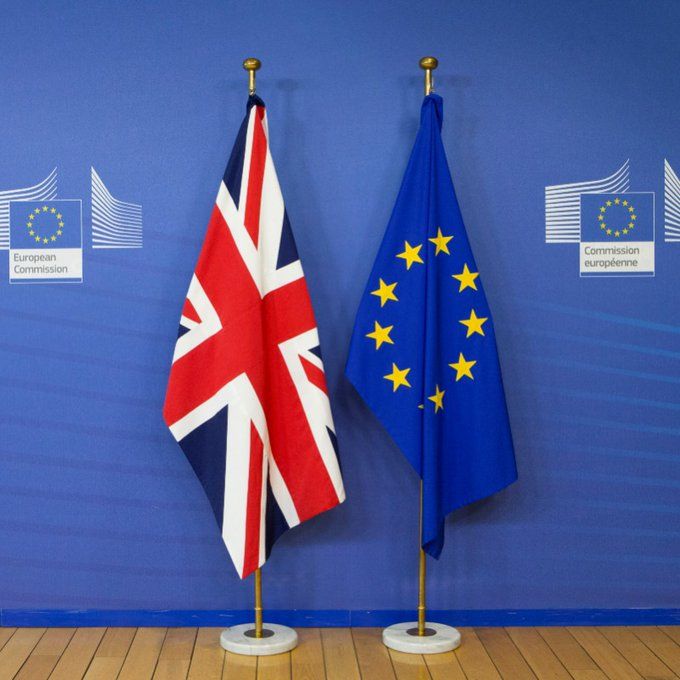
United Kingdom joins Horizon Europe programme

The strategic plan also provides an overview of the achievement of EU Missions over their first years. As a novelty, the stategy plan introduces the New European Bauhaus (NEB) Facility. The New European Bauhaus is a pioneering movement that brings citizens, municipalities, experts, businesses, universities and institutions together to reimagine and jointly bring about sustainable and inclusive living in Europe and beyond. Given the cross-cutting nature of the NEB and of its R&I content, the NEB will be implemented as a cross-cluster issue in the Horizon Europe work programmes for 2025-2027. This R&I component will be complemented by a roll-out component that will be delivered through synergies with other EU programmes. Together, these two components will be referred to as the ‘NEB Facility’.

The plan addresses a number of specific issues, such as the balance of research and innovation and the integration of social sciences and humanities. On the former, the strategic plan commits to provide a balanced support to activities with a range of maturity and of technology readiness levels, ranging from knowledge-generating and early-stage research to innovation, to demonstration and first deployment activities, such as in model regions, living labs and lighthouses. It also commits to strengthen collaborative research projects with low technology readiness levels and maturity levels under Pillar II.

Effectively integrating social sciences and humanities into all clusters, including all missions and partnerships, is a key principle of the programme. This is reflected by flagging specific topics and requesting an assessment of their societal impact. Social sciences and humanities will be integrated into relevant projects, from their drafting to their selection and evaluation.

Next Steps

The key strategic orientations are the guiding principles for Horizon Europe and will be implemented through the work programmes. Work programmes set out the funding opportunities for research and innovation activities through thematic calls for proposals and topics.

The Horizon Europe main Work Programme 2025 will be developed following the orientations of the newly adopted strategic plan. In April 2024, the Commission will launch a feedback opportunity for the Work Programme 2025 open to all stakeholders.

Background

The Horizon Europe strategic plan for 2025-2027 builds on an extensive analysis conducted by the Commission services, including a gap analysis on the missing topics and potential gaps within the intervention areas provided in the Horizon Europe legal basis. The strategic plan has been co-created by Commission services and co-designed with the European Parliament, Member States and Associated Countries as well as more than 2000 stakeholders and citizens who have contributed at various stages of the strategic planning process for Horizon Europe, such as the largest ever public consultation on European Research and Innovation Framework Programmes.

Source: European Commission

More information on the Horizon Europe strategic plan

Horizon Europe strategic plan 2025-2027

Factsheet

Horizon Europe strategic plan 2025-2027 analysis

European Partnerships

EU Missions

Research and Innovation Days 2024

Paper on the Added Value of European investments in research and innovation

Paper on Why Investing in R&I Matters – A rationale for public and private investments

European Funding and Tenders portal

Publicaciones relacionadas:

European Union launches three new missions in space innovaciónEU companies doubled R&D investment growth in 2022 científicoHorizon 2020 evaluation shows that investment in EU research and innovation greatly pays off persona trabajando en un laboratorioIndustrial investments in research and development in the EU again on the rise Persona esconde su cara tras un cartel que refleja el proceso de creación de ideas en el que sea lee "Innovación" como títuloEU publishes European Innovation Scoreboard 2023

EU News,  Production,  Research and Innovation,  Technology Comision Europea,  European Commission,  European Union,  Horizon Europe,  innovation,  Investigación

“This is a space for debate. All comments, for or against publication, that are respectful and do not contain expressions that are discriminatory, defamatory or contrary to current legislation will be published”.

Reader Interactions

Leave a Reply Cancel reply

Your email address will not be published. Required fields are marked *

This site uses Akismet to reduce spam. Learn how your comment data is processed.

Primary Sidebar

Footer

  • CDE Almería
  • Biblioteca Nicolás Salmerón – Universidad de Almería
  • Planta: 1ª, Despacho: 1.05.0B.
  • Ctra. Sacramento s/n. Almería (Spain)
  • Teléfono: (+34) 950 015266

HOME
NEWS
DOCUMENTATION
EUROPE ON THE NET
ABOUT US

  • LEGAL NOTICE
  • PRIVACY POLICY
  • COOKIE POLICY
  • ACCESSIBILITY
  • SITEMAP

Copyright © 2026 CDE Almería · Creative Commons LicenseThis work is licensed under a Creative Commons Attribution-NonCommercial 4.0 International License.

<p>El Centro de Documentación Europea de la Universidad de Almería utiliza cookies propias y de terceros para facilitar al usuario la navegación en su página Web y el acceso a los distintos contenidos alojados en la misma. Asimismo, se utilizan cookies analíticas de terceros para medir la interacción de los usuarios con el sitio Web. Pinche el siguiente enlace si desea información sobre el uso de cookies y como deshabilitarlas. </p>

Politica de privacidad

El Centro de Documentación Europea de la Universidad de Almería utiliza cookies propias y de terceros para facilitar al usuario la navegación en su página Web y el acceso a los distintos contenidos alojados en la misma. Asimismo, se utilizan cookies analíticas de terceros para medir la interacción de los usuarios con el sitio Web. Pinche el siguiente enlace si desea información sobre el uso de cookies y como deshabilitarlas. <a href="/politica-de-cookies" rel="noopener" target="_blank">Más información</a>

Cookies estrictamente necesarias

Las cookies estrictamente necesarias tiene que activarse siempre para que podamos guardar tus preferencias de ajustes de cookies.

Básicamente la web no funcionara bien si no las activas.

Estas cookies son:

  • Comprobación de inicio de sesión.
  • Cookies de seguridad.
  • Aceptación/rechazo previo de cookies.
Cookies de terceros

Esta web utiliza Google Analytics, Google Tag Manager y Yandex Metrika para recopilar información anónima tal como el número de visitantes del sitio, o las páginas más populares.

Dejar estas cookies activas nos permite mejorar nuestra web.

Política de cookies

Pinche el siguiente enlace si desea información sobre el uso de cookies y como deshabilitarlas. Más información