• Skip to primary navigation
  • Skip to main content
  • Skip to primary sidebar
  • Skip to footer
  • Bluesky
  • Facebook
  • Instagram
  • Twitter
  • YouTube
CDE Almería – Centro de Documentación Europea – Universidad de Almería

CDE Almería - Centro de Documentación Europea - Universidad de Almería

Centro de Documentación Europea de la Universidad de Almería

  • HOME
  • WHAT´S ON
    • EU NEWS
    • Activities
    • EU Calls and Awards
    • Radio Program «Europe with You»
  • DOCUMENTATION
    • EU Media Collection
      • Web Space
      • MEDIATHEQUE REPOSITORY
  • Europe on the net
    • Institutions
    • EU Representation in Spain
    • European information network of Andalusia
  • ABOUT US
    • Presentation
    • Services
    • People
    • Contact
  • Spanish
  • English

European Union launches three new missions in space

Inicio » EU News » Research and Innovation » Technology » European Union launches three new missions in space

11 de October de 2023

Three new In-Orbit Demonstration and Validation (IOD/IOV) missions were launched onboard of the European launcher Vega flight VV23 from the European spaceport in French Guyana, under the Horizon 2020 Research and Innovation Programme. The three missions, six satellites and nine experiments, will allow the test of technologies with a wide variety of application, which are detailed below.
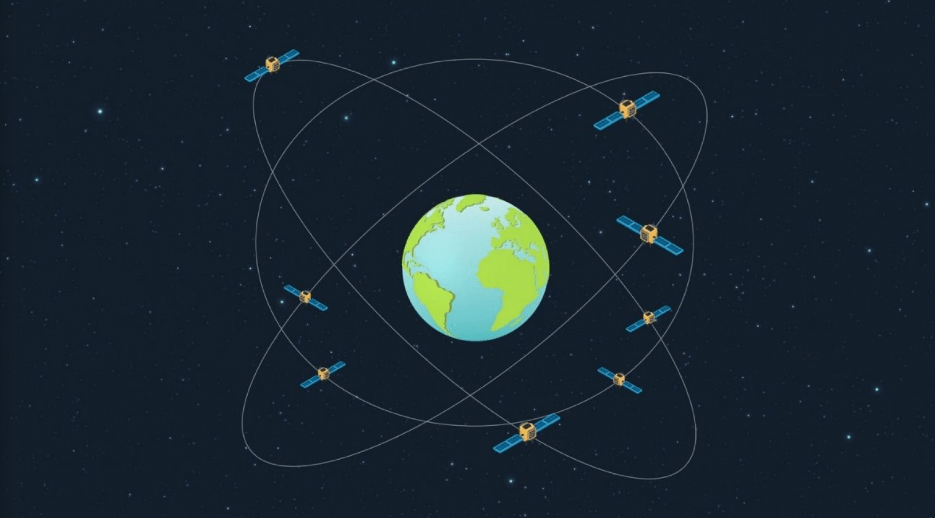
The European Union IOD/IOV programme allows experiments to be tested in orbit and get flight heritage (validation in real environment) for scientific, public, or commercial purposes. The test of technologies in orbit is the final step before placing them on the market. Through the IOD/IOV missions, the European Union, supported by the European Space Agency, is closing the gap between the development of a technology and its commercialisation. This is a fantastic way to boost the competitiveness of the European space industry through innovation, and to enhance European scientific excellence.

The SYNDEO-1&2 cubesat mission is aggregating seven IOD/IOV experiments, while the ESTCube-2 and ANSER missions are provided as ready to fly satellites for in-orbit demonstration.
Building a sustainable future with the power of #EUSpace

In total, in this Vega launch, entities from six European countries will benefit from IOD/IOV services.

  1. SYNDEO-1 & SYNDEO-2: for the first time under the Horizon 2020 the EU is launching aggregated missions of seven experiments covering different space themes from space science, technology, propulsion, space traffic management. The missions are implemented by the Dutch aerospace company ISISpace and the payloads were produced by universities and SMEs from Belgium, Spain, France and Czechia.
  2. ESTCube-2: a mission developed by a group of space students from University of Tartu (Estonia) consisting of a 3U cubesat to demonstrate deorbiting with plasma brake technology and qualify a deep-space nanospacecraft platform for future missions that will use the electric solar wind sail.
  3. ANSER: developed by the Spanish Institute INTA (Instituto Nacional de Técnica Aeroespacial) whose objective is to study and monitor the water quality of the reserves of the Iberian Peninsula by means of spectrometric techniques. It consists of a cluster of 3X3U Cubesats that will fly in formation in low earth orbit.

Ultimately, the entire space ecosystem is supported through the IOD/IOV program of the Commission, from universities and research centres to SMEs and satellite manufacturers.  IOD/IOV also supports an autonomous access to Space by relying on European launch solutions. It is instrumental to the CASSINI initiative of the Commission to support the fast development of new commercial entrants in space.

Background

The IOD/IOV programme of the Commission launched the first call of interest in 2018 under Horizon 2020. It attracted more than 50 proposals from various European entities, from SMEs to large companies, universities, and research organisations. Successful applications relate to technology innovation for Earth observation, positioning navigation and timing, satellite communication and space science. In September 2020, the first selected IOD/IOV experiment, UPMSat-2, was successfully launched on board the Vega launcher. The three new missions launched in October 2023 are part of the selection.

More information: European Commission

Publicaciones relacionadas:

Mass rescue operation takes place in the Arctic Circle with Galileo SAR at the forefront formas futuristasWhat can we expect from science in 2023? Iris2MEPs back deploying new EU satellites to protect government communications Persona esconde su cara tras un cartel que refleja el proceso de creación de ideas en el que sea lee "Innovación" como títuloEU publishes European Innovation Scoreboard 2023 Extension of deadline calls due to Covid-19

EU News,  Production,  Research and Innovation,  Technology EU,  European Commission,  European Union,  EUSPA,  mission,  Space

“This is a space for debate. All comments, for or against publication, that are respectful and do not contain expressions that are discriminatory, defamatory or contrary to current legislation will be published”.

Reader Interactions

Leave a Reply Cancel reply

Your email address will not be published. Required fields are marked *

This site uses Akismet to reduce spam. Learn how your comment data is processed.

Primary Sidebar

Footer

  • CDE Almería
  • Biblioteca Nicolás Salmerón – Universidad de Almería
  • Planta: 1ª, Despacho: 1.05.0B.
  • Ctra. Sacramento s/n. Almería (Spain)
  • Teléfono: (+34) 950 015266

HOME
NEWS
DOCUMENTATION
EUROPE ON THE NET
ABOUT US

  • LEGAL NOTICE
  • PRIVACY POLICY
  • COOKIE POLICY
  • ACCESSIBILITY
  • SITEMAP

Copyright © 2026 CDE Almería · Creative Commons LicenseThis work is licensed under a Creative Commons Attribution-NonCommercial 4.0 International License.

<p>El Centro de Documentación Europea de la Universidad de Almería utiliza cookies propias y de terceros para facilitar al usuario la navegación en su página Web y el acceso a los distintos contenidos alojados en la misma. Asimismo, se utilizan cookies analíticas de terceros para medir la interacción de los usuarios con el sitio Web. Pinche el siguiente enlace si desea información sobre el uso de cookies y como deshabilitarlas. </p>

Politica de privacidad

El Centro de Documentación Europea de la Universidad de Almería utiliza cookies propias y de terceros para facilitar al usuario la navegación en su página Web y el acceso a los distintos contenidos alojados en la misma. Asimismo, se utilizan cookies analíticas de terceros para medir la interacción de los usuarios con el sitio Web. Pinche el siguiente enlace si desea información sobre el uso de cookies y como deshabilitarlas. <a href="/politica-de-cookies" rel="noopener" target="_blank">Más información</a>

Cookies estrictamente necesarias

Las cookies estrictamente necesarias tiene que activarse siempre para que podamos guardar tus preferencias de ajustes de cookies.

Básicamente la web no funcionara bien si no las activas.

Estas cookies son:

  • Comprobación de inicio de sesión.
  • Cookies de seguridad.
  • Aceptación/rechazo previo de cookies.
Cookies de terceros

Esta web utiliza Google Analytics, Google Tag Manager y Yandex Metrika para recopilar información anónima tal como el número de visitantes del sitio, o las páginas más populares.

Dejar estas cookies activas nos permite mejorar nuestra web.

Política de cookies

Pinche el siguiente enlace si desea información sobre el uso de cookies y como deshabilitarlas. Más información