

According to preliminary 2023 data, life expectancy at birth in the EU was 81.5 years, up by 0.9 years from 2022, and 0.2 years compared with the pre-pandemic level in 2019. This information comes from the provisional data on life expectancy published by Eurostat. In 15 countries, life expectancy exceeded the EU average, with the highest life expectancy recorded for […]

Eurostat: by 2023, 68% of girls in the European Union will have at least basic digital skills
In 2023, 68% of girls aged 16-19 in the EU possessed basic or above-basic digital skills, noticeably exceeding the share in the general population (56%). The proportion of boys in the same age bracket with at least basic digital skills was slightly lower (65%). Across age groups, only women or men aged 20-24 and 25-34 demonstrated […]

According to Eurostat, Spain is the country with the highest overqualification rate in the EU
In 2023, the EU over-qualification rate was 22%, with 21% for men and 23% for women. Over-qualification is when people with tertiary education are employed in occupations that do not require such a high level of education. Among the EU countries, the over-qualification rate was highest in Spain (36%), followed by Greece (31%) and Cyprus […]

Eurostat: Online purchases: printed books preferred to ebooks
The share of the EU residents purchasing printed books, magazines or newspapers online remained significantly larger than that for e-books, online magazines or online newspapers in 2023. In 2023, at the EU level, 13.4% of the residents had purchased printed books online in the previous 3 months. This was a slight increase from 2022 (12.7%) but still […]

Spanish was the second most studied foreign language in upper secondary education in the EU.
In 2022, 60.8% of students in general upper secondary education across the EU studied two or more foreign languages as compulsory subjects or as compulsory curricular options, a decrease of only 0.2 percentage points compared to 2021 (61.0%). In upper secondary vocational education, this percentage was 33.8 %, a decrease of 1.1 percentage points compared […]
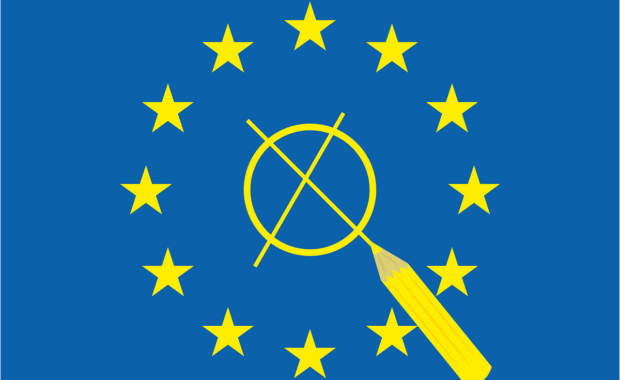
European elections 2024: people eligible to vote
The 2024 elections for the European Parliament are set for 6-9 June 2024. Eurostat has asked the National Statistical Institutes of the EU Member States for a dedicated data collection on the number of people eligible to vote. National estimates show that, on the election dates, the highest numbers of eligible voters are expected in Germany […]

Eurostat: Spain had the second lowest fertility rate in the European Union in 2022
In 2022, 3.88 million babies were born in the EU, a slight decrease from 4.09 million in 2021. The number of children born in the EU has been declining since 2008, when 4.68 million children were born. The total fertility rate in 2022 was 1.46 live births per woman in the EU, which is another decline, after the small increase […]

Battery-only electric cars continued to increase in 2022
In 2022, the number of battery-only electric passenger cars in the EU countries almost reached 3.0 million, which is a +55% increase compared with 2021 (1.9 million). The highest annual rate of increase in battery-only electric passenger cars in the period 2013-2022 was noted between 2019 and 2020 (+85%), followed by the increase in 2021 […]

Increase in online education in the EU in 2023
In 2023, 30% of EU internet users aged 16 to 74 reported that they had done an online course or used online learning material in the three months prior to the survey. This is a 2 percentage point (pp) increase compared with 2022 (28%). Among all EU members, the Netherlands had the highest share (54%) […]