
We, the G7 Finance Ministers and Central Bank Governors, met in Washington D.C., joined by the Heads of the International Monetary Fund, World Bank Group, Organisation for Economic Cooperation and Development, and Financial Stability Board. We were honored to be joined by the Ukrainian Finance Minister Sergii Marchenko.
- We discussed recent global economic and financial sector developments and reiterate our determination to maintain macroeconomic and financial stability. Global growth has proved to be more resilient than expected. Inflation remains elevated and central banks remain strongly committed to achieving price stability. At the same time, recent financial sector developments highlight the uncertainty about the global economic outlook and the need to stay vigilant. We reaffirm that the financial system is resilient, supported by relevant authorities’ prompt responses as well as the financial regulatory reforms implemented after the 2008 global financial crisis. We will continue to closely monitor financial sector developments and stand ready to take appropriate actions to maintain the stability and resilience of the global financial system.
- Russia’s war of aggression against Ukraine continues to cause immense human suffering and exacerbate global economic challenges including through adding to inflationary pressures, disrupting supply chains and heightening food and energy insecurity. We reaffirm our unwavering support for Ukraine and unity in our condemnation of Russia’s war of aggression.
- We welcome the approval by the International Monetary Fund (IMF) Executive Board of a 15.6 billion US dollar program for Ukraine. The significant budget and economic support that has been committed by G7 members and international partners, together with the IMF program, is expected to address Ukraine’s most urgent financing needs and underpin a structural reform agenda for Ukraine. We look forward to the swift implementation of these reforms supported by the IMF program, which will promote macroeconomic and financial stabilization, contribute to longer-term economic sustainability, and help to catalyze further financial support from other countries and institutions as well as the private sector.
- We reiterate our strong commitment to imposing sanctions and other economic measures against Russia in response to its illegal, unjustifiable and unprovoked war. We are vigorously working to prevent and respond to evasion and circumvention of our sanctions and other economic measures in various fora, collectively as well as nationally. We will also continue to monitor the effectiveness of our sanctions, take further actions as needed, and strengthen their enforcement.
- Amid the repercussions of the COVID-19 pandemic and Russia’s war of aggression against Ukraine, economic resilience has been brought into sharper focus. The flow of cross-border economic activities, including global supply chains, is increasingly viewed through the lens of achieving both economic efficiency and resilience. In this endeavor, we will stand firm to protect our shared values, while preserving economic efficiency by upholding the free, fair and rules-based multilateral system and international cooperation. Our efforts to enhance economic resilience should also help accelerate social and economic transformation in our economies and globally by driving progress to achieve deep emission cuts and reach net zero greenhouse gas emissions by 2050 at the latest and by harnessing the benefits of digitalization.
- Enhancing supply chain resilience will help us maintain macroeconomic stability and make economies more sustainable globally. For instance, diversifying the highly concentrated supply chains of important products for clean energy can contribute to safeguarding energy security, as well as support global efforts to keep a global warming limit of 1.5 degrees within reach, while creating new opportunities for value creation in the global economy. We therefore commit to strengthening collaboration among G7 members and partners through the effective use of our respective public finance tools, based on the “High-level Policy Guidance for Public Finance Tools to Build Resilient Supply Chains in the Era of Decarbonization” (Annex). An integral part of this guidance is to support low- and middle-income countries to play bigger roles in supply chains and enhance their value addition. To turn the guidance into specific actions, we will explore the development of a mutually beneficial partnership with low- and middle-income countries, in collaboration with Multilateral Development Banks and relevant international organizations.
- We are fully committed to stepping up our efforts to support low- and middle-income countries, which are disproportionately affected by Russia’s war of aggression and wider global challenges. In this spirit, we will closely work with G20 members, international partners and international organizations to advance the work on MDBs evolution; promote voluntary SDR channeling; secure resources for PRGT and RST; address debt vulnerabilities; strengthen the global health architecture; and tackle climate change.
- We look forward to further deepening our discussions on these issues at Niigata in May.
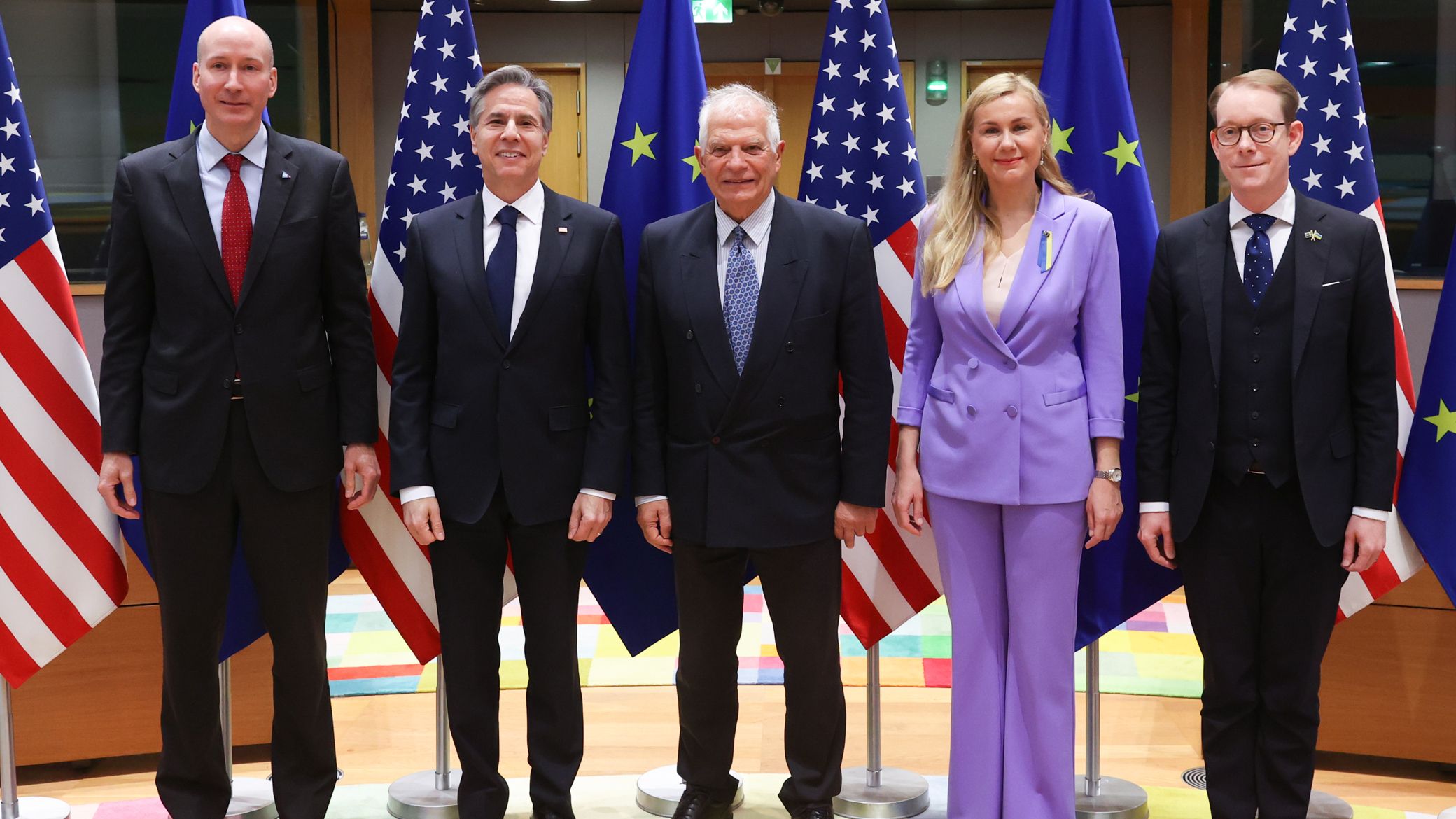
10th EU-US Energy Council |
More information
Publicaciones relacionadas:
 Russia-Ukraine crisis debated in Parliament
 Commission welcomes Joint Statement to provide affordable, accessible and transparent remittance services to Ukraine
 European and World Day against the Death Penalty: Joint statement by the European Union and Council of Europe
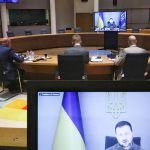 G7 leaders united in supporting Ukraine
 International Women’s Day 2020: Beijing Declaration 25 years after
Leave a Reply