
How can Europe remain competitive, resilient and secure in an increasingly unstable world? According to the central messageoftheEU Green Week 2026,the answer starts with nature.
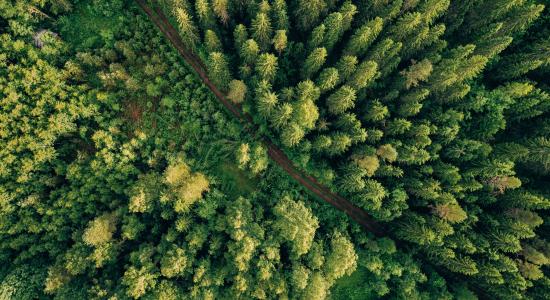
The EU’s most important annual conference on the environment begins today (3 June) in Brussels, bringing together policymakers, business leaders, environmentalists, investors, scientists, farmers, innovators and civil society to explore how investing in nature can strengthen Europe’s economy, security and long-term prosperity.
Organised by the European Commission, this year’s Green Week focuses on building a ‘nature-positive economy’, recognising that healthy ecosystems are not a luxury but essential infrastructure that underpins food production, water security, climate resilience, public health and economic stability. When these systems weaken, the economy suffers.
From environmental issues to economic strategy
The conference comes at a crucial time for Europe. Biodiversity loss, water stress and ecosystem degradationare increasingly recognisednot only as environmental challenges, but also aseconomicandsecurityrisks. Up to two-thirds of European economic activity depends on the services provided by nature: from fertile soils and pollination to drinking water, flood protection and stable supply chains.
The conference also coincides with the publicationof thelatest Eurobarometer report on biodiversity, which shows strong public support among Europeans for protecting nature and combating biodiversity loss. This underlines the growing awareness that healthy ecosystems are essential for both environmental and economic resilience.
Over two days, speakers and participants will explore how ecosystem restoration can help Europe become more resilient and competitive, whilst supporting innovation, investment and local jobs.
The discussions will focus on:
- Regenerative and profitable farming models;
- Financing instruments, such as nature credits and biodiversity investment frameworks;
- Large-scale nature restoration;
- Soil regeneration;
- Greening of cities;
- Tackling rural decline through nature-based development;
- And how businesses are integrating nature into their economic strategy and risk management.
Connecting innovators with investors
One of this year’s highlights is Re:Invest in Nature, the first initiative of its kind organised by the European Commission.
It brings together 70 start-ups and entrepreneurs developing nature-based technology and business models with potential investors, including global companies such as JP Morgan and Rabobank.
“This year, Green Week focuses on a simple but powerful truth: healthy ecosystems are the foundation of resilient and competitive economies.
When we invest in them, we are not prioritising nature over growth; we are choosing the kind of growth that endures. Our task over the next two days — and in the months and years to come — is to turn that understanding into concrete action.
Jessika Roswall, Commissioner for the Environment, Water Resilience and a Competitive Circular Economy.
Dialogue on youth policy, LIFE awards and global engagement.
Green Week extends far beyond the conference venue in Brussels.
Throughout June, hundreds of events organised by partners will take place across Europe, as well as in Turkey, China and the United States. These include guided bike rides through bird sanctuaries, TED talks on investing in biodiversity, workshops, public debates, seminars and exhibitions.
A key highlight of the week will be theYouth Policy Dialogue, where young people from across Europe will engage in a direct exchange with Commissioner Roswall on their expectations for Europe’s environmental future, intergenerational equity and the transition to a resilient economy.
The programme also includes theannualLIFE Awards, which recognise some of the EU’s most innovative and high-impact environmental and climate projects funded by the LIFE Programme. These awards highlight successful initiatives that contribute to the restoration of ecosystems, the protection of biodiversity, the reduction of pollution and the acceleration of Europe’s green transition.
During the conference, the winner ofthe #ForOurPlanet awardwill also be announced. This award, organised by the European Commission and the European External Action Service in collaboration with the European Training Foundation’s Green Skills Award, recognises inspiring initiatives that contribute to the restoration and conservation of nature.
The conference will conclude with a screening of the documentaryBecoming Nature Positive, followed by a discussion with Marco Lambertini, former Director General of WWF International and coordinator of the Nature Positive Initiative.
Background
The protection and restoration of nature are a cornerstone of the EU’s environmental and economic agenda. Through theEuropean Commission’s Biodiversity Strategy to 2030and the implementation ofthe Kunming-Montreal Global Biodiversity Framework, the EU has committed to halting and reversing biodiversity loss within this decade.
Recent EU measures include the adoption ofthe Nature Restoration Regulation, more ambitious biodiversity targets, initiatives onsoiland waterresilience, and efforts to promote a clean, competitive and resilient bioeconomy.
In addition to regulation, the EU is increasingly focusing on mobilising investment for nature. Public funding alone will not be sufficient to close the biodiversity financing gap, so the EU is working to create enabling conditions for private investment throughsustainable finance frameworks,nature creditpilot projectsandsupport for innovative business models.
The aim is to accelerate the transition to a nature-positive economy, in which sustainable economic growth, competitiveness and resilience are reinforced by healthy ecosystems, rather than achieved at their expense.
More information: European Commission.
Publicaciones relacionadas:
 Commission presents new Bioeconomy Strategy
 EU takes new step to protect High Seas biodiversity
 Nearly half of EU Biodiversity Strategy measures now implemented to protect ecosystems.
 Commission issues guidance on sustainability deal to cut CO₂ emissions in EU ports
 The LOCAL-HEAT project promotes solar technology
Leave a Reply