
The EU-funded LOCAL-HEAT project is developing next-generation perovskite materials to make clean energy more accessible and affordable worldwide.
One of the main challenges facing photovoltaic energy is how to build high-performance photovoltaic cells that are cost-effective, reliable and sustainable. Perovskites, a unique class of semiconductor materials, offer great potential for addressing this challenge and could lead to lightweight, flexible and more affordable solar panels. Although they are being researched as a standalone technology, they can also be combined with traditional technologies such as silicon. However, further advances are still needed to understand the formation of perovskite at the microscopic level.
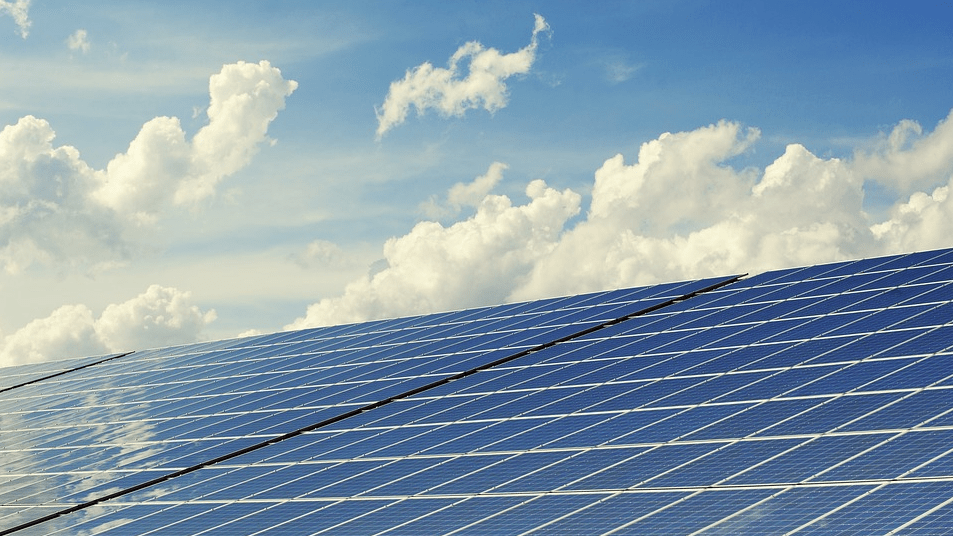
This is where the LOCAL-HEAT project comes in. The project team, which began work in September 2022, is working to understand and control the local heating and crystallisation processes that occur during the formation of thin films of perovskite materials. The aim is to achieve more efficient and stable perovskite photovoltaic cells. “Our overall idea is to help perovskite technology move from the laboratory to real-world applications on a large scale, making clean energy more accessible and affordable worldwide,” explains principal investigator Michael Saliba, director of the Institute for Photovoltaic Energy at the University of Stuttgart (with dual affiliation to the Juelich Research Centre), who is coordinating the project.
One of the main achievements of the LOCAL-HEAT project has been to achieve one of the highest open-circuit voltages for a broadband perovskite, an important measure of quality. The project partners have also monitored the formation of perovskite in real time. This is providing new insights into the crystallisation process and helping the research team to identify the ideal conditions for obtaining high-quality films.
Another achievement of the LOCAL-HEAT project researchers has been the introduction of laser polishing techniques that improve the surface quality of the perovskite layer, increasing the device’s performance. Finally, based on their chemical knowledge, they have also effectively used environmentally friendly solvents, making the manufacturing process more environmentally friendly.
Currently, LOCAL-HEAT researchers are studying how directed laser light can be used to locally modify the properties of perovskite films after their formation. This would allow the performance of photovoltaic cells to be adjusted in a controlled and scalable manner. In turn, they are applying their tools in situ to other perovskite compositions and device architectures to broaden the applicability of their research findings.
By 2027, the project team hopes to have gained a deep understanding of perovskite crystallisation and how to control these processes to improve performance and stability. “This knowledge will be critical to supporting industrial-scale production, especially for large-area solar modules based on one or even multiple layers of perovskite,” says Saliba. “Our advances, including environmentally friendly solvent systems, in situ diagnostic tools and laser-based surface modifications, will provide a comprehensive set of tools for both researchers and manufacturers.”
By combining fundamental knowledge with scalable methods, the LOCAL-HEAT (Controlled Local Heating to Crystallise Solution-based Semiconductors for Next-Generation Solar Cells and Optoelectronics) project has set itself the goal of accelerating not only scientific progress but also the commercialisation of next-generation perovskite solar technologies.
More information: CORDIS
Publicaciones relacionadas:
 Commission issues guidance on sustainability deal to cut CO₂ emissions in EU ports
 European Comission approves Spanish state aid scheme for energy storage and the transition to a zero-emission econom
 Continuous interoperability and data exchange in the energy sector
 Commission approves €5 billion German State aid scheme to help industries decarbonise production processes
 Commission approves €612 million in Portuguese aid for energy-intensive companies
Leave a Reply