• Skip to primary navigation
  • Skip to main content
  • Skip to primary sidebar
  • Skip to footer
  • Bluesky
  • Facebook
  • Instagram
  • Twitter
  • YouTube
CDE Almería – Centro de Documentación Europea – Universidad de Almería

CDE Almería - Centro de Documentación Europea - Universidad de Almería

Centro de Documentación Europea de la Universidad de Almería

  • HOME
  • WHAT´S ON
    • EU NEWS
    • Activities
    • EU Calls and Awards
    • Radio Program «Europe with You»
  • DOCUMENTATION
    • EU Media Collection
      • Web Space
      • MEDIATHEQUE REPOSITORY
  • Europe on the net
    • Institutions
    • EU Representation in Spain
    • European information network of Andalusia
  • ABOUT US
    • Presentation
    • Services
    • People
    • Contact
  • Spanish
  • English

Can plants communicate with one another?

Inicio » Noticias UE » Environmental Affairs » Can plants communicate with one another?

14 de June de 2022

Two trees in the woods. Can plants communicate with one another?

If a tree talks alone in the forest, does it make a sound? The green-fingered expert, Ilaria Pertot, speaks about the secret conversations of plants

“It is indeed true that plants can and do communicate with each other frequently,” Pertot begins. “And plants can talk to all other plants, they’re not just limited to conversation with plants of the same species.” Plants don’t use vibrations to communicate as insects and other organisms do. Instead, they release volatile organic compounds (VOCs), a type of scent called a kairomone, from their flowers, leaves and roots. Each compound is different, but they provide signals to nearby plants and other organisms to provide specific information or to warn them of a possible attack. “If an insect is feeding on a plant’s leaves, that plant will release specific VOCs to warn other plants nearby. If a human decides to callously snap a piece of a plant off, then again, the plant releases its warning to all nearby plants of the potential danger,” Pertot continues. “Obviously a plant can’t get up and run away, so the emphasis is all on defence.” Defence can take the form of a physical reaction, such as the strengthening of the cell walls to provide a stronger, more robust barrier, or a chemical reaction that produces toxic compounds to deter herbivores and pathogens. In fact, plants even communicate with non-plant species as well, such as the microorganisms around them. Plants intentionally send signals from their roots into the soil to attract certain microorganisms that are beneficial for their growth and development – essentially, an invitation to ‘good’ microbiota to move into the plant as a human would move into a new apartment. The plant benefits in numerous ways when the right tenants move in. They contribute to plant protection, can help regulate the production of cells and hormones, and can facilitate the growth of roots, so that the plant can explore a wider area of soil.
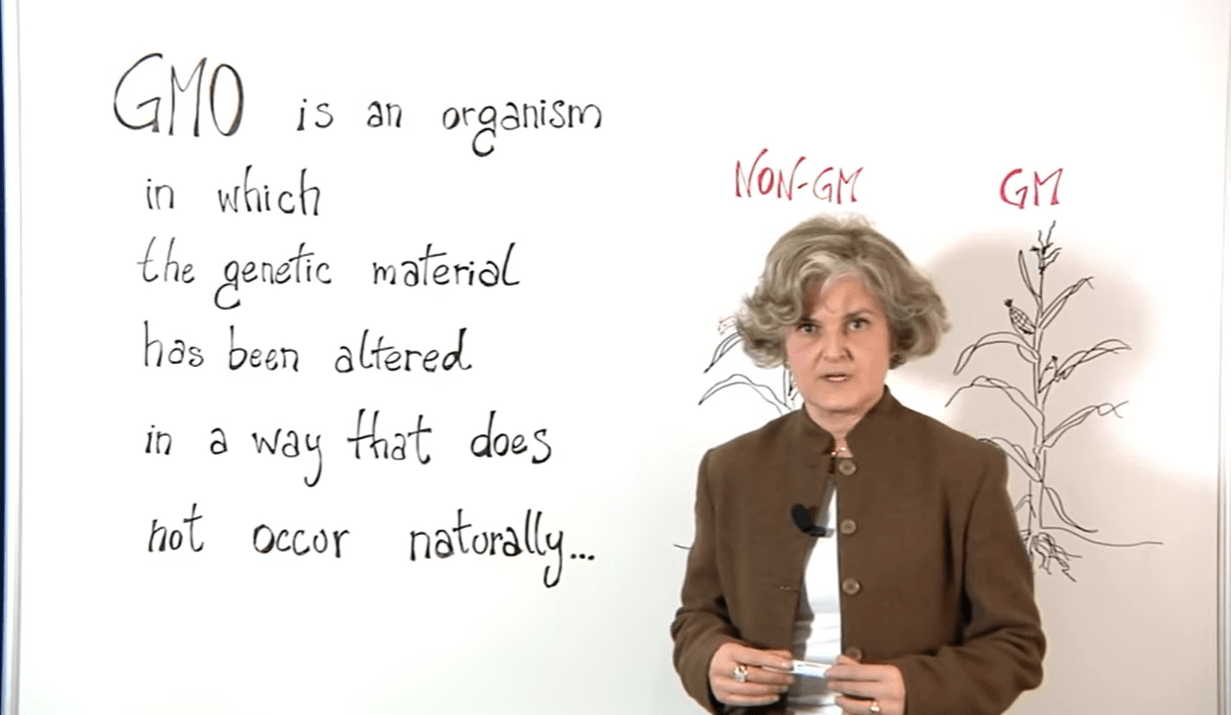
What are GM plants?


Learning the secret language of plants

Pertot and her colleagues hope to practically harness the plant communication process to increase plant resilience, a key element of the EU-funded RhizoTalk project that she worked on. “We’re rapidly developing the molecular tools to understand plant communication, and we do this by monitoring the plant’s gene expressions,” she explains. “It’s essentially like decoding a language. The plant’s genes act as a sort of Rosetta Stone to help guide us.” Once Pertot and her colleagues know the molecular pathway for the production of VOCs, they hope to crack the secret language of plants. Once fluent, scientists could feasibly direct the plant communication process to, for example, better protect them from parasites. Just a slight modification to the plant’s DNA would mean that a parasite wouldn’t be able to recognise the plant as a viable host. That would render pesticides obsolete. “Alongside increasing resilience, the processes behind plant communication could also feasibly provide natural alternatives for many chemically synthesised molecules used to manufacture paints and detergents, alongside pesticides. This will be a big ambition of ours over the next 10 years,” Pertot concludes. So there you have it. Your next walk in the forest may sound tranquil to your ears, but now you know that it’s anything but – the trees may even be talking about you.
Pesticides in food: latest report published


Click here to find out more about Ilaria Pertot’s research: Soil holds secrets to greener pest management

Source: CORDIS — News

Publicaciones relacionadas:

medio ambiente , economía circular , pacto verdeA New Circular Economy Action Plan for a Cleaner and More Competitive Europe GEOTHERMICA, the new European initiative BSO – Tracking energy in our buildings La Comisión Europea aprueba la medida española y portuguesa para reducir el precio de la electricidadEnergy security in the EU New R&T project to improve resilience of cold weather operations

Environmental Affairs,  EU News gene expression,  microbiota,  plants,  RhizoTalk,  VOCs,  volatile organic compounds

“This is a space for debate. All comments, for or against publication, that are respectful and do not contain expressions that are discriminatory, defamatory or contrary to current legislation will be published”.

Reader Interactions

Leave a Reply Cancel reply

Your email address will not be published. Required fields are marked *

This site uses Akismet to reduce spam. Learn how your comment data is processed.

Primary Sidebar

Footer

  • CDE Almería
  • Biblioteca Nicolás Salmerón – Universidad de Almería
  • Planta: 1ª, Despacho: 1.05.0B.
  • Ctra. Sacramento s/n. Almería (Spain)
  • Teléfono: (+34) 950 015266

HOME
NEWS
DOCUMENTATION
EUROPE ON THE NET
ABOUT US

  • LEGAL NOTICE
  • PRIVACY POLICY
  • COOKIE POLICY
  • ACCESSIBILITY
  • SITEMAP

Copyright © 2026 CDE Almería · Creative Commons LicenseThis work is licensed under a Creative Commons Attribution-NonCommercial 4.0 International License.

<p>El Centro de Documentación Europea de la Universidad de Almería utiliza cookies propias y de terceros para facilitar al usuario la navegación en su página Web y el acceso a los distintos contenidos alojados en la misma. Asimismo, se utilizan cookies analíticas de terceros para medir la interacción de los usuarios con el sitio Web. Pinche el siguiente enlace si desea información sobre el uso de cookies y como deshabilitarlas. </p>

Politica de privacidad

El Centro de Documentación Europea de la Universidad de Almería utiliza cookies propias y de terceros para facilitar al usuario la navegación en su página Web y el acceso a los distintos contenidos alojados en la misma. Asimismo, se utilizan cookies analíticas de terceros para medir la interacción de los usuarios con el sitio Web. Pinche el siguiente enlace si desea información sobre el uso de cookies y como deshabilitarlas. <a href="/politica-de-cookies" rel="noopener" target="_blank">Más información</a>

Cookies estrictamente necesarias

Las cookies estrictamente necesarias tiene que activarse siempre para que podamos guardar tus preferencias de ajustes de cookies.

Básicamente la web no funcionara bien si no las activas.

Estas cookies son:

  • Comprobación de inicio de sesión.
  • Cookies de seguridad.
  • Aceptación/rechazo previo de cookies.
Cookies de terceros

Esta web utiliza Google Analytics, Google Tag Manager y Yandex Metrika para recopilar información anónima tal como el número de visitantes del sitio, o las páginas más populares.

Dejar estas cookies activas nos permite mejorar nuestra web.

Política de cookies

Pinche el siguiente enlace si desea información sobre el uso de cookies y como deshabilitarlas. Más información