
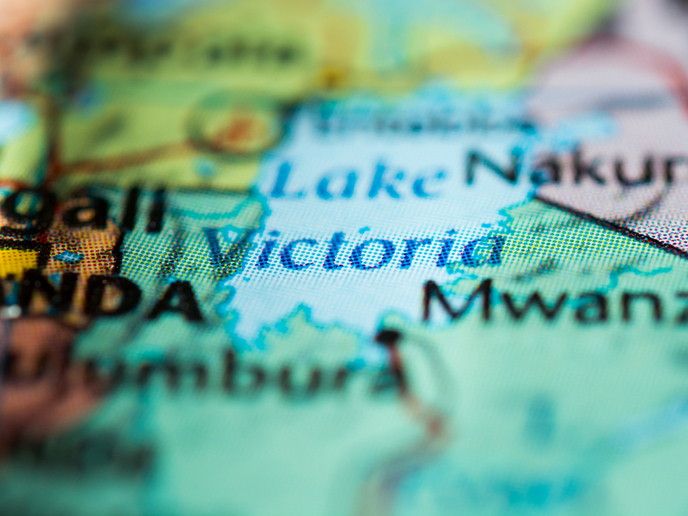
EU-funded researchers have developed a system that helps fish farmers in Lake Victoria while also protecting the environment.
Overfishing, water shortages and pollution – these are just some of the environmental problems Lake Victoria has been facing over the last few decades. Bordered by Kenya, Tanzania and Uganda, the world’s second largest freshwater lake provides the main source of income for the populations living around the Lake Victoria basin. However, the environmental pressures put on the lake have seriously compromised fish farmers’ livelihoods.
The EU-funded VicInAqua project developed a model for more environmentally friendly, sustainable aquaculture that helps fish farmers maintain their livelihoods. Their model was based on recirculating aquaculture systems (RASs), a technology for farming fish that minimises pollution while also securing a higher and more stable fish production with fewer diseases.
RASs use biofilters to treat the water, 90 % to 95 % of which is reused. The technology offers a number of advantages: it uses less water and land, is more eco-friendly, provides waste management control and ensures safe food. A unique element of the VicInAqua project was that the 5 % to 10 % top-up water used in the RASs was treated wastewater. The wastewater was purified in a membrane bioreactor that uses novel self-cleaning membranes.
Pilot hatchery in Kenya
As part of the project, a pilot RAS hatchery running mainly on renewable energy was constructed in Kisumu, Kenya, in early 2019. The facility was developed for hatching tilapia, a freshwater fish that has been very important in traditional, small-scale fishing in Africa and, more recently, in aquaculture. The hatchery had a twofold purpose: it served as a demonstration and training facility, and provided fish farmers with high-quality fingerlings (juvenile fish that have developed scales and working fins). The first fingerlings were distributed to farmers in April.
Although the pilot hatchery’s production capacity was 25 000 fingerlings per month, the system can be adapted to different aquaculture operators’ needs. According to project partners, the more operators using RASs in their hatcheries, the greater the environmental and economic benefits. “If the [RAS] technology is adopted by fish farms or local authorities around Lake Victoria it would reduce pollution loads from the waters getting into the lake. It would also lead to increased production of fish through aquaculture, contributing to improved food security for the lake’s populations,” says Susan Clare Adhiambo of project partner Department of Agriculture, Livestock and Fisheries (DALF, Kenya) of Kisumu County in an article posted on ‘The Fish Site’. “VicInAqua also creates employment as the technology is customised by using locally available materials and resources,” she adds.
VicInAqua (Integrated aquaculture based on sustainable water recirculating system for the Victoria Lake Basin (VicInAqua)) concluded in May 2019. However, the pilot hatchery will continue to be used by DALF, Kisumu County, as a training and demonstration facility to boost aquaculture in the region and increase awareness, knowledge and skills among fish farmers.
For more information
Publicaciones relacionadas:
 Zero hunger and sustainable growth for the fisheries and aquaculture sector
 European Commission launches new tool to strengthen EU’s fight against illegal, unreported and unregulated fishing
 Bringing down the barriers to the uptake of clean energy solutions in Europe
 Sustainable finance: Commission publishes guidelines to improve how firms report climate-related information
 Illegal fishing: EU lifts Taiwan’s yellow card following reforms
Leave a Reply