
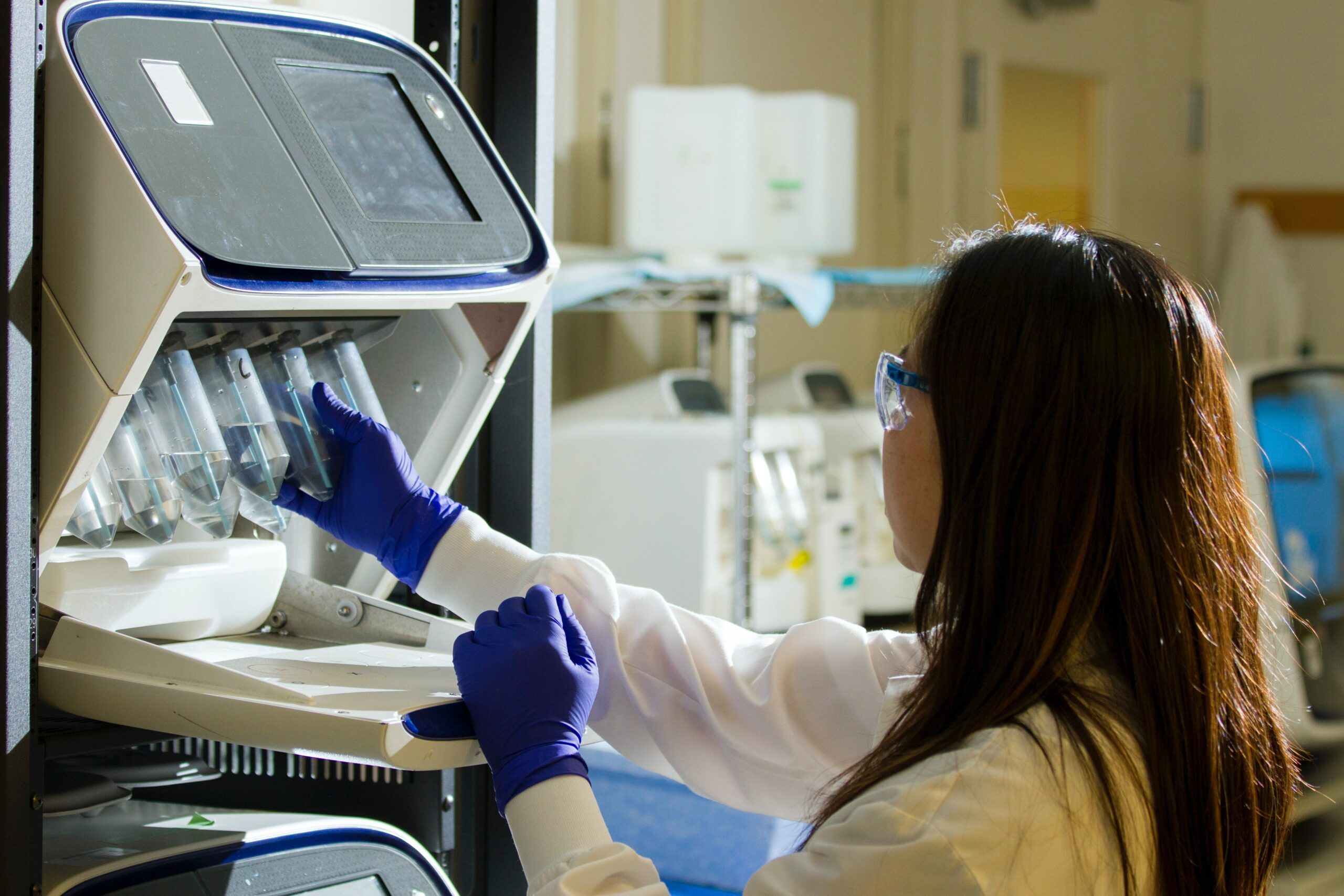
The Clinical Cooperation Unit “Applied Tumor Immunity” is seeking for its Research Group “Translational Research in Immuno-oncology and Microbiome (TRIM)” for the next possible date a PhD Student in the field of Tumor Immunology and Gut Microbiome.
Immunotherapy has led to a paradigm change in systemic tumor therapy. Many patients now benefit from improved survival and sometimes cure. However, there is an urgent need to further improve immunotherapy, as a majority of patients will progress despite treatment. Recent preclinical, translational, and clinical studies demonstrate that the patient’s (gut) microbiome is a major determinant of response to immunotherapy and highlight the potential of microbiome intervention in immuno-oncology.
In the team, they actively integrate translational data, functional assays and preclinical models, to understand and overcome mechanisms of resistance to immunotherapy and chemotherapy, with a focus on gut-related subversion of antitumor immunity. By leveraging this knowledge, they aim to find biomarkers, patient stratification, and innovative treatment combinations.
The research group is embedded in a multidisciplinary team with close connection to the clinic and a bioinformatics team.
They are seeking a highly motivated and result-oriented PhD candidate to join the dynamic research team working on a cutting-edge project focused on investigating how gut microbiota influence resistance to immunotherapy and chemotherapy in colorectal cancer. The successful candidate will be an integral part of a multidisciplinary effort aimed at identifying microbial-derived factors that modulate tumor immunogenicity. They aim to identify and validate novel therapeutic targets and combination strategies to overcome microbiome-driven immune suppression in colorectal cancer.
Duties
- Design and conduct experiments, data collection, and data analysis
- Collaborate with other team members to contribute to ongoing research efforts
- Conduct comprehensive literature reviews to gain an in-depth understanding of the research area and identify knowledge gaps
- Assist in writing research reports, conference abstracts, and scientific papers
- Attend institutional research seminars, consortium meetings, and international conferences, and present research findings to disseminate research outcomes and interact with the scientific community
Anticipated tasks
- Integrate multi-omics datasets (including metabolomics, high-dimensional flow cytometry, and multiplex imaging) to identify key molecular and cellular mechanisms in colorectal cancer (CRC)
- Conduct high-throughput in vitro screening using 2D cell culture systems representing distinct molecular subtypes of CRC, and assess expression profiles via flow cytometry
- Perform in vitro studies using mouse- and patient-derived organoid models, as well as in vivo experiments employing state-of-the-art preclinical systems
Requirements
- Master’s degree in a relevant field, such as cancer biology, immunology, microbiology and infection biology, or related disciplines
- Fulfil all academic requirements set by the DKFZ PhD Program
- Strong background in molecular and cellular biology techniques, including high-dimensional flow cytometry, gene expression analysis, cell culture (2D and 3D), and microbiology
- Experience in metabolomics and data analysis is highly desirable
- Excellent communication and organizational skills, with the ability to work both independently and collaboratively
- Experience in animal experimentation is a plus
- Enthusiasm for onco-immunology and microbiome research and the drive to contribute to scientific advancements
Organisation/Company – Academic Europe.
Field of research –Biological sciences » Biology
Research profile – First Stage Researcher (R1).
Country – Germany.
Application deadline – 19 Dec 2025 – 23:59 (Europe/Berlin).
More information: Euraxess
Publicaciones relacionadas:
 PhD – Human X chromosome regulation – Germany
PhD – Position in microbial ecology and health during the first 1000 days of life – Netherlands
PhD – Human X chromosome regulation – Germany
PhD – Position in microbial ecology and health during the first 1000 days of life – Netherlands
 PhD – Clinical-translational neuroimmunology of Parkinson’s disease – Belgium
 PhD – Molecular Medicine – Norway
 PhD – Non-invasive monitoring and prediction of cancer evolutionary dynamics from cfDNA- United Kingdom
Leave a Reply