
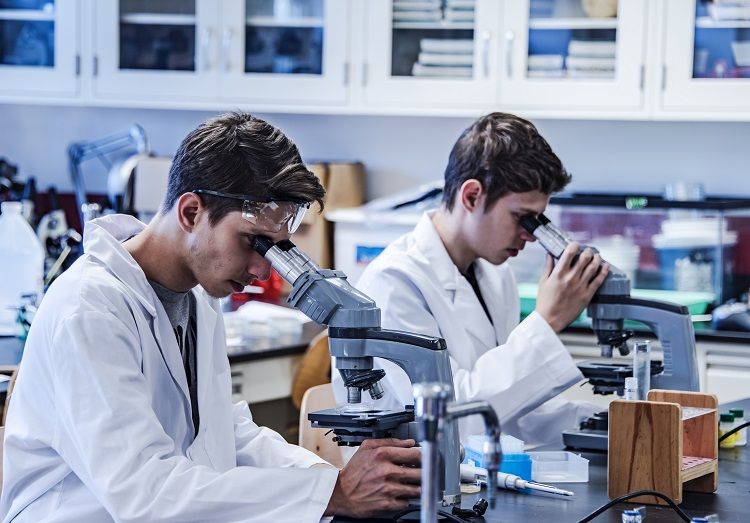
LMU Munich is one of Europe’s leading research institutions. Scientists from all over the world encounter excellent conditions for their work in their own research field and in interdisciplinary networks alike.
This PhD project builds upon an ongoing collaboration between groups in Mainz (Schweiger lab) and Basel (Keller Valsecchi lab) to investigate the molecular mechanisms controlling gene reactivation during development. Using human induced stem cell models with fluorescent reporters and high-throughput screening approaches, we aim to identify key regulatory factors and distinguish between gene-specific and global mechanisms governing X chromosome dynamics. This research opens the way to elucidate its contribution to female-biased disease along developmental trajectories.
Duties
- Design and execute imaging-based high-throughput screening experiments
- Develop, optimize cellular assays and CRISPR engineering using human iPS stem cell models and differentiation systems (2D or organoids)
- Perform functional validation of candidate hits using molecular biology techniques and smFISH.
- Conduct multi-omics data integration across experimental platforms (e.g. NGS, Imaging time lapse, particle tracing)
- Collaborate with interdisciplinary research teams and external partners in Basel (CH) and Mainz (DE)
- Mentor undergraduate and Master’s students in laboratory techniques.
- Maintain detailed experimental records
- Effective time management with flexibility
- Present findings at lab meetings, conferences, and in peer-reviewed publications
Requirements
- A Master’s degree (or comparable) in biology, biochemistry, molecular biology, biomedical sciences, medicine, or related natural science disciplines.
- A high degree of responsibility and a proven record of teamwork (e.g. biologist-bioinformatician, clinicians-biochemist)
- Experience with cell culture techniques is highly desirable and knowledge of basic microscopy methods is an advantage.
- Interest and/or experience in working at the interface between wet and dry lab is a plus.
- Interest in working independently on scientific questions.
- Organizational skills, a high work ethic, flexibility, curiosity, and a passion for research.
Benefits
- An exciting project in a young, well-equipped and modern laboratory.
- Creative working conditions in a top world-wide research environment.
- Mentorship for career development for both academic and industry path
- LMU Gateway support in all matters relating to the move to Munich [for international PhD students]
- Participation at conferences and in international research projects
- Many opportunities to help shape our BMC initiatives (e.g. BMC Green Lab, Public Outreach and BMC working group diversity and inclusion)
- Free parking and good public transportation connections
- Compatibility of family and science (e.g. kindergarten on campus and emergency child care)
- Numerous LMU employee benefits, e.g. discounted fitness and cultural offers, job public transport ticket, Jobbike as well as several canteens and excellent cafés on campus
- Annual special payment, 30 days of vacation and additional pension scheme
Organization/Company – Biomedical Center, LMU Munich.
Research field – Biological sciences » Biology.
Research profile – First Stage Researcher (R1).
Country – Germany.
Application Deadline – 1 Nov 2025 – 23:55 (Europe/Berlin)
More information: Euraxess.
Publicaciones relacionadas:
 PhD – Clinical-translational neuroimmunology of Parkinson’s disease – Belgium
 Computational protein design/engineering scientist
 PhD – Position in microbial ecology and health during the first 1000 days of life – Netherlands
 PhD – Fellowship in Cancer Nanomedicine – Norway
 PhD – fellowship in Health Sciences with a focus on immigrant health – Norway
Leave a Reply