• Skip to primary navigation
  • Skip to main content
  • Skip to primary sidebar
  • Skip to footer
  • Bluesky
  • Facebook
  • Instagram
  • Twitter
  • YouTube
CDE Almería – Centro de Documentación Europea – Universidad de Almería

CDE Almería - Centro de Documentación Europea - Universidad de Almería

Centro de Documentación Europea de la Universidad de Almería

  • HOME
  • WHAT´S ON
    • EU NEWS
    • Activities
    • EU Calls and Awards
    • Radio Program «Europe with You»
  • DOCUMENTATION
    • EU Media Collection
      • Web Space
      • MEDIATHEQUE REPOSITORY
  • Europe on the net
    • Institutions
    • EU Representation in Spain
    • European information network of Andalusia
  • ABOUT US
    • Presentation
    • Services
    • People
    • Contact
  • Spanish
  • English

New funding for additional European Universities alliances will boost cooperation in higher education

Inicio » EU News » Education and Culture » Teaching and Education » New funding for additional European Universities alliances will boost cooperation in higher education

28 de June de 2024

The Commission announced the results of the 2024 Erasmus+ call for the European Universities initiative, which provides support to alliances of higher education institutions. With today’s results, 14 new European Universities alliances are joining the 50 previously selected alliances and will receive up to €14.4 million each over a period of four years.
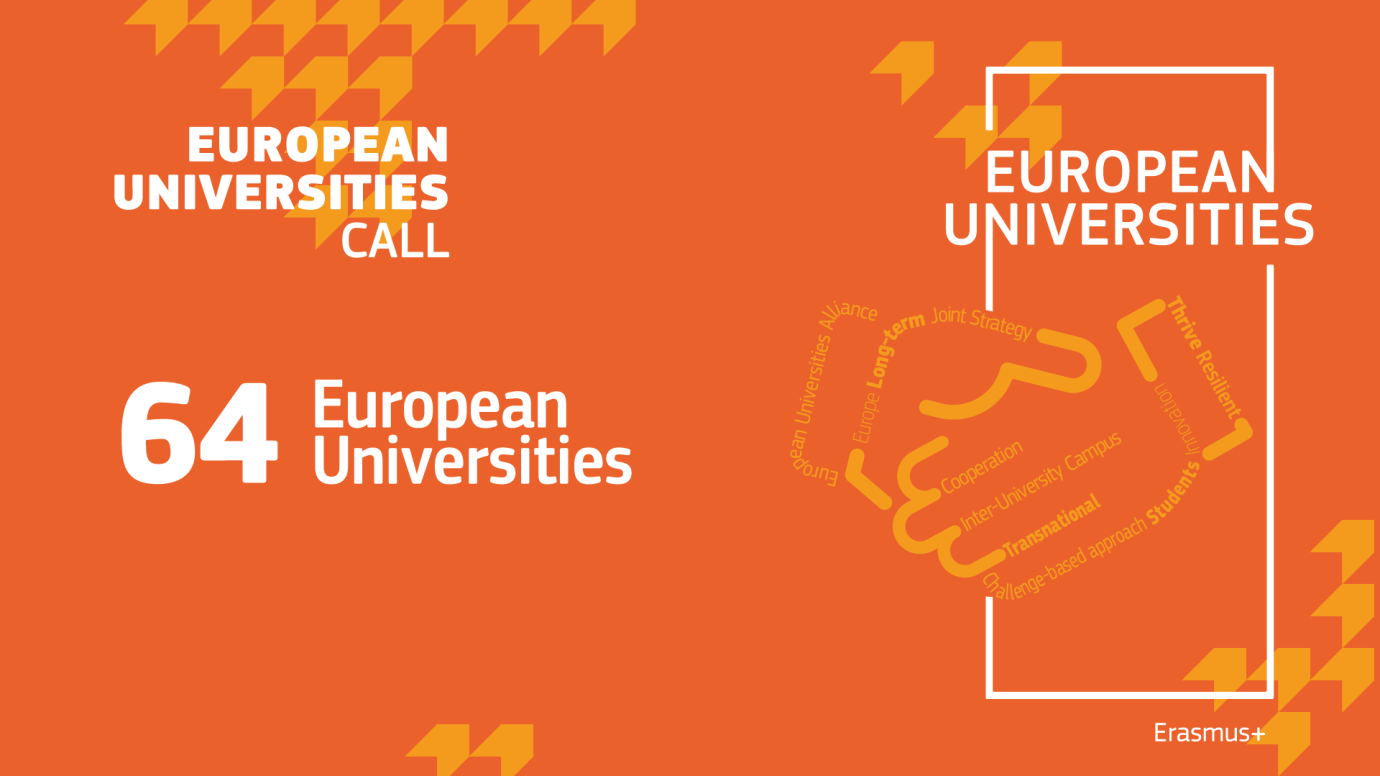
These 64 European Universities alliances encompass more than 560 higher education institutions of all types, across all regions of Europe.

The results mark an important milestone, achieving the European strategy for universities‘ goal to have at least 60 European Universities alliances with more than 500 universities involved by mid-2024.

The European Universities alliances bring together a new generation of Europeans and allow them to study and work in different European countries, in different languages, and across sectors and academic disciplines. Students can obtain a high-level degree by combining studies in several European countries, contributing to the international attractiveness and competitiveness of Europe’s higher education. These alliances also bring innovation to Europe’s regions by allowing students to work together with academics, researchers, enterprises, cities, authorities, and civil society organisations.

The 64 alliances span 35 countries, including all EU Member States, as well as Albania, Bosnia and Herzegovina, Iceland, Montenegro, the Republic of North-Macedonia, Norway, Serbia, and Türkiye. They are solidly anchored in communities and innovation networks, bringing together almost 2200 associated partners ranging from non-governmental organisations to enterprises, cities, local and regional authorities, and higher education institutions from the Bologna Process countries. For example, almost 40 higher education institutions from Ukraine are associated partners.

The 2024 Erasmus+ call for proposals also supports the set-up of a Community of Practice for European Universities, reinforcing peer learning between the alliances and boosting dissemination of reusable results and models within the wider higher education sector.

The 14 new alliances of European Universities and the Community of Practice for European Universities will start their activities in autumn this year.

The Commission will continue supporting the European Universities alliances and any other type of partnership between higher education institutions to deliver joint degree programmes more easily, as also outlined in the blueprint for a European degree presented in March 2024.

The Commission announced the results of the 2023 Erasmus+ call for the European Universities initiative

Background

The European Universities initiative supports transnational alliances of, on average, nine higher education institutions that can include different types of establishments, such as comprehensive and research universities, universities of applied sciences, institutes of technology, schools of arts and higher vocational education and training institutions. These higher education institutions develop a long-term structural, sustainable, and systemic cooperation on education, in synergy with research and innovation, across borders, and contribute to solving societal challenges. They offer curricula jointly delivered across inter-university campuses, on which students, staff, and researchers from all parts of Europe can enjoy seamless mobility.

The Commission proposed the European Universities initiative to EU leaders ahead of the Gothenburg Social Summit in November 2017, as part of an overall vision for the creation of a European Education Area by 2025. Presented in 2022, the European strategy for universities sets out the ambition to support at least 60 European Universities alliances involving more than 500 higher education institutions by mid-2024. For this, a record €1.1 billion under Erasmus+ is foreseen during the current programming period 2021-2027. Support for the research dimension of European Universities alliances can be sought under the European Excellence initiative under Horizon Europe.

The 2024 Erasmus+ European Universities call was structured around two strands. It offered support to the creation of new European Universities alliances across Europe, gathering diverse higher education institutions around common strategic visions, as well as the creation of a Community of Practice for European Universities alliances.

More Information: European Commission

European Universities Erasmus+ call 2024: results

European Universities Initiative

European strategy for universities

European Degree Higher Education package

Factsheet

Publicaciones relacionadas:

Model European Union 2022 in South Korea concludes with selection of top performing students European Commission adopts two proposals to promote digital education and digital skills provision Foreign language learning increases among EU students EU Higher Education Ministers discuss Diploma mobility in the EU Early school leavers: Spain has the second highest rate in the European Union in 2023




Education and Culture,  EU News,  Teaching and Education European Union,  European Universities

“This is a space for debate. All comments, for or against publication, that are respectful and do not contain expressions that are discriminatory, defamatory or contrary to current legislation will be published”.

Reader Interactions

Leave a Reply Cancel reply

Your email address will not be published. Required fields are marked *

This site uses Akismet to reduce spam. Learn how your comment data is processed.

Primary Sidebar

Footer

  • CDE Almería
  • Biblioteca Nicolás Salmerón – Universidad de Almería
  • Planta: 1ª, Despacho: 1.05.0B.
  • Ctra. Sacramento s/n. Almería (Spain)
  • Teléfono: (+34) 950 015266

HOME
NEWS
DOCUMENTATION
EUROPE ON THE NET
ABOUT US

  • LEGAL NOTICE
  • PRIVACY POLICY
  • COOKIE POLICY
  • ACCESSIBILITY
  • SITEMAP

Copyright © 2026 CDE Almería · Creative Commons LicenseThis work is licensed under a Creative Commons Attribution-NonCommercial 4.0 International License.

<p>El Centro de Documentación Europea de la Universidad de Almería utiliza cookies propias y de terceros para facilitar al usuario la navegación en su página Web y el acceso a los distintos contenidos alojados en la misma. Asimismo, se utilizan cookies analíticas de terceros para medir la interacción de los usuarios con el sitio Web. Pinche el siguiente enlace si desea información sobre el uso de cookies y como deshabilitarlas. </p>

Politica de privacidad

El Centro de Documentación Europea de la Universidad de Almería utiliza cookies propias y de terceros para facilitar al usuario la navegación en su página Web y el acceso a los distintos contenidos alojados en la misma. Asimismo, se utilizan cookies analíticas de terceros para medir la interacción de los usuarios con el sitio Web. Pinche el siguiente enlace si desea información sobre el uso de cookies y como deshabilitarlas. <a href="/politica-de-cookies" rel="noopener" target="_blank">Más información</a>

Cookies estrictamente necesarias

Las cookies estrictamente necesarias tiene que activarse siempre para que podamos guardar tus preferencias de ajustes de cookies.

Básicamente la web no funcionara bien si no las activas.

Estas cookies son:

  • Comprobación de inicio de sesión.
  • Cookies de seguridad.
  • Aceptación/rechazo previo de cookies.
Cookies de terceros

Esta web utiliza Google Analytics, Google Tag Manager y Yandex Metrika para recopilar información anónima tal como el número de visitantes del sitio, o las páginas más populares.

Dejar estas cookies activas nos permite mejorar nuestra web.

Política de cookies

Pinche el siguiente enlace si desea información sobre el uso de cookies y como deshabilitarlas. Más información