
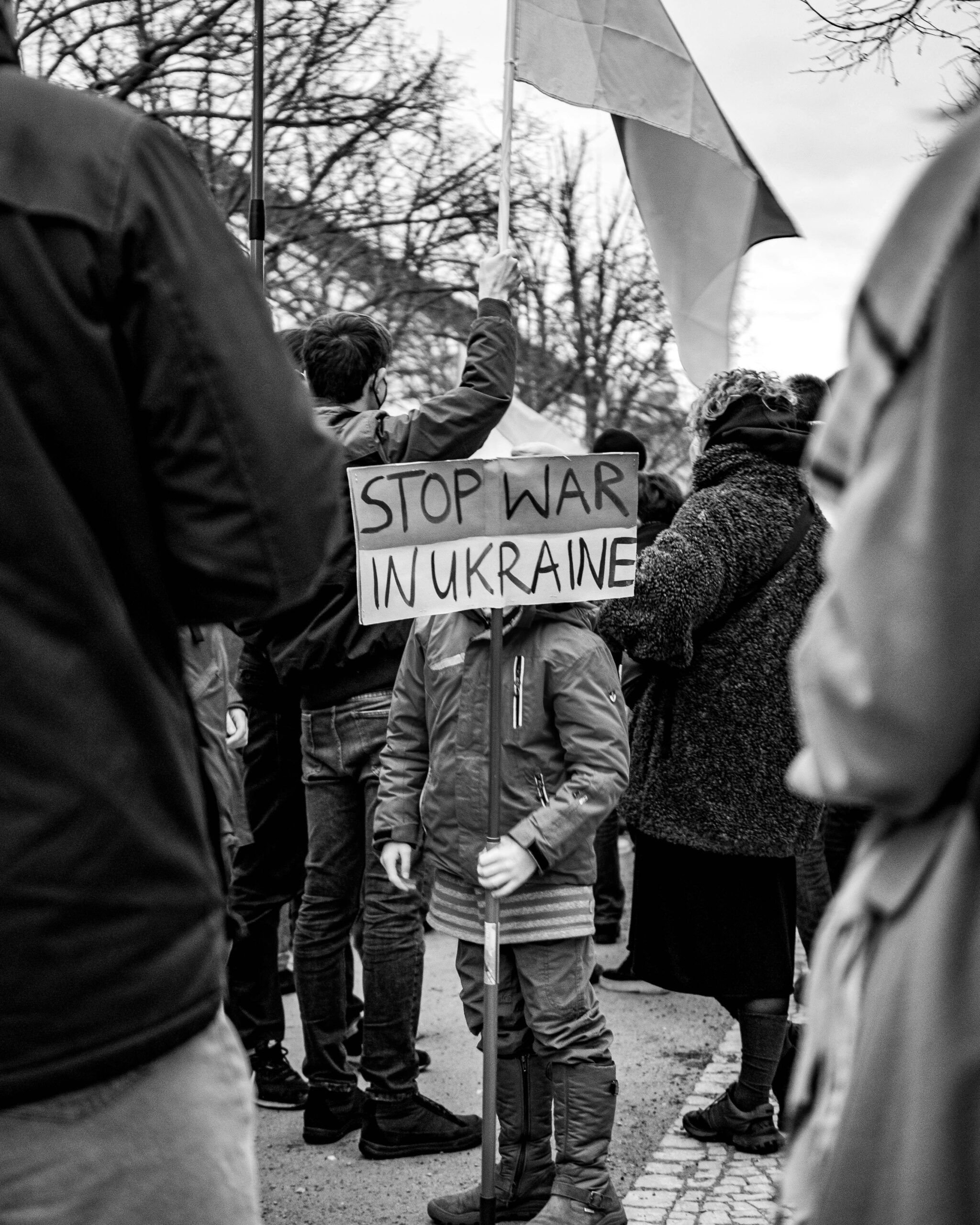
As Russia’s war of aggression continues to devastate Ukraine, approximately 12.7 million people are in need of urgent assistance. New European Commission funding will be used to provide life-saving support and ensure that essential aid reaches the most vulnerable populations in Ukraine.
The €148 million in new funding will continue to support vital humanitarian aid in both Ukraine and Moldova, and will bring the total of humanitarian aid allocated by the European Commission to over €1.1 billion. Of the new package:
- €140 million is allocated for humanitarian projects in Ukraine. The funding will be directed towards emergency assistance, including food, shelter, clean water, healthcare, and winter protection. Key priorities are supporting vulnerable populations in the heavily war impacted regions of eastern and southern Ukraine.
- €8 million is allocated for humanitarian projects in Moldova. Support will focus on aiding Ukrainian refugees and Moldovan host communities, prioritising cash assistance, access to critical services like healthcare and education, and psychosocial support.
Today, Commissioner for Preparedness, Crisis Management and Equality Hadja Lahbib is visiting Ukraine to reinforce the EU’s ongoing efforts to provide critical assistance. During the visit, Commissioner Lahbib is expected to meet with key Ukrainian leaders, including President Volodymyr Zelensky and senior officials, to discuss urgent humanitarian challenges and the strategic allocation of EU aid. She will also meet with beneficiaries of EU humanitarian aid and local partners.
Prior to arriving in Kyiv, Commissioner Lahbib already visited the EU Medevac hub in Rzeszów, which assists the Civil Protection Mechanism medical evacuations of critically ill patients from Ukraine and neighbouring countries. Some 4,000 patients have been transferred to European hospitals for treatment since system was set up in March 2022.
Since the beginning of the Russian aggression, the EU has been coordinating its largest ever operation under the EU Civil Protection Mechanism, delivering more than 150,000 tonnes of in-kind assistance into Ukraine. The EU has also deployed assistance from its rescEU stockpiles, including, power generators, medical equipment, temporary shelters, and water treatment stations to Ukraine.
Background
The EU has been providing humanitarian aid to Ukraine since the conflict began in 2014, addressing the needs of vulnerable communities in the country. Following Russia’s full-scale invasion in February 2022, the EU significantly scaled up its response to tackle the unprecedented humanitarian challenges caused by the war. While Russia’s ongoing aggression continues to seriously endanger civilian lives and severely damage critical infrastructures the EU remains deeply concerned about Russia’s violations of international humanitarian law.
In response, the EU has mobilised all available resources to deliver emergency assistance. To date, the European Commission has allocated over €1.1 billion for humanitarian aid, including today’s €148 million. Of this funding, €1.09 billion has been allocated for humanitarian programmes within Ukraine and €84 million to support refugees who have fled to neighbouring Moldova.
In addition to its humanitarian aid operations, the EU has been coordinating its largest ever operation under the EU Civil Protection Mechanism by delivering more than 150,000 tonnes of in-kind assistance into Ukraine, such as ambulances, fire engines, medicines, shelter supplies, power generators, and much more.
For extra layer of crisis support, the EU has also deployed its own rescEU emergency stockpiles to send power generators, medical equipment, temporary shelter, and specialised equipment for public health risks such as chemical, biological, radiological, and nuclear threats.
More information: European Commission.
Publicaciones relacionadas:
 EU launches call for EU companies to invest in Ukraine recovery and reconstruction
 Parliament calls for an EU crackdown on Russia’s ’shadow fleet’
 Parliament condemns Russia’s brutal attacks on Ukrainian civilians
 EU adopts new measures against Russian shadow fleet ecosystem and Belarus
 Commission presents a financial support package for Ukraine for 2026–2027
Leave a Reply