• Skip to primary navigation
  • Skip to main content
  • Skip to primary sidebar
  • Skip to footer
  • Bluesky
  • Facebook
  • Instagram
  • Twitter
  • YouTube
CDE Almería – Centro de Documentación Europea – Universidad de Almería

CDE Almería - Centro de Documentación Europea - Universidad de Almería

Centro de Documentación Europea de la Universidad de Almería

  • HOME
  • WHAT´S ON
    • EU NEWS
    • Activities
    • EU Calls and Awards
    • Radio Program «Europe with You»
  • DOCUMENTATION
    • EU Media Collection
      • Web Space
      • MEDIATHEQUE REPOSITORY
  • Europe on the net
    • Institutions
    • EU Representation in Spain
    • European information network of Andalusia
  • ABOUT US
    • Presentation
    • Services
    • People
    • Contact
  • Spanish
  • English

MEPs want more ambitious EU support for outermost regions

Inicio » EU News » Institutional Affairs » MEPs want more ambitious EU support for outermost regions

15 de June de 2023

With 589 votes against 22 and 16 abstentions, MEPs adopted their position on Commission´s strategy for outermost regions.
Individual action plans and resources

Parliamentarians want EU policy to focus more on competitiveness and provide for a tailor-made approach reflecting the needs of each outermost region as current policies do not consider their specificities sufficiently. They believe it requires better coordination between local, regional, national and EU levels.

MEPs want the Commission to come up with a series of tailored-made action plans to implement this strategy and support it with adequate financial resources. In the current crisis and inflation-ridden context, MEPs want to adjust state aid rules for outermost regions and increase aid thresholds to reflect additional operating costs faced by enterprises in these areas. They also want the Commission to examine special treatment of outermost regions when it comes to state aid for airport, port and road infrastructure to enhance regional mobility.

Investing in people

Outermost regions face geographical challenges such as remoteness, small size or harsh climate, which are coupled with negative social and economic consequences. These include high levels of unemployed young people and early school leavers, more people at risk of poverty and lower GDP per inhabitant. Investments in people should address these issues. MEPs urge the Commission and the member states to ensure access to essential services in the outermost regions and call on them to use funds available under Multiannual Financial Framework (MMF) 2021-2027 and Recovery and Resilience Facility (RRF) to fight youth unemployment and brain drain. Commission should also come up with training and skills development activities, motivating young people to work in traditional sectors such as agriculture and fisheries. MEPs also want to maintain compensatory POSEI scheme in agriculture, helping these regions to overcome their challenges, while extending it to fisheries, transport, energy and other sectors.

Sustainable tourism and space activities

Besides blue and circular economy, MEPs also support sustainable tourism in the outermost regions, balancing tourism development with biodiversity protection. They call on the Commission to set up a European Tourism Agency with offices in each of the outermost regions’ geographical areas, while supporting pilot projects for outermost destinations in the tourism sector. Given the outermost regions´ vulnerability to climate change and natural disasters, MEPs suggests to consider creation of an EU Climate Change Adaptation Fund to help prepare their infrastructure and improve their resilience to climate shocks.

Council agrees on new migration and asylum rules

The text of the report also states that outermost regions have both location and infrastructure to ensure EU’s access to space. MEPs call on the Commission to support national plans to relaunch space activities and coordinate between EU funds for space policy and regional development. This should provide support to ecosystems developing around the infrastructures in French Guiana and the Azores while boosting research and innovation in the outermost regions.

Background

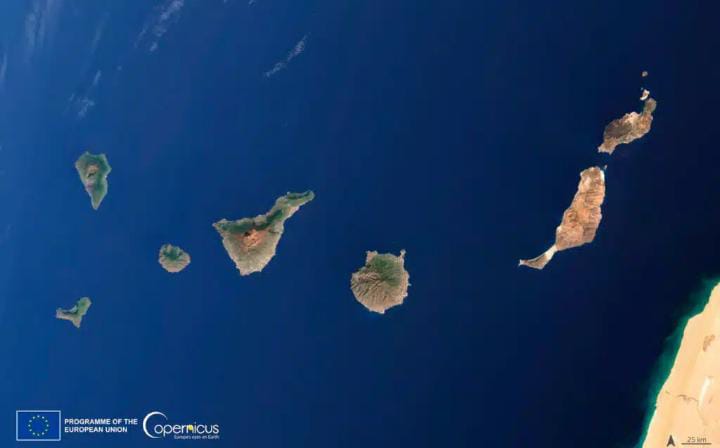
Treaty on the Functioning of the European Union (article 349) provides for specific supportive measures for EU outermost regions such as tailored application of EU law and access to EU programmes. There are nine EU territories with this special status located in the Atlantic and Indian Oceans, in the Caribbean basin and in South America, including Guadeloupe, French Guiana, Martinique, Mayotte, Réunion and Saint-Martin (France), the Azores and Madeira (Portugal) and the Canary Islands (Spain).

More information: European Parliament

Publicaciones relacionadas:

EU-US: A new transatlantic agenda for global change EU statements on trials and sentences in Cuba UE en 202210 milestones of 2022 in the European Union EU and Argentina step up cooperation on raw materials Get involved in the State of the European Union – 16 September 2020

EU News,  Institutional Affairs Canarias,  EU,  European Union,  outermost regions,  Unión Europea

“This is a space for debate. All comments, for or against publication, that are respectful and do not contain expressions that are discriminatory, defamatory or contrary to current legislation will be published”.

Reader Interactions

Leave a Reply Cancel reply

Your email address will not be published. Required fields are marked *

This site uses Akismet to reduce spam. Learn how your comment data is processed.

Primary Sidebar

Footer

  • CDE Almería
  • Biblioteca Nicolás Salmerón – Universidad de Almería
  • Planta: 1ª, Despacho: 1.05.0B.
  • Ctra. Sacramento s/n. Almería (Spain)
  • Teléfono: (+34) 950 015266

HOME
NEWS
DOCUMENTATION
EUROPE ON THE NET
ABOUT US

  • LEGAL NOTICE
  • PRIVACY POLICY
  • COOKIE POLICY
  • ACCESSIBILITY
  • SITEMAP

Copyright © 2026 CDE Almería · Creative Commons LicenseThis work is licensed under a Creative Commons Attribution-NonCommercial 4.0 International License.

<p>El Centro de Documentación Europea de la Universidad de Almería utiliza cookies propias y de terceros para facilitar al usuario la navegación en su página Web y el acceso a los distintos contenidos alojados en la misma. Asimismo, se utilizan cookies analíticas de terceros para medir la interacción de los usuarios con el sitio Web. Pinche el siguiente enlace si desea información sobre el uso de cookies y como deshabilitarlas. </p>

Politica de privacidad

El Centro de Documentación Europea de la Universidad de Almería utiliza cookies propias y de terceros para facilitar al usuario la navegación en su página Web y el acceso a los distintos contenidos alojados en la misma. Asimismo, se utilizan cookies analíticas de terceros para medir la interacción de los usuarios con el sitio Web. Pinche el siguiente enlace si desea información sobre el uso de cookies y como deshabilitarlas. <a href="/politica-de-cookies" rel="noopener" target="_blank">Más información</a>

Cookies estrictamente necesarias

Las cookies estrictamente necesarias tiene que activarse siempre para que podamos guardar tus preferencias de ajustes de cookies.

Básicamente la web no funcionara bien si no las activas.

Estas cookies son:

  • Comprobación de inicio de sesión.
  • Cookies de seguridad.
  • Aceptación/rechazo previo de cookies.
Cookies de terceros

Esta web utiliza Google Analytics, Google Tag Manager y Yandex Metrika para recopilar información anónima tal como el número de visitantes del sitio, o las páginas más populares.

Dejar estas cookies activas nos permite mejorar nuestra web.

Política de cookies

Pinche el siguiente enlace si desea información sobre el uso de cookies y como deshabilitarlas. Más información