
On Wednesday, the Civil Liberties Committee endorsed plans to gradually roll out the Entry-Exit System (EES) at the EU’s external borders.
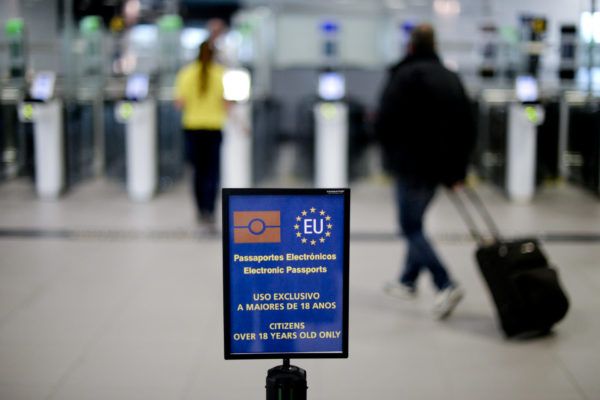
Civil Liberties Committee MEPs adopted a draft position on the proposed gradual launch of the Entry-Exit System (EES) at EU external borders by 54 votes in favour, 2 against and with 10 abstentions. Once operational the system will register data of third‑country nationals, including biometric data such as facial images and fingerprints, as they enter and leave the Schengen area on short-stay visas. This is intended to improve security, speed up the process, and reduce queues.
By launching the system gradually, and allowing member states to start operating it in stages, it should be possible to prevent a simultaneous launch everywhere from compromising the system’s resilience. During the roll-out period, the launch could be temporarily suspended if waiting times become too long or there are technical issues, says the Committee report.
Roll-out over 180 days
According to the proposed legislation, the Commission will decide when to commence a 180-day period during which EU countries will begin the incremental implementation of the EES at their borders. On day one of this period, at least 10% of border crossings would have to be registered in the new system, followed by up to 50% by day 90, and 100% by the end of the 180 days.
In their amendments to the Commission’s proposal, Committee MEPs underline that member states should be free to decide whether to roll the system out gradually or all at once. They propose that if EU countries do opt to implement the EES in stages, then they should enjoy more flexibility in reaching certain milestones – namely, 10% of border crossings registered in the system to be achieved by day 30 (instead of day one), and 35% (instead of 50%) by day 90.
MEPs also want to include contingency procedures for the central EES system, and recommend that neither the start nor the end of the gradual roll-out period should coincide with peak travel seasons, i.e. June-August and December-February.
Quote
After the vote, rapporteur Assita Kanko (ECR, Belgium) said: “The purpose of the Entry-Exit System is to make EU citizens safer. In the eight years since the EES legislation was adopted, security threats have only increased, meaning that the system is now more important than ever. Unfortunately, the system is still not operational, as not all member states are as yet ready for its full launch. With this gradual roll-out, we aim to get the system up and running as soon as realistically possible, and I’m glad about the broad support in Parliament for my position.“
Next steps
The Committee voted to authorise negotiations with the Council on the final shape of the legislation by 60 in favour, 3 against, and 3 abstentions. The EP draft negotiating position will be announced at a future plenary session. If no objection is raised, negotiations can begin.
Background
The Entry-Exit System (EES) is one of the EU’s interoperable databases for border management and security. Once it is fully operational, physical stamping of passports will be replaced by entries in the EES, to be accessible for real-time consultation by other Schengen area member states, in line with their security needs. The EES has been developed by the European Union Agency for the Operational Management of Large-Scale IT Systems in the Area of Freedom, Security and Justice (eu-LISA).
The system will mark the first time that biometric data, including fingerprints and facial images, are collected systematically at EU external borders. It is expected to reduce violations of entry rules.
More information: European Parliament
Publicaciones relacionadas:
 MEPs will discuss transatlantic relations with US counterparts
 Three Spanish petitions to be discussed at the Petitions Committee
 EASO operations expand to all major EU countries of first arrival
 Breaches of EU values: how the EU can act
 Corruption scandal: MEPs insist on reforms for transparency and accountability
Leave a Reply