
On 26 May, the European Committee of the Regions joined Ukrainian and European local leaders in Kyiv to highlight the vital role played by cities and regions in ensuring that Ukraine remains resilient in the face of Russian attacks, as well as their importance in the country’s recovery and integration into the EU.
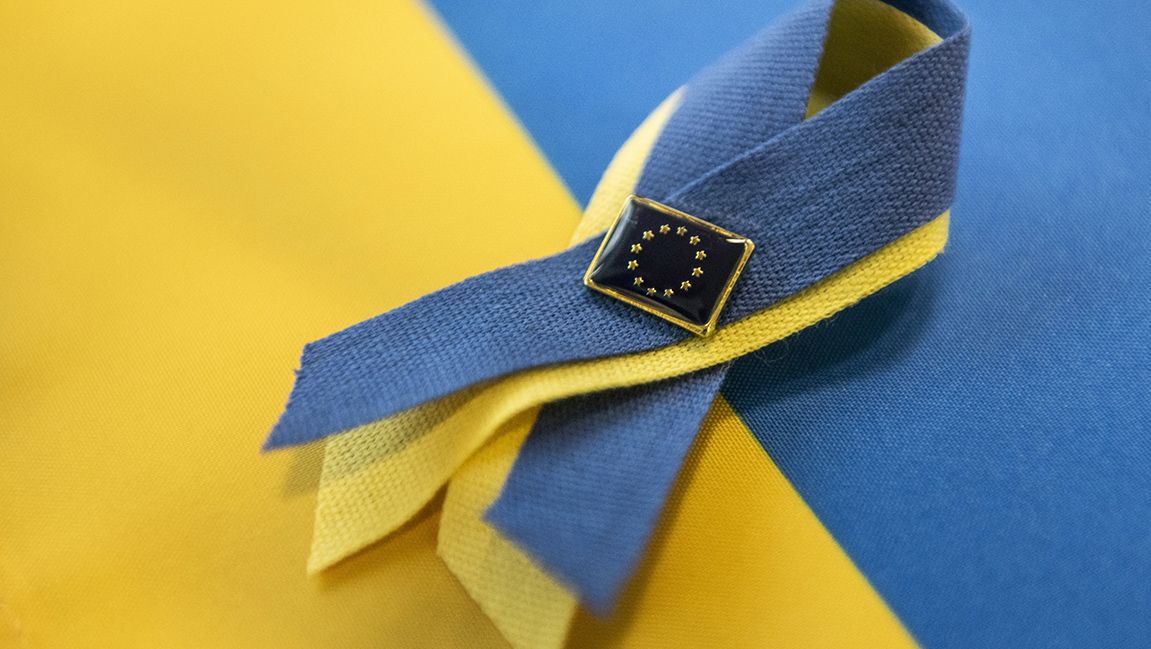
The meeting, the 4th International Summit of Cities and Regions, took place the day after one of the largest Russian attacks of the war. At the opening of the summit, whose theme was “Partnership. Resilience. Preparedness”, President Volodymyr Zelensky awarded the honorary title of Rescuer City to several cities, including Gdańsk, which will host the Ukraine Recovery Conference (URC) on 25 and 26 June.
Speaking on behalf of the URC host city and the European Committee of the Regions, the Mayor of Gdańsk, Aleksandra Dulkiewicz (PL/EPP), emphasised the importance of partnerships between municipalities and regions, arguing that resilience is built on trust.
The Kyiv summit was a major political and operational milestone leading up to the URC, bringing together senior representatives of the Ukrainian government, MPs, ministers, mayors, regional leaders and international partners. The event focused on how cities and regions can contribute to Ukraine’s recovery, strengthen life-support systems, bolster territorial security, improve energy resilience and support the rehabilitation and reintegration of veterans.
It reaffirms that local and regional authorities must be fully involved in shaping recovery priorities, implementing reforms and building the partnerships necessary for Ukraine’s resilience and long-term future in Europe.
Throughout the day, it became clear that Ukraine’s resilience depends not only on the emergency response, but also on long-term systemic transformation based on capable local and regional authorities. Speakers highlighted the importance of international cooperation, decentralised governance and practical partnerships between Ukrainian and European territories.
In the panel on the resilience of life-support systems, in which Aleksandra Dulkiewicz participated, the discussion focused on how Ukraine’s recovery must move from emergency response to a systemic transformation based on multi-level governance, trust and a clear division of responsibilities between central and local authorities. Participants emphasised that local and regional authorities are best placed to identify vulnerabilities in essential services such as water, heating and transport, and that Ukraine’s reconstruction must follow a ‘resilience by design’ approach based on decentralised infrastructure, green and digital solutions, transparent and fair access to funding, and greater citizen participation. The debate also highlighted that Ukraine’s local resilience is a shared European asset and that partnerships between cities and regions are fundamental both for reconstruction and for Europe’s own preparedness.
During the summit, Patrick Molinoz, a member of the European Committee of the Regions and Vice-President of the Bourgogne-Franche-Comté Region, emphasised the growing importance of territorial cooperation for Ukraine’s recovery and its path towards the European Union. On behalf of the CoR, he highlighted support for greater cooperation between the EU and Ukraine through practical partnerships between regions and cities.
At the side event on the Carpathian Integration Initiative, he highlighted the Carpathian region as a strategic area for macro-regional development, practical partnerships and better use of EU instruments such as Interreg.
The summit concluded with the signing of international territorial cooperation agreements and the adoption of a declaration setting out common ambitions regarding partnership, resilience and preparedness. For the CoR, these priorities remain fundamental to ensuring that Ukraine’s reconstruction is inclusive, locally driven and rooted in democratic local self-government.
Further information: European Committee of the Regions.
Publicaciones relacionadas:
 The European Union and Central Asia establish a Strategic Partnership during groundbreaking summit
 The first EU-Egypt summit will be held in Brussels on 22 October
 EU Leaders move forward on Ukraine, defence and competitiveness during European Council summit
 EU and Jordan deepen partnership with first-ever Summit
 President Ursula von der Leyen in Uzbekistan to take the EU-Central Asia partnership to the next level
Leave a Reply