
The European Commission, on behalf of the European Union, has acceded to the Expanded Partial Agreement of the Special Tribunal for the Crime of Aggression against Ukraine, a document setting out the institutional, financial and administrative arrangements of the Special Tribunal. Following this decision, participating states and organisations will be able to ratify the Convention, which will formally establish the Special Tribunal. This Tribunal will have the power to investigate and prosecute senior Russian political and military leaders for the crime of aggression against Ukraine.
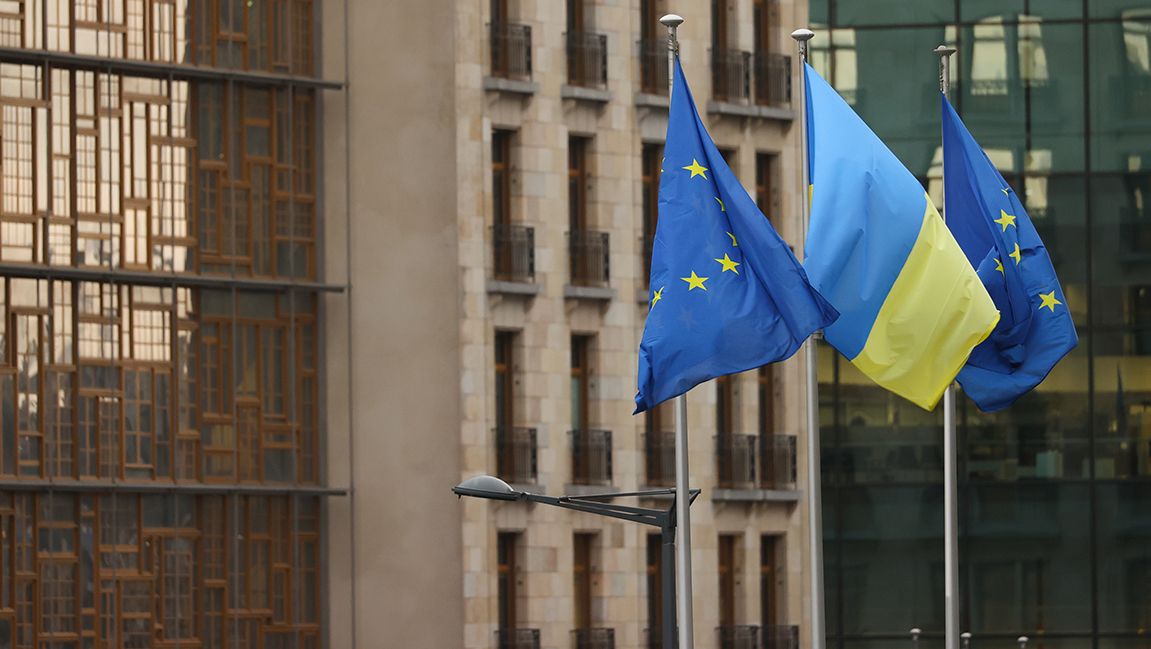
The Commission ratified, on behalf of the EU, the Convention establishing the International Claims Commission for Ukraine. This body, of which the EU is a founding member, will be responsible for examining, assessing and determining claims for compensation for the damage, losses and harm caused by Russia to Ukraine and the Ukrainian people. It will also determine the amount of compensation in each case. The Claims Commission will be able to commence its work once it has received 25 ratifications with sufficient financial contributions.
The Commission is funding the establishment of the Claims Commission and the Special Tribunal to ensure they are fully operational once they come into force. This includes€10 millionfor the Tribunal and up to€1 millionfor the Claims Commission.
The Special Tribunal and the Claims Commission will be the key international bodies ensuring full accountability for international crimes and compensation for the damage caused in Ukraine. The EU has played a key role in their establishment, including the drafting of the founding legal texts of the Special Tribunal. These texts werepolitically endorsed by an international coalition of states and international organisations on 9 May 2025.
Next steps
The European Union is committed to supporting Ukraine and its people in their quest for justice and accountability. The Commission will continue to work with its international partners to finalise preparations for the conclusion of the Special Tribunal’s Expanded Partial Agreement. The Commission will subsequently present a proposal for the EU to become a founding member of the Tribunal.
In June, the signatories to the Convention establishing the Claims Commission will meet at a technical level to make the practical arrangements for the start of its operations. The Convention will enter into force following 25 ratifications with sufficient financial contributions. Once this threshold is reached, the Claims Commission will be able to begin its work.
Background
On 5 May, the Member States adopted a Decision authorising the Commission, on behalf of the EU, to participate in the adoption of the Enlarged Partial Agreement, expressing the EU’s intention to join the Court as a founding member at a later stage.
In December 2025, the European Union, together with 35 other states, signed the Convention establishing the Claims Commission. This Commission builds on the important work ofthe Damages Registry, established in May 2023 to record claims for damages such as serious injury, deprivation of liberty, sexual violence, loss of home or residence, or the deportation of minors. Through the Register, Ukraine and its population cansubmit claimsfor 18 types of harm. On 11 May, the Council adopted a Decision, with the consent of the European Parliament, whereby the Union becomes a founding member of the Claims Commission.
The Commission also supports accountability for the crime of aggression through theInternational Centre for the Prosecution of the Crime of Aggression against Ukraine at Eurojust.Furthermore, the EU supports the Ukrainian authorities in strengthening their capacity to investigate and prosecute international crimes committed in Ukraine, with the assistance of the EU Advisory Mission. In addition, the EU provided further funding to the International Criminal Court to enhance its investigative capabilities, expand its data storage and processing infrastructure, and develop additional analytical resources.
More information: European Commission.
Publicaciones relacionadas:
 EU adopts 18th package of sanctions against Russia
 President von der Leyen and President Costa travel to Kyiv on the 4th anniversary of the invasion
 EU adopts 20th package of sanctions against Russia
Parliament condemns Russia’s brutal attacks on Ukrainian civilians
EU adopts 20th package of sanctions against Russia
Parliament condemns Russia’s brutal attacks on Ukrainian civilians
 Ukraine receives another EUR 1 billion from the EU’s G7 loan contribution
Leave a Reply