
On 1 July in Baku, the President of the European Commission, Ursula von der Leyen, together with the Commissioner for Enlargement, Marta Kos, met with the President of Azerbaijan, Ilham Aliyev, to discuss how to promote peace in the region through greater connectivity and support for border communities. They also discussed bilateral cooperation between the EU and Azerbaijan on trade and energy.
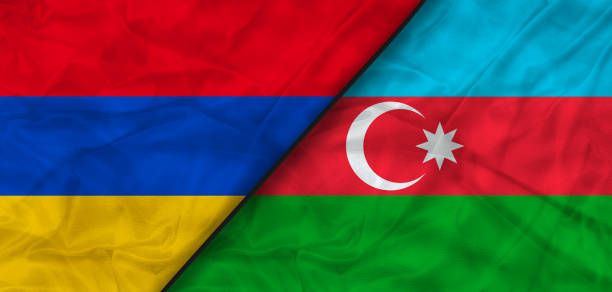
President von der Leyen said:“Our ‘Peace through Connectivity Package’ will help build a peaceful and prosperous future for the South Caucasus. With up to €200 million in grants, we will mobilise up to €2,000 million in investment to connect the region, foster cooperation and create a culture of lasting peace between Azerbaijan and Armenia. Together, we can turn peace on paper into peace in practice.”
During the visit, President von der Leyen outlined concrete measures to boost regional cooperation, as well as initiatives to integrate Azerbaijan into the Connectivity Agenda. To support this ambition, she announced an investment package of up to 200 million euros for connectivity projects in the South Caucasus, as part of the Global Gateway initiative. An additional 20 million euros will be allocated to a peace-building programme for local communities in Armenia and Azerbaijan. The President also highlighted the importance of joint investment in energy, particularly in renewable energy.
Boosting connectivity in the South Caucasus
By connecting regions, the EU’s Connectivity Agenda contributes to shared prosperity and peace in the South Caucasus. In this context, President von der Leyen announced the launch of the EU-Azerbaijan Connectivity Partnership. This partnership will provide a structured framework for identifying projects, mobilising funding and coordinating their implementation. The EU-Azerbaijan High-Level Dialogue on Connectivity, covering transport, energy and digital connectivity, will strengthen this partnership by ensuring strategic coordination and monitoring progress. It will be supported by the EU’s new ‘Connectivity for Peace’ investment package, worth up to 200 million euros, which has the potential to mobilise up to 2,000 million euros in public and private investment.
In Azerbaijan, the EU is committed to the development of the Nakhchivan railway project, a strategic investment that will improve mobility and economic flows in Azerbaijan and the wider region. The European Union and Azerbaijan, together with the European Bank for Reconstruction and Development, launched afeasibility studyfor the development of the project in January 2026.
Furthermore, President von der Leyen and President Aliyev announced a Ministerial Conference on Investment in Regional Connectivity, to be held in Baku in late 2026. The conference will bring together the EU, the South Caucasus, Central Asia, international financial institutions and private investors to showcase strategic connectivity projects, present investment opportunities and mobilise funding for regional infrastructure.
Strengthening peace-building measures in the region.
The €20 million announced under the Peace Dividends initiative will support local communities in Armenia and Azerbaijan through investments that promote peace in areas such as healthcare, demining, skills development and local businesses, helping people to experience the tangible benefits of peace in their daily lives. By improving livelihoods and strengthening local resilience, this package will also help to build a culture of lasting peace.
This complements existing initiatives, such as the support package for Karabakh and other conflict-affected areas, which focuses on healthcare, rural development and human capital development, as well as the EU’s initiatives for continued support for humanitarian action against landmines. Through the Team Europe Initiative, the EU remains the largest donor in this field.
Greater trade and energy cooperation with Azerbaijan.
Presidentvon der Leyenreaffirmed the EU’s commitment to strengthening cooperation on renewable energy, electricity interconnections and regional energy networks, given that Azerbaijan remains a reliable partner in the diversification of Europe’s energy supply. She also emphasised the importance of deepening economic cooperation between the EU and Azerbaijan by resuming talks on a new comprehensive agreement.
Background
Relations between the European Union and Azerbaijan are based on the EU-Azerbaijan Partnership and Cooperation Agreement, which has been in force since 1999. In February 2017, the EU and Azerbaijan began negotiations on a new framework agreement with the aim of revitalising political dialogue and fostering mutually beneficial cooperation. In September 2018, the Cooperation Council endorsed these priorities, setting out the joint political guidelines that guided and strengthened the EU–Azerbaijan Partnership over the following years. On 28 September 2018, the Cooperation Council also endorsed the Partnership Priorities. In June 2026, the EU and Azerbaijan provisionally concluded talks on a new set of EU–Azerbaijan Partnership Priorities for the period 2026–2030. Furthermore, the EU and Azerbaijan resumed negotiations on a new bilateral agreement.
The signing of the peace agreement between Azerbaijan and Armenia represents a historic opportunity to achieve lasting peace, strengthen regional stability and deepen regional economic integration.
More information: European Commission
Publicaciones relacionadas:
 MEPs support the reduction of tariffs on US agricultural and industrial products.
 The EU and Mexico strengthen their long-term ties at a historic summit
 The Commission proposes a free and secure data circulation zone between the EU and Brazil
 New strategy to strengthen prosperity and security with India
 The first EU-Egypt summit will be held in Brussels on 22 October
Leave a Reply