
The EU and Mexico have taken last May 22 a major step forward in their partnership by signing the Modernised Comprehensive Agreement and the Interim Trade Agreement.
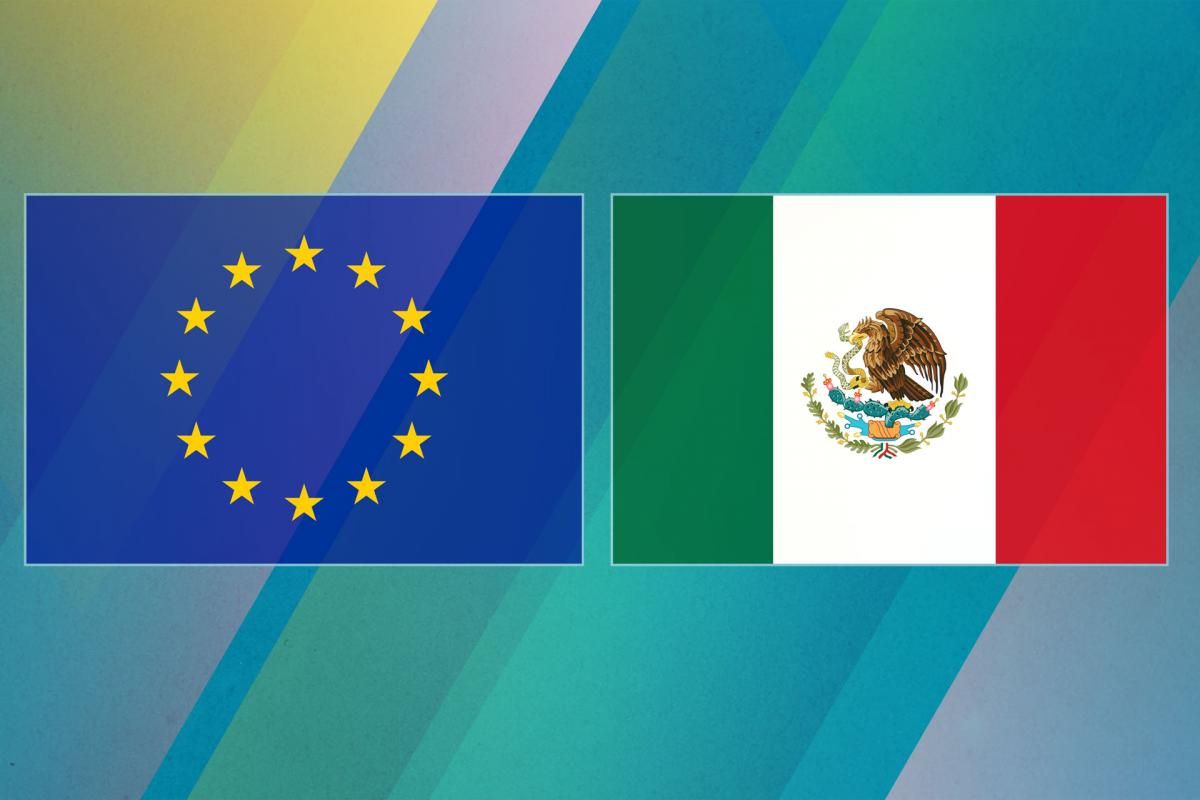
At the 8th EU-Mexico Summit held in Mexico City, both sides agreed to deepen their political and economic cooperation at a time of growing global uncertainty.
The EU was represented by the President of the European Commission, Ursula von der Leyen; the President of the European Council, António Costa; the High Representative of the Union for Foreign Affairs and Security Policy, Kaja Kallas; and the Commissioner for Trade and Economic Security, Maroš Šefčovič.
The agreements will help to strengthen political dialogue and cooperation between the EU and Mexico, creating opportunities in areas such as trade, investment and clean technologies, whilst strengthening supply chains and supporting climate objectives.
Furthermore, they create new opportunities for businesses on both sides — including those in the agri-food sector — with one of the EU’s most strategic partners in Latin America.
President Von der Leyen said: “The EU and Mexico have committed to a close strategic partnership. Today’s modernised agreements set out our shared vision for the future and will bring many benefits to both sides. We will boost trade and investment to support jobs and growth, and cooperate across a range of policy areas. Together we will build a better future for our citizens and the planet, finding common ground to defend international institutions, drive clean growth and promote human rights and gender equality.”
A shared commitment to multilateralism and global institutions
The Summit reaffirmed the EU and Mexico’s joint commitment to multilateralism and the rules-based international order. As like-minded partners in multilateral forums, both sides have emphasised the vital importance of international cooperation in addressing global challenges. The leaders have committed to working closely together to promote peace and security, reform global governance institutions and defend human rights.
At the Summit, the EU and Mexico also reaffirmed their role as key drivers of bi-regional relations between the EU and the Community of Latin American and Caribbean States (CELAC).
In light of growing global challenges, Mexico and the EU have agreed to establish a strategic dialogue at ministerial level, as a permanent mechanism for consultation and coordination on international and regional issues of common interest.
Promoting trade and economic security
The EU and Mexico enjoy a strong and long-standing trade relationship, worth €100 billion a year in goods and services. The modernised agreement will further boost this relationship by facilitating exports and investment in both markets, as it provides:
·greater opportunities for the EU’s agricultural sector, given that Mexico is a net importer of food with high tariffs. Under the new agreement, Mexico will protect 232 spirits and a further 336 European geographical indications for wines, beers and foodstuffs;
·greater cooperation on the green and digital transitions, and the strengthening of supply chains for critical raw materials;
·new opportunities for EU companies to bid for Mexican government contracts on an equal footing with Mexican companies; new opportunities for service exports in key areas such as financial services, maritime transport, and digital and professional services;
·simpler rules for businesses, and greater regulatory cooperation between the EU and Mexico;
·the removal of barriers to e-commerce and increased cooperation in the digital sphere; and
·Strengthened rules to protect creators and intellectual property rights.
At the Business Forum held in parallel with the Summit, both sides discussed future cooperation, including ways to unlock new opportunities in advanced technologies, digital trade and the creation of a business environment conducive to the clean transition.
Working together to promote sustainability and human rights
The Agreement aims to promote sustainable development in both Europe and Mexico, as it includes:
·legally binding commitments on labour rights, environmental protection, climate change and responsible business conduct;
·a joint declaration on trade and gender equality reaffirming the shared commitment to promoting women’s economic empowerment and rights;
·a dispute settlement mechanism to enforce these commitments;
·an active role for independent experts, civil society and international organisations in monitoring the implementation of the Agreement.
Both parties have signed a Joint Declaration on the circular economy to tackle the triple planetary crisis of climate change, biodiversity loss and pollution — including plastic pollution — whilst strengthening economic resilience, competitiveness and sustainable job creation.
In parallel with the Summit, the EU and Mexico organised a joint event on the theme ‘Empowering women for greater participation in trade’. The event brought together key stakeholders to identify ways to help women benefit from the opportunities offered by the two agreements, as well as from the ‘Declaration on Trade and Gender Equality’ contained therein.
Global Gateway Investment Agenda and future cooperation
The EU and Mexico have reaffirmed their commitment to deepening the Global Gateway Investment Agenda as a central pillar of their strategic partnership. Through Global Gateway, the EU supports sustainable investment, decarbonisation, resilient value chains and inclusive economic growth in Mexico. The Summit confirmed both partners’ shared commitment to a mutually beneficial partnership.
The EU-Mexico Global Gateway Investment Agenda makes available more than €5 billion in European-backed investment in key sectors, such as the energy transition, sustainable transport, health and pharmaceuticals, the circular economy, water and sanitation, sustainable agriculture, forests and biodiversity, and digital connectivity. Furthermore, European companies will also play a key role in achieving the objectives of the Mexico Plan in the areas of rail development, the circular economy and green financing.
As part of the Global Gateway strategy, the European Union and Mexico are investing in clean technologies, local manufacturing, sustainable finance and innovative solutions. Leaders welcomed the forward-looking agenda and agreed to step up collaboration through new dialogues on energy security, health and digital connectivity. The joint organisation of the fourth EU-Caribbean conference on Sargassum in Mexico this autumn will boost efforts to build a Sargassum value chain.
The EU and Mexico have also highlighted the social inclusion dimension of Global Gateway, which encompasses gender equality and partnerships with civil society organisations. In this context, President Von der Leyen has announced a project worth over four million pesos in EU funding to support the empowerment of indigenous women in Mexico. The investment agenda supports long-term sustainable development and the creation of decent jobs, whilst contributing to resilient infrastructure and high-quality connectivity.
EU-Mexico Digital Dialogue
Mexico and the EU have agreed to relaunch the EU-Mexico Digital Dialogue, taking due account of the Joint Declaration on an EU-Latin America and the Caribbean Digital Alliance, as well as the Declaration of the CELAC-EU Summit in Santa Marta. Topics such as digital innovation, regulation and new technologies will be covered.
Next steps
Following the signing of the Modernised Comprehensive Agreement and the Interim Trade Agreement, the EU and Mexico will now proceed with their respective ratification procedures for the Agreements.
On the EU side, the Modernised Comprehensive Agreement will be subject to ratification by all Member States, in accordance with their national procedures. At the same time, the Interim Trade Agreement will follow the EU’s exclusive ratification process, as it falls within the EU’s exclusive competence. This will require the approval of the European Parliament and the adoption of a decision by the Council to conclude the Agreement, after which it will enter into force.
The Interim Trade Agreement will expire once the Modernised Comprehensive Agreement enters into force.
More information: European Commission.
Publicaciones relacionadas:
 The new European Centre for Democratic Resilience begins its work
 The Commission proposes a free and secure data circulation zone between the EU and Brazil
 New strategy to strengthen prosperity and security with India
 The first EU-Egypt summit will be held in Brussels on 22 October
 The EU and Nigeria open negotiations on a bilateral agreement on cooperation in science and technology
Leave a Reply