
The EIB and the European Commission are launching the implementation of the €400 million financing facility, initially announced in October 2025, through the signing of sub-lending agreements for SMEs between the Palestinian Monetary Authority (PMA) and the Bank of Palestine for $150 million, Quds Bank for $100 million, the Palestine Investment Bank for $70 million, the National Bank for $50 million and the Cairo Amman Bank for $25 million.
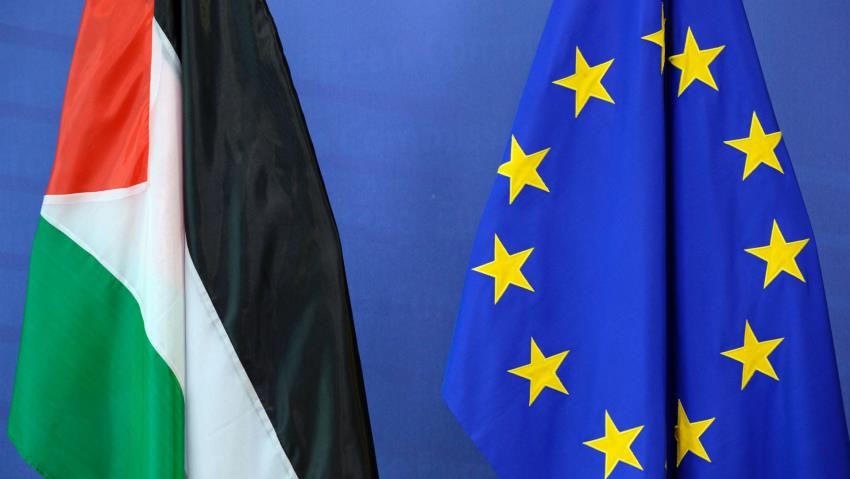
These agreements make up to $395 million available to support Palestinian micro, small and medium-sized enterprises (MSMEs) through local financial intermediaries. The package also includes the deployment of the remaining €2.1 million in technical assistance, within a total budget of €3.5 million, of which €1.4 million has already been deployed, to strengthen the overall ecosystem of Palestinian micro, small and medium-sized enterprises through direct support to MSMEs, as well as to financial institutions and sectoral initiatives.
Through collaboration with the PMA and local partner banks, the implementation of this mechanism will help to expand access to affordable finance for Palestinian businesses that continue to face severe economic difficulties in the context of the current conflict. This initiative will help channel much-needed liquidity to micro, small and medium-sized enterprises (MSMEs), sustain business activity and employment, and strengthen economic resilience.
This operation, with a budget of €400 million, forms part of the “European Commission’s Multi-Annual Comprehensive Programme for Palestinian Recovery andResilience”, with a total budget of up to €1.6 billion for the period 2025–2027, which includes around €620 million in grants to support the Palestinian Authority and around €576 million for projects that, when conditions allow, promote recovery and resilience in the West Bank, East Jerusalem and Gaza.
“Palestinian businesses need reliable access to finance to be able to continue operating, investing and safeguarding livelihoods under extremely difficult conditions,” said EIB Vice-President Gelsomina Vigliotti. “With these agreements, we are launching the €400 million facility announced in October 2025 and making up to €395 million available through local partner banks to support Palestinian SMEs where funding is most needed. At the same time, €3.5 million in technical assistance will help to strengthen the sector at multiple levels.”
The Deputy Governor of the Palestinian Monetary Authority, MohammadManasrah, stated: “The implementation of this $395 million package represents a concrete step towards strengthening the Palestinian financial sector’s capacity to support businesses during a period of exceptional hardship. Through five sub-loans to local banks — part of which is structured as subordinated debt to strengthen the banks’ capital base — and whilst the funds are earmarked exclusively for financing micro, small and medium-sized enterprises, this cooperation will expand access to finance across Palestine, enabling businesses to continue operating, adapt to difficult conditions and sustain economic activity. The Palestinian Monetary Authority values its collaboration with the European Investment Bank and local financial institutions to promote this channel of support, where it can make a significant difference to businesses, families and communities.”
The Acting Director-General of the European Commission’s Directorate-General for the Middle East, North Africa and the Gulf, Michael Karnitschnig, said: “The EU’s €400 million Facility for Palestine is delivering results. By channelling €395 million through local banks and providing €2.1 million in technical assistance, we are making vital funding directly available to Palestinian businesses. This is not just a €1 million investment in businesses; it is a €1 million investment in jobs, resilience and the future of millions of Palestinians.”
Since 1995, the EIB has provided financing worth around €1 billion in Palestine, as well as risk-sharing instruments to support Palestinian small and medium-sized enterprises (SMEs) for an additional €120 million. The EIB has long been working with local financial institutions and public sector partners to improve access to finance, support essential infrastructure and strengthen economic resilience in Palestine.
Background information
The EU and Palestine
The EU is a long-standing partner of the Palestinian people and advocates a two-state solution, where Israelis and Palestinians live together in peace and security. It has demonstrated its support both politically and financially. Supporting strong and viable governance by the Palestinian Authority is essential to achieving sustainable and lasting peace, both for the Palestinian people and for the region as a whole.
In April 2025, the Commission adopted a€1.6 billion Comprehensive Multi-Annual Programme to support Palestine’s recovery and resilience, covering the next three years. The programme is currently being implemented. Since October 2023, EU commitments have amounted to nearly €740 million in grants and loans.
The EIB Group
The European Investment Bank (EIB)Groupis the financial arm of the European Union, owned by the 27 Member States, and one of the world’s largest multilateral development banks. In 2025, the EIB Group signed agreements worth €100 billion in new financing and advisory services for more than 870high-impact projects acrosseight key priorities that supportthe EU’s policy objectives: Climate action and the environment, digitalisation and technological innovation, security and defence, territorial cohesion, agriculture and the bioeconomy, social infrastructure, strong global partnerships, and the savings and investment union. In addition to long-term loans for major infrastructure projects, the EIB Group drives private investment in high-risk innovative projects and companies, playing an increasingly important role in European markets for risk debt, venture capital, guarantees and securitisation.
The European Investment Fund (EIF) is the EIB Group’s subsidiary specialising in providing guarantees and capital to improve access to finance for small and medium-sized enterprises and start-ups across Europe. As a lead investor, through its extensive network of partner banks and investment funds, the EIF mobilises private investment and drives the venture capital ecosystem to support innovative European entrepreneurs.
EIB Global
EIB Global is the EIB Group’s specialised arm dedicated to increasing the impact of mutually beneficial international partnerships and development finance, and a key partner ofTeam Europe and the Global Gateway strategy. EIB Global brings the EIB Group closer to people, businesses and institutions through itsoffices around the world.
The EIB and Palestine
The EIB has been operating in Palestine since 1995 with investments totalling €1.15 billion and, over the years, has helped to improve infrastructure and boost economic development. It is the only European multilateral financial institution authorised to grant sovereign loans to the Palestinian Authority, focusing on infrastructure such as water and energy. The EIB also leads support for micro, small and medium-sized enterprises in Palestine through a €700 million financing package, complemented by risk-sharing instruments and advisory services.
About the Palestinian Monetary Authority
The Palestinian Monetary Authority (PMA) is the independent central institution responsible for regulating and supervising the Palestinian banking and financial sector. Since its establishment in 1994, the PMA has worked to safeguard financial stability, promote economic growth and ensure the soundness of the Palestinian financial system. As a modern and resilient central bank without a national currency, the PMA manages payment systems, supervises financial institutions and develops inclusive policies to facilitate access to finance for individuals and businesses. The PMA plays a key role in strengthening Palestine’s economic resilience by fostering a secure, transparent and competitive financial environment that meets the needs of households and businesses in the West Bank and Gaza.
Allocate €2.1 million to technical assistance.
- The European Investment Bank and the European Commission will launch a €400 million financing programme, announced in October 2025, which will provide up to $395 million to Palestinian micro, small and medium-sized enterprises.
- These funds will be channelled through the Bank of Palestine, the National Bank, the Bank of Jerusalem, the Cairo-Amman Bank and the Palestinian Investment Bank, to increase access to credit through local financial intermediaries.
- The package also includes the allocation of the remaining €2.1 million for technical assistance, out of a total of €3.5 million, of which €1.4 million has already been made available.
The European Investment Bank and the European Commission are today launching a €400 million financing facility, initially announced in October 2025, through the signing of sub-lending agreements for micro, small and medium-sized enterprises between the Palestinian Monetary Authority and the Bank of Palestine for $150 million, the Bank of Jerusalem for $100 million, the Palestine Investment Bank for $70 million, the National Bank for $50 million and the Cairo Amman Bank for $25 million.
These agreements provide up to $395 million to support Palestinian micro, small and medium-sized enterprises (MSMEs) through local financial intermediaries. The package also includes the release of the remaining €2.1 million in technical assistance, out of a total of €3.5 million, of which €1.4 million has already been disbursed. The aim is to strengthen the Palestinian MSME ecosystem as a whole, providing direct support to MSMEs, as well as to financial institutions and sectoral initiatives.
Thanks to cooperation with the Palestinian Monetary Authority and partner local banks, the implementation of these mechanisms will facilitate access to affordable finance for Palestinian businesses that continue to face severe economic difficulties due to the ongoing conflict. This initiative will provide micro, small and medium-sized enterprises (MSMEs) with much-needed liquidity, boost business activity, preserve jobs and strengthen economic resilience.
These facilities, valued at €400 million, form part of the “Comprehensive Multi-Annual Programme to Enhance Recovery and Resilience in Palestine”. The European Commission’s fund, with a total financing portfolio of €1.6 billion for the period 2025–2027, of which €620 million consists of grants to support the Palestinian Authority, and some €576 million to projects aimed at strengthening resilience and recovery in the West Bank, East Jerusalem and the Gaza Strip when conditions permit.
In this context, Gelsomina Velotti, Vice-President of the European Investment Bank, stated that ‘Palestinian businesses need reliable sources of finance to continue their operations and investment activities, as well as to maintain their livelihoods in extremely difficult circumstances’. She added: ‘In light of these agreements, we are beginning to implement the €400 million facility announced in October 2025, which will provide up to $395 million through local partner banks to support Palestinian micro, small and medium-sized enterprises (MSMEs) in areas with urgent financing needs. At the same time, €3.5 million in technical assistance will help to strengthen this sector at various levels.”
Mohammad Manasra, Deputy Governor of the Palestinian Monetary Authority, stated: “The implementation of the $395 million financing package represents a tangible step towards strengthening the Palestinian financial sector’s capacity to support businesses during this period of exceptional pressure. With the help of five sub-loans granted to local banks — some of which are structured as subordinated debt to bolster the banks’ capital base, whilst the funds are earmarked exclusively for financing micro, small and medium-sized enterprises (MSMEs) — this collaboration will improve access to finance for businesses across Palestine, enabling them to continue operating, adapt to difficult conditions and sustain economic activity. The Palestinian Monetary Authority values its partnership with the European Investment Bank and local financial institutions, which help to channel this support to where it can make a real difference for businesses, families and local communities.”
Michael Karnitsch, Acting Director General for the Middle East, North Africa and the Gulf, said: “The European Union’s €400 million facility for Palestine has begun to achieve its objectives. By channelling €395 million to Palestinian businesses through local banks and providing €2.1 million in technical assistance, we are directly providing these businesses with vital financial resources. It is not just about investing in businesses, but about creating jobs, strengthening resilience and building a promising future for Palestinians.”
It is worth noting that, since 1995, the European Investment Bank (EIB) has provided approximately €1 billion in financing to Palestine, in addition to risk-sharing instruments to support Palestinian small and medium-sized enterprises (SMEs) with a further €120 million. The EIB has a long track record of working with local financial institutions and public sector partners to improve access to finance, support the development of essential infrastructure and strengthen economic resilience in Palestine.
Background information
European Union and Palestine
The European Union has long been an ally of the Palestinian people and advocates a two-state solution in which Israelis and Palestinians live side by side in peace and security. The EU has demonstrated both political and financial support and considers it essential to provide the necessary backing to ensure that the Palestinian Authority has a robust and sustainable system of governance, with a view to achieving a lasting and sustainable peace for both the Palestinian people and the region as a whole.
In April 2025, the Commission adopteda comprehensive multi-annual programme to enhance recovery and resilience in Palestine, worth €1.6 billion. It covers the next three years and is currently being implemented. Since October 2023, the European Union’s commitments have amounted to nearly €740 million in grants and loans.
European Investment Bank Group
The European Investment Bank Group (EIB), owned by the 27 Member States of the European Union, is its financial arm and one of the world’s largest multilateral development banks. In 2025, the EIB Group signed new financing and advisory agreements worth €100 billion to support more than 870high-impact projectsacrosseight key priority areas. It supports the achievement ofpublic policy objectives. For the European Union, these areas include climate action and the environment, digitalisation and technological innovation, security and defence, regional cohesion, agriculture and the bioeconomy, social infrastructure, strong global partnerships, and the Savings and Investment Union. In addition to long-term loans for major infrastructure projects, the European Investment Bank Group attracts private investment for high-risk businesses and innovation projects, playing an increasingly important role in European markets for risk debt, venture capital, guarantees and securitisation.
The European Investment Fund (EIF) is a fund within the European Investment Bank Group dedicated to providing guarantees and private equity to improve access to finance for small and medium-sized enterprises (SMEs) and start-ups across Europe. As a central investment vehicle, and through its extensive network of partner banks and investment funds, the EIF mobilises private investment and contributes to the development of the venture capital ecosystem to drive European innovation.
European Investment Bank
The European Investment Bank is regardedas the world bank. The specialised division of the European Investment Bank Group, dedicated to maximising the impact of mutually beneficial international partnerships and development finance, is a key partner ofTeam Europe. And as part of its global outreach strategy, it also works to bring the European Investment Bank Group closer to individuals, businesses and local institutionsthrough its offices around the world.
European Investment Bank and Palestine
The European Investment Bank (EIB) has been operating in Palestine since 1995, with investments totalling €1.15 billion. Over the years, it has helped to strengthen resources for infrastructure and economic development. The EIB is the only European multilateral financial institution authorised to grant sovereign loans to the Palestinian Authority, focusing on infrastructure projects such as water and energy. It also plays a key role in supporting micro, small and medium-sized enterprises (MSMEs) in Palestine through a €700 million financing package, complemented by risk-sharing instruments and advisory services.
About the Palestinian Monetary Authority
The Palestinian Monetary Authority (PMA) is the independent central institution responsible for regulating and supervising the Palestinian banking and financial sector. Since its establishment in 1994, the PMA has worked to safeguard financial stability, promote economic growth and ensure the integrity of the Palestinian financial system. Furthermore, it functions as a modern and flexible central bank, without a national currency, managing payment systems, supervising financial institutions and developing comprehensive policies to improve access to finance for individuals and businesses. In this regard, the PMA plays a key role in strengthening Palestine’s economic resilience by providing a secure, transparent and competitive financial environment that meets the needs of households and businesses in the West Bank and Gaza.
More information: European Commission.
Publicaciones relacionadas:
 The Spring 2026 European Semester package sets out a roadmap for promoting economic resilience and social cohesion across the EU
 The EU and Montenegro have provisionally closed the chapter on trans-European networks in the accession negotiations
 The EU and the US launch a strategic partnership on critical minerals
 The EU and Mexico strengthen their long-term ties at a historic summit
 New strategy to strengthen prosperity and security with India
Leave a Reply