
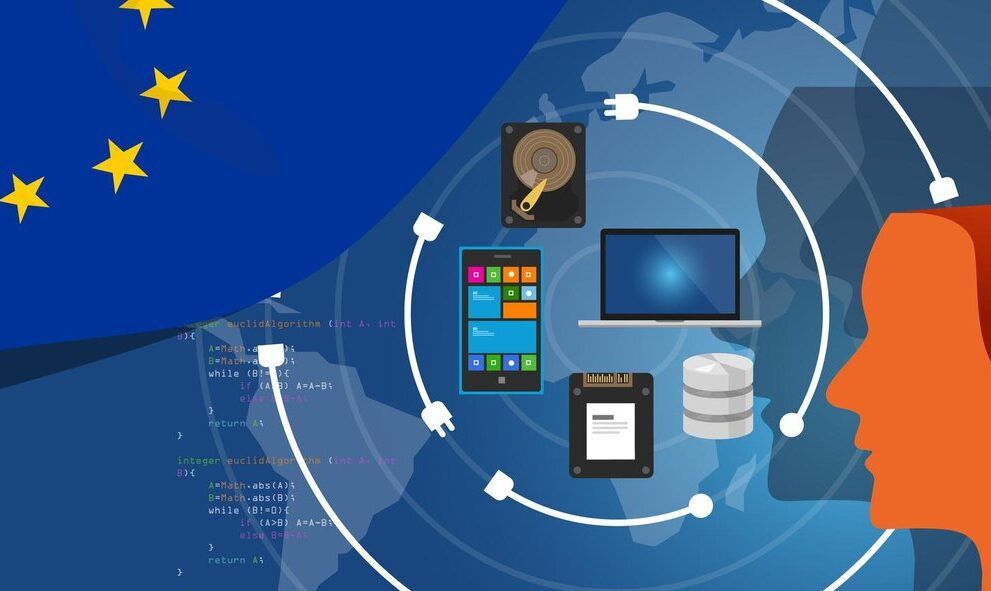
The European Commission has unveiled the European Technology Sovereignty Package, a set of measures designed to strengthen Europe’s capabilities in semiconductors, artificial intelligence (AI), cloud computing and open source.
The Commission President, Ursula von der Leyen, stated:“We cannot afford to rely on others for the technologies that keep our hospitals running, ensure the stability of our energy networks and safeguard our services. This is about protecting our citizens, defending our interests and making our own decisions. Europe has the talent, research excellence, industrial base and the Single Market. Together, we must turn these strengths into technological sovereignty.”
The package includes two legislative proposals: the Chips Act 2.0and theCloud and AI Development Act, as well as the Open Source Strategy and a Strategic Roadmap for Digitalisation and AI in the Energy Sector.
Together, these measures underpin Europe’s ambition to become a leading continent in artificial intelligence, strengthen its digital autonomy and help build a more sustainable digital future. They will also help expand the range of options in key technologies for businesses, citizens and public administrations across the EU.
This move comes at a time when Europe remains heavily dependent on suppliers outside the European Union for essential digital technologies, and against a backdrop of surging demand for computing power due to the expansion of AI. Its aim is to reduce structural dependencies and ensure that Europe can develop, deploy and protect the technologies on which Europeans rely. It represents a significant shift in the EU’s approach to technology.
Securing the semiconductor base for Europe’s AI ambitions.
Semiconductors are essential for artificial intelligence and for the technologies that Europeans use every day.
The Chips Act, in force since 2023, was the EU’s first response to critical vulnerabilities in the global semiconductor supply chain. However, Europe remains heavily dependent on third countries for advanced chip production and design. AI-related components are expected to drive future growth and account for more than 70% of the semiconductor market by 2030.
The Chips Act 2.0 will build on Europe’s strengths, including in general-purpose chips, and develop capabilities in cutting-edge semiconductor technologies that power AI applications.
It will streamline the permitting process, deepen cooperation with like-minded partners and introduce a new seal of excellence for European semiconductor regions. Furthermore, through an ecosystem-based approach, it will bring European chip manufacturers closer to their customers and capitalise on demand from growth sectors such as data centres, cloud service providers and AI gigafactories. Finally, it will drive investment and strategic projects, whilst addressing vulnerabilities that could put the supply chain at risk.
Developing Europe’s capabilities in cloud computing and AI.
The Cloud and AI Development Act is a key part ofthe Commission’sAI for the Continent Action Plan. Its aim is to triple data centre capacity in Europe over the next five to seven years and strengthen the role of theApply AI strategyto drive its adoption.
The Act will drive research and innovation in cutting-edge and sustainable technologies, balancing AI ambitions with climate commitments. It will simplify the requirements for deploying data centres across the EU, prioritising highly sustainable and innovative facilities at the scale required for the green and digital transition. It will also introduce a single EU-wide framework to assess cloud and AI sovereignty, whilst keeping the bulk of the market open to like-minded partners.
This will help protect critical applications and sensitive data, and support the development and deployment of advanced AI and cloud computing technologies. It will also foster a more coordinated approach to AI adoption across all Member States, including through theAI Centres of Expertise and Acceleration,which act as local hubs to support the integration and scaling up of AI.
Strengthening digital autonomy through open source.
Europe is home to more than three million open-source contributors. These contributors provide digital solutions made in Europe, for Europe, based on European principles and values.
The Open Source Strategy builds on this strength to develop and deliver more sovereign solutions. It will promote open-source alternatives in priority areas such as the cloud, AI, internet technologies, cybersecurity and semiconductors. It will also promote a stronger open-source ecosystem by investing in training, supporting open-source start-ups and improving the long-term maintenance and security of Europe’s open-source digital infrastructure.
The strategy will also encourage greater use of open-source software in public administrations through public procurement guidelines and best practices. It will promote the adoption of European solutions and support standardisation and interoperability, including through initiatives such as the Open Internet Stack.
Digitising the European energy system whilst ensuring sustainable digitalisation.
The digitalisation of the European energy sector is more urgent than ever, as high energy prices are putting pressure on industrial competitiveness and household budgets. At the same time, the growth of digital infrastructure across the continent is expected to increase demand for electricity. The Strategic Roadmap for Digitalisation and AI in the Energy Sector addresses both aspects and sets out how AI and other digital solutions can ensure the sustainable integration of digital infrastructure into our energy system, whilst contributing to greater efficiency in the European energy system.
This roadmap will ensure the sustainable and transparent integration of data centres into our energy system. The Commission will facilitate cooperation between the energy and digital sectors to ensure their efficient integration into the grid, as well as the necessary supply of clean energy, whilst protecting water and energy resources.
This roadmap will also accelerate the roll-out of digital and artificial intelligence solutions to improve and modernise Europe’s electricity infrastructure, whilst supporting a faster roll-out of smart meters, which are key to giving European consumers greater control over their energy consumption and, ultimately, lower energy bills.
Furthermore, it will contribute to the creation of secure and autonomous AI models for the energy sector, trained on European data and developed by European companies. By simplifying the cross-border exchange of energy data, it will ensure the adoption of smart energy services and greater flexibility that can generate savings for millions of people across Europe.
Next steps
Before their adoption and entry into force, the legislative proposals will be negotiated by the European Parliament and the Council of the European Union.
The Commission will continue its work to make Europe a continent of AI and is expected to launch a call for AI gigafactories in July, following the agreement in principle reached on 1 June by the Governing Board of the European High-Performance Computing Joint Undertaking.
The Commission will also launch a consultation with Member States, the European Investment Bank Group and other key stakeholders to establish a large-scale European capital capacity to finance Europe’s technological sovereignty ambitions.
Background
The Commission’s Action Plan for an AI Continentpositions Europe to become an AI continent, focusing on boosting computing infrastructure, data, skills and the uptake of AI in Europe.
The Technology Sovereignty Package accelerates this action, representing a new approach for Europe. Furthermore, it builds on existing initiatives such as theCompetitiveness Compassand theEconomic Security Strategy, and complements them.
More information: European Commission.
Publicaciones relacionadas:
 The Commission proposes measures for Google regarding the sharing of search engine data with third parties under the Digital Markets Act
 The Commission launches an Action Plan against Cyberbullying to protect young people online
 Commission launches investigation into Shein under the Digital Services Act
 Legal Affairs MEPs call for protection of copyrighted works used by AI
 The European Parliament calls for a stronger EU response to online harassment
Leave a Reply