
The European Commission has approved a Spanish state aid scheme worth €500 million to help agricultural businesses facing higher fertiliser prices due to the crisis in the Middle East.
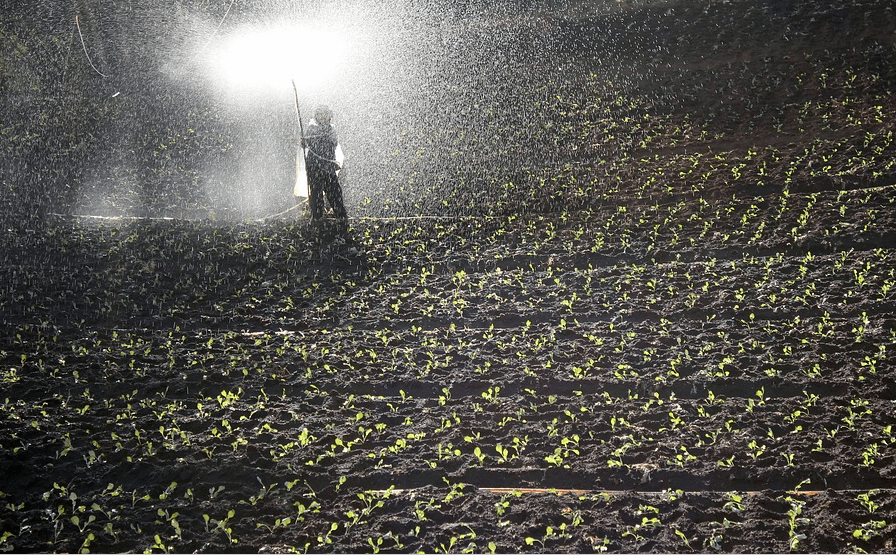
The scheme has been approved under the Temporary Framework for Aid in Response to the Crisis in the Middle East (METSAF), which the Commission adopted on 29 April 2026.
The Spanish aid scheme
Spain notified the Commission of an aid scheme worth €500 million to support businesses engaged in the primary production of agricultural products. The scheme, which will remain in force until 31 December 2026, aims to mitigate the effects of rising fertiliser prices.
The aid will be granted in the form of subsidies. Businesses will be eligible to receive €22 per hectare of dryland and €55 per hectare of irrigated land, up to a maximum of 300 hectares per beneficiary. The aid will cover up to 70% of the additional costs of fertilisers resulting from the crisis in the Middle East.
The Commission has assessed the measure in accordance with EU state aid rules, and in particular Article 107(3)(c) of the Treaty on the Functioning of the European Union (‘TFEU’), which allows Member States to support the development of certain economic activities under certain conditions, as well as Sections 1 and 2.1 of the METSAF.
The Commission has found that the Spanish scheme complies with the conditions set out in the METSAF. In particular, the aid will be granted on the basis of a scheme with a clear estimated budget, and aid will be provided to temporarily support the development of undertakings engaged in the primary production of agricultural products. The Commission has concluded that the scheme is necessary, appropriate and proportionate to facilitate the development of an economic activity and does not affect trading conditions to an extent contrary to the common interest.
For these reasons, the Commission has approved the Spanish aid scheme in accordance with the relevant EU rules.
Background
On 29 April 2026, the Commission adopted the Temporary Framework for Aid in Response to the Crisis in the Middle East to enable Member States to support the EU economy in the context of the Middle East crisis. The METSAF is a temporary and targeted framework designed to mitigate the effects of the crisis on some of the most exposed sectors of the economy, namely: agriculture, fisheries, transport and energy-intensive industries. The METSAF will be available until 31 December 2026. During its period of application, the Commission will review the content, scope and duration of the framework in the light of developments in the situation in the Middle East and the general economic climate.
Whilst the transition to a clean economy remains the long-term solution to protect EU businesses from the effects of global energy disruptions, the METSAF enables Member States to act immediately to ensure that the growth of the most exposed businesses is not irreparably hampered by the current crisis.
To this end, aid may take various forms for businesses operating in the agriculture, fisheries and transport sectors, such as aid based on actual consumption to cover part of the increases in fuel or fertiliser prices, and a simplified approach for small amounts of aid.
METSAF also provides for a temporary adjustment to the framework governing state aid measures to support the Clean Industry Pact, allowing for higher aid intensities to address electricity price spikes.
Further information on the METSAF is available online.
More information: European Commission.
Publicaciones relacionadas:
 EU agri-food exports increased in July 2025
 The committee is inviting comments on the multiannual fisheries plans
 Commission approves new geographical indications for Italy and Spain
Commission proposes safeguards to strengthen protections for EU farmers in EU-Mercosur deal
Commission approves new geographical indications for Italy and Spain
Commission proposes safeguards to strengthen protections for EU farmers in EU-Mercosur deal
 Commission proposes measures to support generational renewal in agriculture
Leave a Reply