• Skip to primary navigation
  • Skip to main content
  • Skip to primary sidebar
  • Skip to footer
  • Bluesky
  • Facebook
  • Instagram
  • Twitter
  • YouTube
CDE Almería – Centro de Documentación Europea – Universidad de Almería

CDE Almería - Centro de Documentación Europea - Universidad de Almería

Centro de Documentación Europea de la Universidad de Almería

  • HOME
  • WHAT´S ON
    • EU NEWS
    • Activities
    • EU Calls and Awards
    • Radio Program «Europe with You»
  • DOCUMENTATION
    • EU Media Collection
      • Web Space
      • MEDIATHEQUE REPOSITORY
  • Europe on the net
    • Institutions
    • EU Representation in Spain
    • European information network of Andalusia
  • ABOUT US
    • Presentation
    • Services
    • People
    • Contact
  • Spanish
  • English

How the European Commission is tackling the spread of disinformation

Inicio » EU News » How the European Commission is tackling the spread of disinformation

26 de October de 2023

The Commission is tackling the spread of online disinformation and misinformation to ensure the protection of European values and democratic systems.

Disinformation is false or misleading content that is spread with an intention to deceive or secure economic or political gain, and which may cause public harm. Misinformation is false or misleading content shared without harmful intent though the effects can be still harmful.

The spread of both disinformation and misinformation can have a range of harmful consequences, such as threatening our democracies, polarising debates, and putting the health, security and environment of EU citizens at risk.

Large-scale disinformation campaigns are a major challenge for Europe and require a coordinated response from EU countries, EU institutions, online platforms, news media and EU citizens. The Commission has developed a number of initiatives to tackle disinformation:

  • the Communication on ‘tackling online disinformation: a European approach’ is a collection of tools to tackle the spread of disinformation and ensure the protection of EU values;
  • the Action plan on disinformation aims to strengthen EU capability and cooperation in the fight against disinformation;
  • the European Democracy Action Plan develops guidelines for obligations and accountability of online platforms in the fight against disinformation;
  • The 2018 Code of Practice on disinformation was the first time worldwide that industry has agreed, on a voluntary basis, to self-regulatory standards to fight disinformation. It aimed at achieving the objectives set out by the Commission’s Communication presented in April 2018
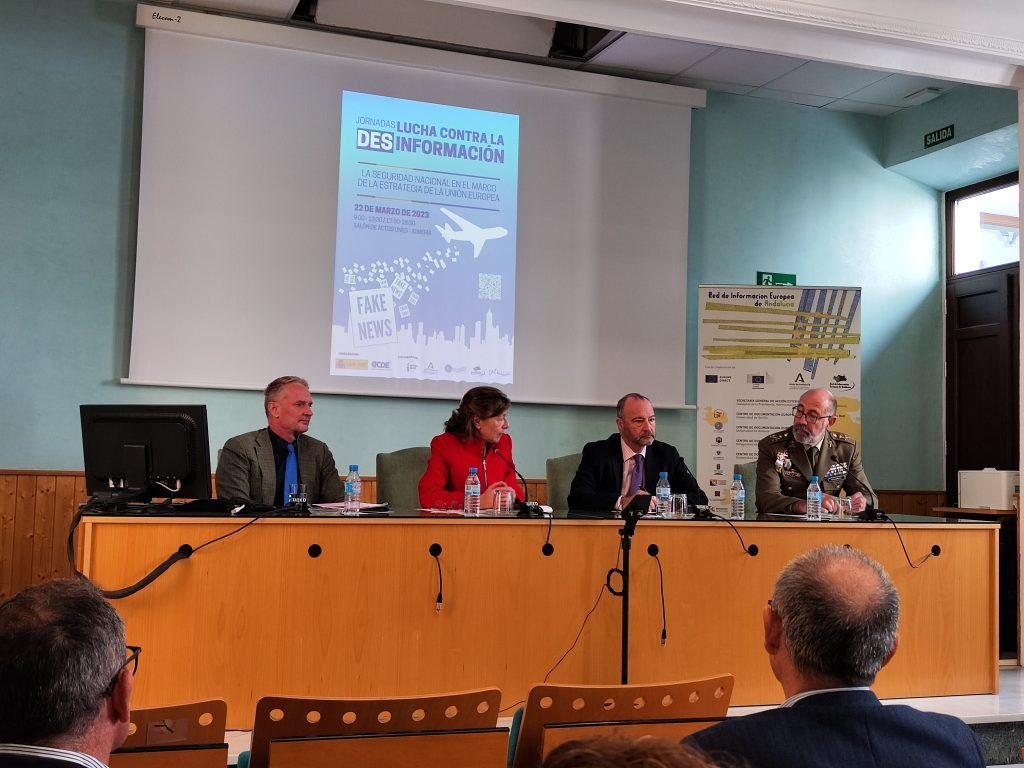
Jornadas “Lucha contra la desinformación: la Seguridad Nacional en el marco de la estrategia de la UE”


  • the COVID-19 disinformation monitoring  programme, carried out by signatories of the Code of Practice, acted as a transparency measure to ensure online platforms’ accountability in tackling disinformation.
  • EDMO is an independent observatory bringing together fact-checkers and academic researchers with expertise in the field of online disinformation, social media platforms, journalist driven media and media literacy practitioners
  • the Strengthened Code of Practice on Disinformation, signed on 16th June 2022, brings together a wide range of players to commit to a broad set of voluntary commitments to counter disinformation
More information: European Commission

Publicaciones relacionadas:

Seminar “Fight against disinformation: National Security in the framework of the EU strategy”. votacionesEuropean Parliament calls for coordinated strategy to protect 2024 European elections against foreign interference Ursula Von der LeyenAn EU approach to enhance economic security cambio climáticoEU proposes comprehensive new on Climate-Security nexus Afghanistan: EU’s position and next steps




Cybersecurity,  Defence & Security,  EU News,  Institutional Affairs,  International Safety and Defence Politics disinformation,  European Commission,  European Union

“This is a space for debate. All comments, for or against publication, that are respectful and do not contain expressions that are discriminatory, defamatory or contrary to current legislation will be published”.

Reader Interactions

Leave a Reply Cancel reply

Your email address will not be published. Required fields are marked *

This site uses Akismet to reduce spam. Learn how your comment data is processed.

Primary Sidebar

Footer

  • CDE Almería
  • Biblioteca Nicolás Salmerón – Universidad de Almería
  • Planta: 1ª, Despacho: 1.05.0B.
  • Ctra. Sacramento s/n. Almería (Spain)
  • Teléfono: (+34) 950 015266

HOME
NEWS
DOCUMENTATION
EUROPE ON THE NET
ABOUT US

  • LEGAL NOTICE
  • PRIVACY POLICY
  • COOKIE POLICY
  • ACCESSIBILITY
  • SITEMAP

Copyright © 2026 CDE Almería · Creative Commons LicenseThis work is licensed under a Creative Commons Attribution-NonCommercial 4.0 International License.

<p>El Centro de Documentación Europea de la Universidad de Almería utiliza cookies propias y de terceros para facilitar al usuario la navegación en su página Web y el acceso a los distintos contenidos alojados en la misma. Asimismo, se utilizan cookies analíticas de terceros para medir la interacción de los usuarios con el sitio Web. Pinche el siguiente enlace si desea información sobre el uso de cookies y como deshabilitarlas. </p>

Politica de privacidad

El Centro de Documentación Europea de la Universidad de Almería utiliza cookies propias y de terceros para facilitar al usuario la navegación en su página Web y el acceso a los distintos contenidos alojados en la misma. Asimismo, se utilizan cookies analíticas de terceros para medir la interacción de los usuarios con el sitio Web. Pinche el siguiente enlace si desea información sobre el uso de cookies y como deshabilitarlas. <a href="/politica-de-cookies" rel="noopener" target="_blank">Más información</a>

Cookies estrictamente necesarias

Las cookies estrictamente necesarias tiene que activarse siempre para que podamos guardar tus preferencias de ajustes de cookies.

Básicamente la web no funcionara bien si no las activas.

Estas cookies son:

  • Comprobación de inicio de sesión.
  • Cookies de seguridad.
  • Aceptación/rechazo previo de cookies.
Cookies de terceros

Esta web utiliza Google Analytics, Google Tag Manager y Yandex Metrika para recopilar información anónima tal como el número de visitantes del sitio, o las páginas más populares.

Dejar estas cookies activas nos permite mejorar nuestra web.

Política de cookies

Pinche el siguiente enlace si desea información sobre el uso de cookies y como deshabilitarlas. Más información