
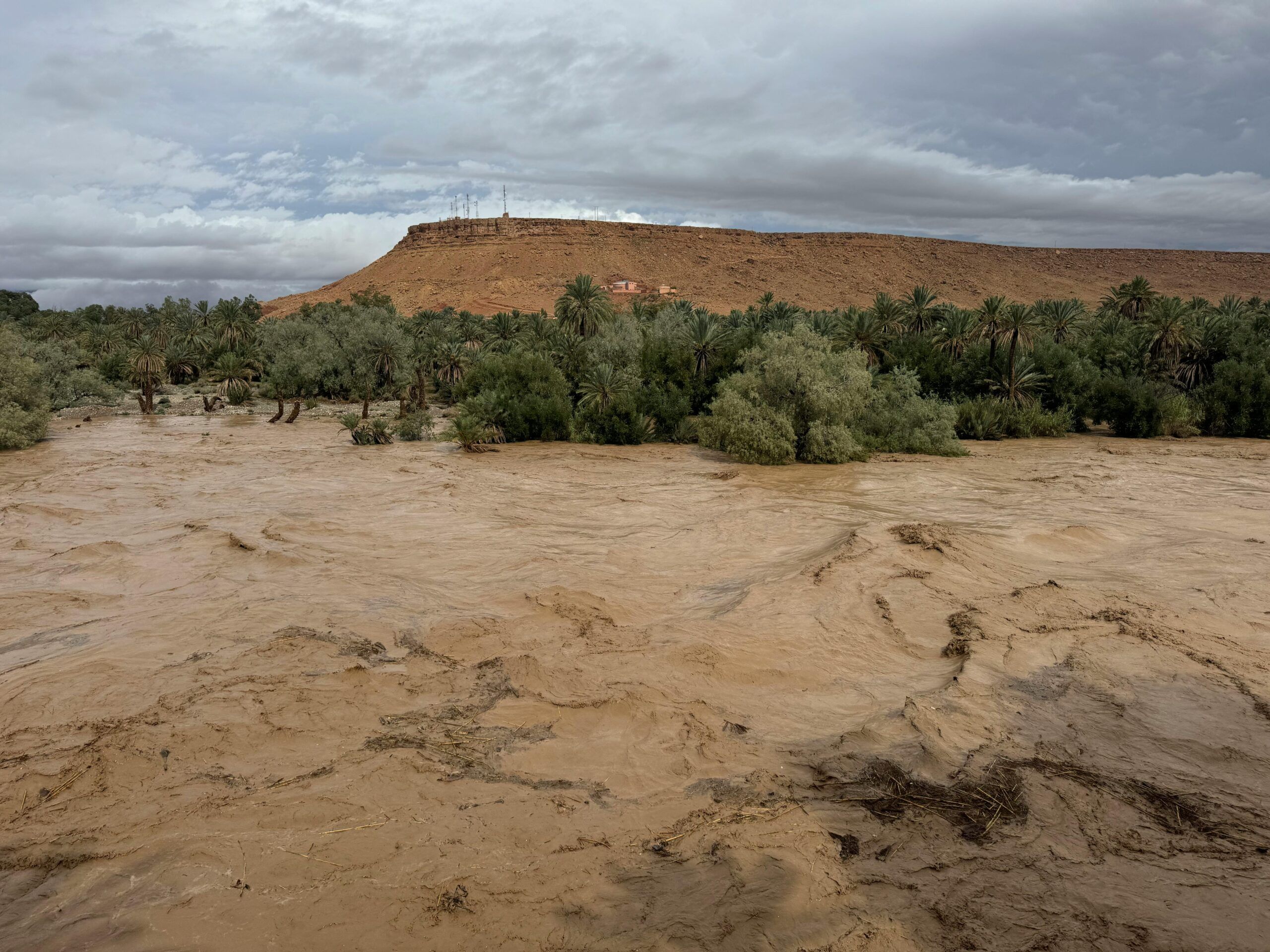
The frequency and intensity of natural disasters in Europe is increasing. Largely due to climate change and urbanisation, Europeans have had to deal with more extreme weather including heatwaves, droughts, wildfires, floods and storms in recent years.
Natural disasters in Europe
As the European Environmental Agency points out, global temperatures have been increasing, with 2023 being the warmest year in more than 100,000 years. In addition, Europe is the fastest-warming continent and temperatures are predicted to rise even further.
This often results in extreme weather conditions, such as droughts and wildfires. For instance, the record drought of 2022 was aggravated by wildfires consuming 900,000 hectares in southern Europe – an area the size of Corsica. In 2023, wildfires burned an additional 500,000 hectares, primarily in Greece, Italy, Spain and Portugal.
However, the impact of climate change is not limited to extreme heat: it has also led to severe flooding across Europe. In the past 30 years, floods have affected 5.5 million people in the EU, caused 3,000 deaths and more than €170 billion in economic damage.
In 2021, floods in Germany and Belgium caused more than 200 deaths and €44 billion worth of damage. In 2023, the damage in Slovenia was estimated at 16% of the country’s gross domestic product and the financial loss from storm Daniel in Greece was estimated at billions of euros. Devastating floods hit Austria, Czechia, Germany, Hungary, Poland, Romania and Slovakia in September 2024.
These natural disasters do not only result in material damages and the loss of life, but also affect ecosystems, agriculture, water supplies, health, energy security, food security, infrastructure, tourism, and can cause threats to the economy and financial markets.
What can the EU do to tackle and recover from natural disasters?
Civil Protection Mechanism
When an emergency hits, the EU can activate its Civil Protection Mechanism in the first instance. It is a mechanism to organise and coordinate an emergency response between the participating states, which include all EU countries as well as 10 other European countries (Albania, Bosnia and Herzegovina, Iceland, Moldova, Montenegro, North Macedonia, Norway, Serbia, Türkiye, and Ukraine).
The Civil Protection Mechanism offers on-the-ground logistical and operational support to improve prevention, preparedness, and response to disasters.
Solidarity and Emergency Aid Reserve
Since 2021, the Solidarity and Emergency Aid Reserve (SEAR) merges two mechanisms to streamline the aid process, allowing for both faster and more flexible emergency efforts and for long-term recovery efforts: the former European Emergency Aid Reserve and the EU Solidarity Fund.
During the revision of the EU’s long-term budget for 2021-2027, approved in 2024, the maximum budget for the SEAR was increased from €1.2 billion to €1.5billion.
The Solidarity and Emergency Aid Reserve provides rapid financial response to all kinds of emergencies like natural disasters or humanitarian crises in EU countries or their neighbours. For example, it provided support to Türkiye after two earthquakes in 2020 and 2023. It can quickly disburse funds to help with immediate humanitarian aid and rescue efforts such as the provision of food, shelter, medical assistance, and transport and logistics, as well as reconstruction.
Within the Solidarity and Emergency Aid Reserve, the EU Solidarity Fund (EUSF) offers more long-term financial support to EU countries or candidate countries mainly in the event of a major natural disaster such as a flood, forest fire, earthquake, storm or drought, or since 2020 a major public health emergency, such as the Covid-19 pandemic.
More than €8.2 billion has been paid out for various recovery efforts since the fund was set up in 2002. Flooding is the most commonly funded event while the largest amounts have been allocated for recovery efforts following earthquakes.
EU Cohesion Policy
Another tool for long-term recovery and reconstruction are funds from the EU Cohesion Policy to rebuild infrastructure, repair damaged public services, and improve disaster preparedness for future emergencies.
Within the Cohesion policy, the European Regional Development Fund (ERDF) can provide support for infrastructure and the European Social Fund (ESF+) supports social recovery efforts such as training or psychological support.
Improving preparedness
While natural disasters can occur anywhere and anytime, the level of preparedness by countries and societies plays a crucial role in mitigating their impact.
The EU has many policies and initiatives that aim to build resilience. Through the European Green Deal, the EU aims to be climate-neutral by 2050 and tackle the global warming that drives many of the natural disasters. With tools such as the EU Adaptation Strategy, the EU wants to become climate resilient.
MEPs call for more funding and faster response to natural disasters
In October 2024, Parliament approved the European Commission’s proposal to mobilise the European Union Solidarity Fund to help Italy, Slovenia, Austria, Greece and France repair damages from extreme flooding and cyclones in 2023.
MEPs called for more funding to strengthen EU preparedness to respond to natural disasters and highlighted the need for urgent investment in flood management and flood risk prevention measures.
Parliament called for faster allocation of money from the EU Solidarity Fund. In addition, the MEPs suggested that the future EU Cohesion Policy should focus on climate change mitigation and adaptation even more and that the Commission should present a European Climate Adaptation Plan.
For more information: European Parliament
Publicaciones relacionadas:
 EU, Latin America and Caribbean step up cooperation on environment
 EU, Latin America and the Caribbean lead the charge for a Green and Just Transition
 EU proposes comprehensive new on Climate-Security nexus
 The EU has presented at the United Nations its first Voluntary Review on the implementation of the 2030 Agenda for Sustainable Development
 EU opens consultation on the future of the Arctic
Leave a Reply