
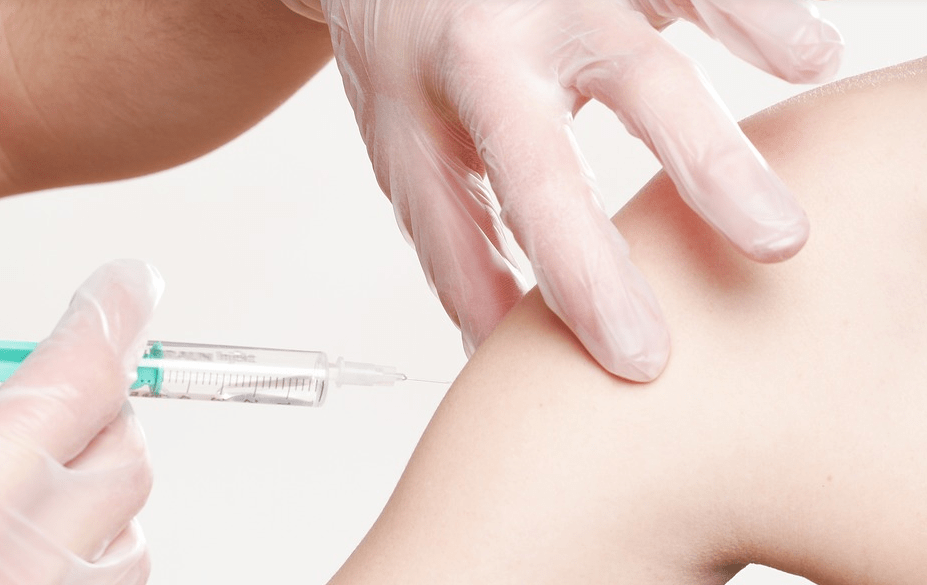
The European Commission organised, in cooperation with the World Health Organisation (WHO), a Global Vaccination Summit on 12 September 2019, in Brussels.
The overall objective have been to give high-level visibility and political endorsement to the topic of vaccination, which is one of the most successful public health measures, saving millions of lives every year. This event aimed at demonstrating EU leadership for a global commitment to vaccination boosts political commitment towards eliminating vaccine-preventable diseases, and engages political leaders and leaders from scientific, medical, industry, philanthropic and civil society in global action against the spread of vaccine misinformation.
What are the benefits of vaccination?
Vaccination is one of the greatest successes of public health. Worldwide, it saves at least 2-3 million lives each year. Before vaccines were given, children often died young or become crippled for life. Vaccination prevents 2.7 million people from contracting measles, 2 million from getting neonatal tetanus, and 1 million from getting pertussis (whooping cough) each year. It has also led to the eradication of smallpox, and the near elimination of polio. In Europe, seasonal flu vaccination prevents around 2 million people from getting the flu each year.
Vaccines are a safe and effective way of protecting children and adults from serious illness and complications from vaccine-preventable diseases. They can prevent a disease from occurring in the first place, saving human suffering, and reducing healthcare costs. Vaccines do not only protect the person vaccinated, they also protect others, provided that ‘herd immunity’ is reached. In the case of measles, diphtheria, tetanus and pertussis, a 95% coverage rate is required to protect the whole community.
Are vaccines safe?
Yes, vaccines are safe. An extensive body of research has proven the effectiveness and safety of vaccines. The EU has very strict rules for the market authorisation of vaccines. On average, it takes 12 to 15 years, including extensive clinical studies, to develop a vaccine. Once on the market, the European Medicines Agency (EMA) continues to supervise a vaccine’s safety, to detect, prevent and communicate any adverse effects. Reports of a link between the Measles, Mumps, and Rubella (MMR) vaccine and autism, for example, were based on a now discredited study.
Are vaccine-preventable diseases increasing in the EU?
The surge in measles cases that began in 2018 has continued into 2019, with approximately 90 000 cases reported for the first half of the year in the WHO European region. This is already more than the number of cases recorded for the whole year of 2018 (84 462).
Between 1 January 2016 and 31 March 2019, 84 deaths were reported for the EU/EEA countries alone. From July 2018 to June 2019, 11 EU/EEA Member States reported 483 cases of rubella. At the end of 2018, four European countries lost their measles elimination status
Seasonal flu vaccination coverage in older age groups has also decreased in the past few years in the majority of EU countries, and the European Centre for Disease Prevention and Control (ECDC) estimates that 40 000 people in Europe – many of whom are elderly – die prematurely from complications from seasonal flu every year.
Is disinformation a determinant for lower vaccine coverage?
Yes. The exposure of citizens to large-scale disinformation, including misleading or outright false information, is a major challenge for Europe.Disinformation is amplified by modern technology and the rapid spread of content on the internet.
Fighting disinformation has to be a coordinated effort involving institutions, social platforms, the media and citizens. The European Commission is taking action to address online disinformation. In 2018, it invited social media platforms to subscribe to a Code of Practice on Disinformation, which commits them to enable monitoring of online disinformation, including on vaccines.
What are the EU recent actions regarding vaccination?
Following the Council Recommendation adopted in December 2018, several actions have already been implemented including the Coalition for Vaccination and the Joint Procurement of pandemic influenza vaccine and others are on track. This includes the development of a common vaccination card, the support to research and innovation for the development of new vaccines or the establishment of a European Vaccination Information Sharing System).
More information
Global Vaccination Summit 2019
Publicaciones relacionadas:
 New intraoperative probe for breast cancer tissue
 Global Report on Food Crises: acute hunger still affecting over 100 million people worldwide
 Commission adopts €4 billion investment package for infrastructure projects across 10 Member States
 Brexit preparedness in the area of Health and Food Safety
 Food safety: New rules to boost consumer trust approved by MEPs
Leave a Reply