
The Commission has adopted its proposal for the 2024 fishing opportunities for the Baltic Sea in response to a scientific assessment that indicates several fisheries are in a dire situation.
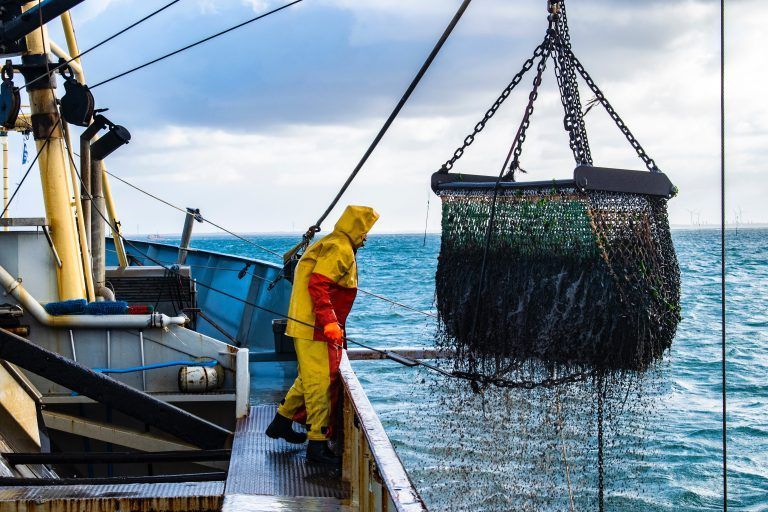
The Commission proposed the total allowable catches (TACs) and quotas for three out of the ten stocks managed in the Baltic Sea. The remaining quota proposals will be established at a later stage. The Commission proposes to increase fishing opportunities for salmon in the Gulf of Finland by 7%, while proposing to decrease fishing of salmon in the main basin by 15%, and to decrease herring catches in the Gulf of Riga by 20%.
As for the other stocks in the Baltic (western cod, eastern cod, western herring, Bothnian herring, central herring, sprat and plaice), the Commission has requested additional information from the International Council on the Exploration of the Seas (ICES) to take better account of the fact that cod is caught together with flatfish, and herring together with sprat.
Scientists estimate that the size of the central Baltic herring stock has been around or below minimum levels since the early 1990s. The stock size of Bothnian herring fell below healthy levels due to the lower number of young fish and the smaller size of older fish. The Commission therefore proposes to close the targeted fisheries for both stocks, and to maintain the closure for the targeted fisheries on cod stocks, western herring and salmon in most of the main basin.
The Commission will propose setting by-catch TACs for western cod, eastern cod, western herring, Bothnian herring and central herring on the basis of additional information expected in autumn. This proposal will allow vessels to land the unavoidable catches of each of these weak stocks when fishing for example for plaice or sprat.
The proposed TACs are based on the best available scientific advice from ICES and follow the Baltic multiannual management plan adopted in 2016 by the European Parliament and the Council. A detailed table is available below.
Cod
For eastern Baltic cod, the Commission intends to keep a catch limit for unavoidable by-catches and all the accompanying measures decided in. Additionally, the Commission suggests removing the exemption from the spawning closure for certain herring fisheries. Despite the measures taken since 2019, when scientists first warned about the poor status of cod, the situation has not yet improved.
The condition of western Baltic cod is weak, and the biomass was at its lowest levels in 2022. This is probably due to a significant natural mortality, which scientists are not yet able to fully understand. The Commission therefore proposes to maintain the TAC limited to unavoidable by-catches and all the accompanying measures from 2023, but to remove recreational fisheries and the exemption from the spawning closure for certain herring fisheries.
Agreement on fisheries subsidies to boost environmental sustainability/ |
Herring
The stock size of western Baltic herring remains below healthy levels. The Commission proposes to maintain the TAC limited to unavoidable by-catches and to remove the exemption for small-scale coastal fisheries.
For herring in the Gulf of Bothnia, the Commission also proposes to close the targeted fisheries and to set a TAC limited to unavoidable by-catches. The scientific assessment states that the likelihood of the stock size falling below the minimum level would be above 5% even if there were no catches.
The stock size of central Baltic herring fell below the minimum levels. The Commission therefore proposes to close the targeted fishery and to limit the TAC to unavoidable by-catches. Consequently, unlike before, the catches of central Baltic herring in the Gulf of Riga should no longer be included in the fishing opportunities for herring in the Gulf of Riga. The resulting scientific catch advice suggests a decrease of 23%, but the Commission proposes to limit the decrease to 20%, as the stock is healthy.
Plaice
While scientific advice would allow for a considerable increase, the Commission remains cautious, mainly to protect cod – which is an unavoidable by-catch when fishing for plaice. At the same time, new measures to reduce cod by-catches through alternative fishing gear will be implemented soon. The Commission therefore requested additional information from ICES before proposing a TAC.
Sprat
Scientific advice for sprat recommends a small decrease in catches. However, sprat is caught together with herring – especially central herring – whose biomass is below minimum levels. Therefore, the level of catches needs to take this factor into consideration. The Commission also requested additional information from ICES before proposing a TAC.
Salmon
The status of the different river salmon populations in the main basin varies considerably, with some remaining weak and others healthy. To achieve healthy levels, ICES advised two years ago the closure of all salmon fisheries in the main basin. At the same time, ICES assessed it would be possible to maintain certain fisheries during the summer in the coastal waters of the Gulf of Bothnia and the Åland Sea. ICES maintained the principle of its advice but limited the geographical area to the Bothnian Bay and decreased the related catch level. The Commission therefore proposes adjusting the fishing opportunities and the accompanying rules accordingly.
More information: European Commission
Publicaciones relacionadas:
 Baltic Sea fishing: Council agrees on 2021 catch limits
 The specific control campaign of the bluefin tuna purse seine and traps kicks off
 Long-term vision for rural areas: stronger, connected, resilient, and prosperous
Fisheries: EU and Norway strengthen cooperation for sustainable fishing in the Northeast Arctic
Long-term vision for rural areas: stronger, connected, resilient, and prosperous
Fisheries: EU and Norway strengthen cooperation for sustainable fishing in the Northeast Arctic
 The Commission includes Acehúche Cheese of Spain in the PDO
Leave a Reply