
At the European Council on 26 and 27 October, EU leaders will discuss the unfolding situation in the Middle East and continued support to Ukraine. They will also cover the mid-term revision of the EU’s long-term budget.
Oriente Próximo
In light of Hamas’ brutal and indiscriminate terrorist attack against Israel and the unfolding tragic scenes in the Gaza Strip resulting from the siege, members of the European Council adopted a statement that sets out the EU’s common position, in which they:
- condemned Hamas in the strongest possible terms
- recognised Israel’s right to defend itself in line with international law and international humanitarian law
- called on Hamas to immediately release all hostages
- called for the provision of urgent humanitarian aid
- expressed their readiness to support civilians in Gaza in coordination with partners
As a follow-up, President Charles Michel also convened an extraordinary European Council meeting on 17 October 2023, to assess the unfolding situation in the Middle East.
At this European Council meeting, EU leaders will continue to discuss the latest developments in the region, including effective and urgent delivery of humanitarian aid to those most in need and how to engage with partners to avoid a dangerous regional escalation of the conflict.
Mid-term revision of EU long-term budget
The EU’s long-term budget, or multiannual financial framework (MFF), provides for financing of programmes and actions in all policy areas in line with the EU’s long-term priorities. The current MFF covers the period 2021-2027 and includes funding for the green and digital transitions.
Since the MFF was adopted in 2020, the EU has faced unprecedented and unexpected challenges, from the consequences of Russia’s war on Ukraine to an acceleration in inflation and interest rates. Against this background, on 20 June 2023 the European Commission presented three legislative proposals to reinforce the EU budget, which leaders will discuss at the meeting.
EU leaders are expected to give guidance on the mid-term revision, including on the most pressing needs and how to finance future priorities.
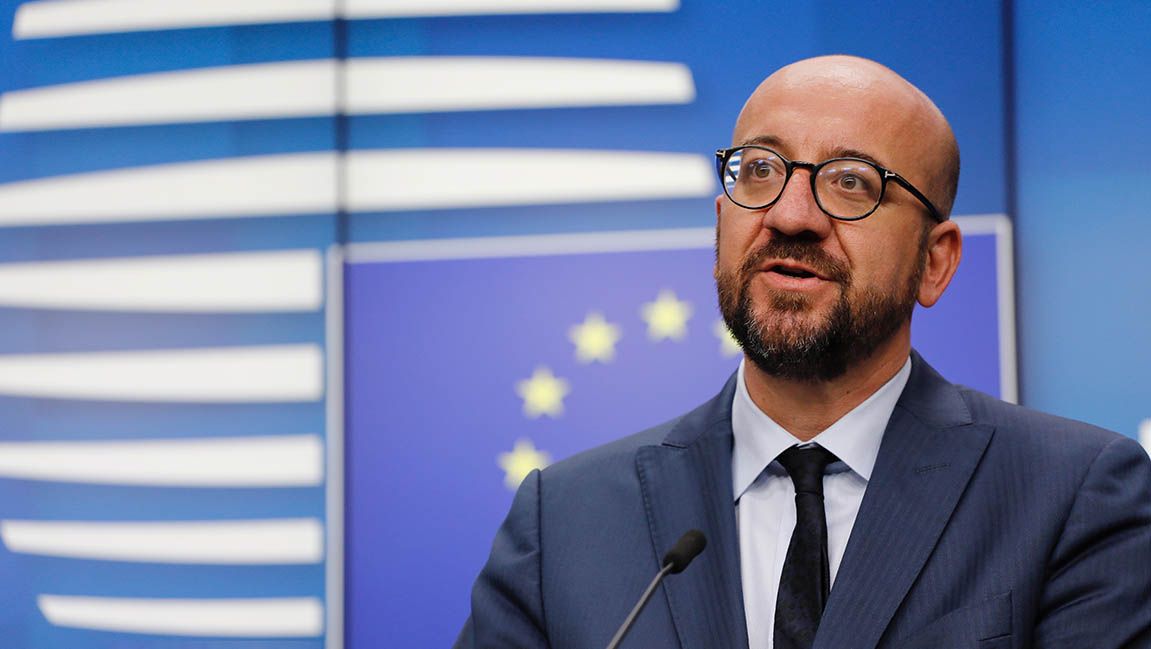
The European Council will discuss the current situation in Israel and the region this afternoon
|
Russia’s war of aggression against Ukraine
The European Council will address the latest developments in Russia’s war of aggression against Ukraine and continued EU support for Ukraine, including financial, military and humanitarian support.
The EU stands firmly with Ukraine and its people, and will continue to strongly support Ukraine for as long as it takes. So far, the EU and its member states have provided over €82 billion to Ukraine.
Economy and competitiveness
Building on the discussions held at the European Council meetings in March and June 2023, EU leaders will discuss progress and measures to create a robust and future-proof economy that secures long-term prosperity.
In this context, the EU aims to strengthen its industrial policy, deepen its single market and reduce strategic dependencies.
Migration
EU leaders will hold a strategic discussion on migration, following up on their discussions at the informal European Council meeting in Granada on 6 October 2023.
External relations
The European Council may address other specific foreign policy issues in the light of current events, including the situation in the Sahel, Pristina-Belgrade relations, and the South Caucasus.
Publicaciones relacionadas:
 European Peace Facility backs African Union with 600 million euros
 The EU on the first anniversary of the 2021 demonstrations in Cuba
 Council adopts additional €1 billion assistance to Ukraine
 Council will sign agreement with Albania on Frontex cooperation
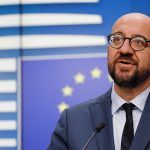 The European Council will discuss the current situation in Israel and the region this afternoon
Leave a Reply