
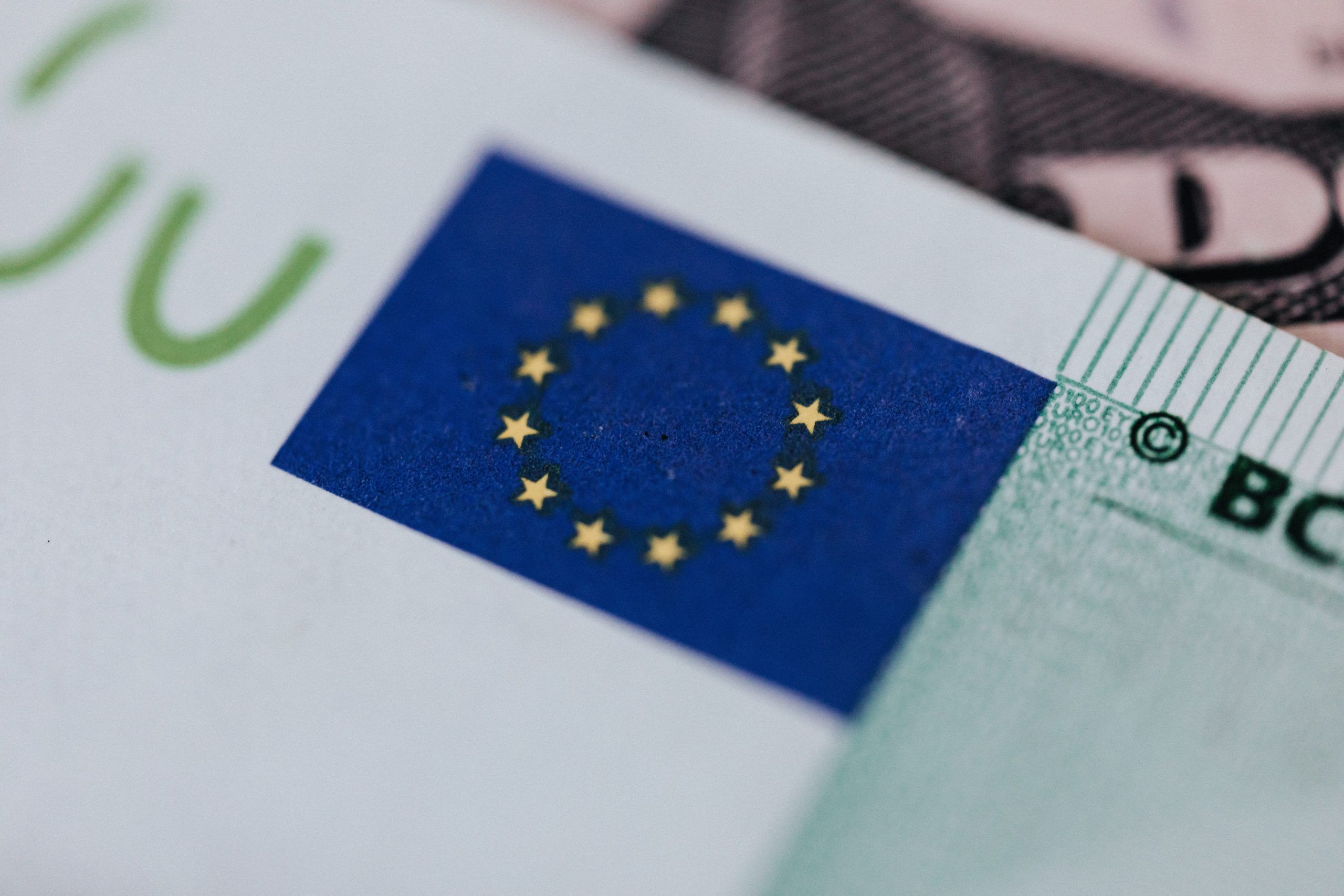
The sixth syndicated transaction for 2023 by the European Commission, which issues EU-Bonds on behalf of the EU, raised €9 billion today in a dual-tranche deal. Two tranches were included in it: a new 3-year line with a due date of October 5, 2026, for which €5 billion were issued, and a tap of a 30-year bond with a due date of March 20, 2053, for which €4 billion were raised.
Investors showed a lot of interest in this Europe Day deal, submitting bids totaling €29 billion for the 3-year bond and €59 billion for the 30-year tap. This translates into oversubscription rates of roughly 6 and 15 times, respectively.
The proceeds of this transaction will be used to support the NextGenerationEU recovery programme and the Macro-Financial Assistance+ programme for Ukraine, in line with the Commission’s approach of issuing single branded “EU-Bonds” rather than separately labelled bonds for individual programmes.
With today’s transaction, the Commission has completed 74% of its €80 billion funding target for the first half of 2023. Out of the €80 billion funding target, some €70 billion will be directed to the NextGenerationEU recovery programme, and around €10 billion to the Macro-Financial Assistance+ programme for Ukraine. A full overview of all transactions executed to date is available online.
A detailed overview of the EU’s planned transactions for the first half of 2023 is available in the EU funding plan.

Commission proposes new economic governance rules fit for the future |
Background
The European Commission is borrowing on international capital markets on behalf of the European Union and disbursing the funds to Member States and third countries under various borrowing programmes. EU borrowing is guaranteed by the EU budget, with contributions to the EU budget being an unconditional legal obligation of all Member States under the Treaties.
Since January 2023, the European Commission is issuing single branded EU-Bonds rather than separately labelled bonds for individual programmes. The proceeds are then allocated to relevant programmes according to the procedures set out in the applicable agreements.
On the basis of EU-Bonds raised since mid-2021, the Commission has so far disbursed € 152.82 billion in grants and loans to the EU Member States under the Recovery and Resilience Facility, on top of further support to other EU programmes benefitting from NextGenerationEU funding.
The Commission has also disbursed €6 billion to Ukraine under the Macro-Financial Assistance + programme, with further disbursements of €1.5 billion each scheduled for May and June 2023. This programme – of €18 billion for the full 2023 – follows the disbursement of €7.2 billion by the Commission in emergency MFA loans to Ukraine in 2022. Prior to that, the EU had provided over €5 billion to Ukraine through five MFA programmes since 2014.
Under the Macro-Financial Assistance (MFA) programme, the EU provides medium/long-term loans or grants, or a combination of these, to partner countries experiencing a balance of payments crisis. MFA beneficiaries include Albania, Bosnia-Herzegovina, Georgia, Jordan, Kosovo, Moldova, Montenegro, North Macedonia, Tunisia, Ukraine.
To further boost secondary market liquidity of EU-Bonds, the Commission is preparing a framework for providing investors with pricing quotes on electronic platforms for EU securities, and is starting to build a facility to support the use of EU bonds as an instrument for repurchase agreements, to be implemented by early 2024.
More information
Publicaciones relacionadas:
 Ukraine: EU grants access to funding under the EU4Health
 Commission adopts banking package to facilitate lending to households and businesses in the EU
 Commission approves second Spanish “umbrella” scheme to support economy in coronavirus outbreak
 Spring 2020 Economic Forecast: A deep and uneven recession, an uncertain recovery
 European Commission to issue EU SURE bonds of up to €100 billion as social bonds
Leave a Reply