• Skip to primary navigation
  • Skip to main content
  • Skip to primary sidebar
  • Skip to footer
  • Bluesky
  • Facebook
  • Instagram
  • Twitter
  • YouTube
CDE Almería – Centro de Documentación Europea – Universidad de Almería

CDE Almería - Centro de Documentación Europea - Universidad de Almería

Centro de Documentación Europea de la Universidad de Almería

  • HOME
  • WHAT´S ON
    • EU NEWS
    • Activities
    • EU Calls and Awards
    • Radio Program «Europe with You»
  • DOCUMENTATION
    • EU Media Collection
      • Web Space
      • MEDIATHEQUE REPOSITORY
  • Europe on the net
    • Institutions
    • EU Representation in Spain
    • European information network of Andalusia
  • ABOUT US
    • Presentation
    • Services
    • People
    • Contact
  • Spanish
  • English

Eurobarometer: Europeans see mental health promotion as equally important as physical health promotion

Inicio » EU News » Health » Diseases » Eurobarometer: Europeans see mental health promotion as equally important as physical health promotion

10 de October de 2023

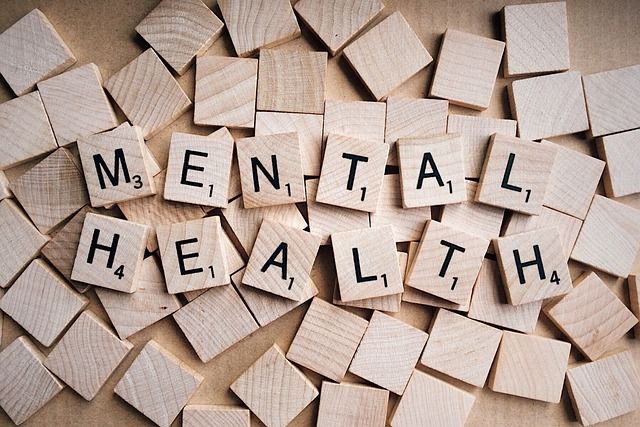
On the eve of World Mental Health Day, a new Eurobarometer on mental health has revealed that nine in ten respondents (89%) consider that mental health promotion is as important as physical health promotion. At the same time, less than half of respondents agree that people with mental health issues receive the same level of care as those with a physical condition. Moreover, almost half of respondents (46%) experienced an emotional or psychosocial problem, such as feeling depressed or anxious, in the past twelve months. More than half of these respondents (54%) with a mental health issue have not received help from a professional, according to the survey. These results show that it is crucial to continue working on mental health at EU level.
Stella Kyriakides, Commissioner for Health and Food Safety, will host a high-level conference on mental health, building on the ‘Comprehensive Approach to Mental Health’, presented by the Commission in June 2023. The event will be attended by Her Majesty the Queen of the Belgians, as well as hundreds of representatives from EU institutions, national governments, European organisations and other interested partners.

Increased pressure on mental health

The Eurobarometer published confirms that recent events such as the COVID-19 pandemic, Russia’s aggression in Ukraine, the climate crisis, and other societal and economic pressures, have exacerbated the already poor levels of mental health in Europe. Before the COVID-19 pandemic, one in six people in the EU suffered from mental health issues and the situation has worsened. Most respondents replied that recent world events have influenced their mental health ‘somewhat’ (44%) or ‘to a great extent’ (18%).

Most respondents (60%) think that the most important factors to achieve good mental health are living conditions, followed by financial security (53%). About a third of Europeans consider that being in contact with nature and green spaces (35%), sleeping habits (35%), physical activity (34%) and social contact (33%) are key contributors to good mental health. In all Member States however, a large majority believe that the use of social media can negatively impact the mental health of young people.

In terms of how the EU can contribute the most to improving the mental health of European citizens, the largest share of respondents selected ‘improving the overall quality of life’ (45%), followed by ‘improving access and support to diagnosis, treatment and care of mental health patients’ (37%), and ‘supporting the mental health of the most vulnerable’ (35%).

The European Commission will support Member States putting people and their mental health first

High-level conference on mental health

Mental health is an integral part of health, and a priority for the Commission. In this context, today, the Commission is organising a hybrid mental health conference in Brussels and online. The half-day event will be hosted by Commissioner Kyriakides and will include keynote speeches from Her Majesty the Queen of the Belgians, Marc Angel, Vice-President of the European Parliament, Dr. Hans Henri P. Kluge, WHO Regional Director for Europe, José Miñones, Spanish Minister of Health, Bertrand Bainvel, UNICEF Representative to the European Institutions, Dr. Péter Takács, Hungarian Minister of State for Health and Frank Vandenbroucke, Belgian Minister of Social Affairs.

Participants will listen to testimonials, exchange information and good practices on topics such as mental health across all policies, promotion and prevention, and equal access for all.

More information: European Commission
Publicaciones relacionadas:

February 4: World Cancer Day salud mentalThe European Commission will support Member States putting people and their mental health first COVID-19: ECDC updates case definition for EU surveillance banderas europeasThe European Commission will address the issue of Coronavirus at its meeting on 5th March

Diseases,  EU News,  Health Comision Europea,  Comision Europea,  mental

“This is a space for debate. All comments, for or against publication, that are respectful and do not contain expressions that are discriminatory, defamatory or contrary to current legislation will be published”.

Reader Interactions

Leave a Reply Cancel reply

Your email address will not be published. Required fields are marked *

This site uses Akismet to reduce spam. Learn how your comment data is processed.

Primary Sidebar

Footer

  • CDE Almería
  • Biblioteca Nicolás Salmerón – Universidad de Almería
  • Planta: 1ª, Despacho: 1.05.0B.
  • Ctra. Sacramento s/n. Almería (Spain)
  • Teléfono: (+34) 950 015266

HOME
NEWS
DOCUMENTATION
EUROPE ON THE NET
ABOUT US

  • LEGAL NOTICE
  • PRIVACY POLICY
  • COOKIE POLICY
  • ACCESSIBILITY
  • SITEMAP

Copyright © 2026 CDE Almería · Creative Commons LicenseThis work is licensed under a Creative Commons Attribution-NonCommercial 4.0 International License.

<p>El Centro de Documentación Europea de la Universidad de Almería utiliza cookies propias y de terceros para facilitar al usuario la navegación en su página Web y el acceso a los distintos contenidos alojados en la misma. Asimismo, se utilizan cookies analíticas de terceros para medir la interacción de los usuarios con el sitio Web. Pinche el siguiente enlace si desea información sobre el uso de cookies y como deshabilitarlas. </p>

Politica de privacidad

El Centro de Documentación Europea de la Universidad de Almería utiliza cookies propias y de terceros para facilitar al usuario la navegación en su página Web y el acceso a los distintos contenidos alojados en la misma. Asimismo, se utilizan cookies analíticas de terceros para medir la interacción de los usuarios con el sitio Web. Pinche el siguiente enlace si desea información sobre el uso de cookies y como deshabilitarlas. <a href="/politica-de-cookies" rel="noopener" target="_blank">Más información</a>

Cookies estrictamente necesarias

Las cookies estrictamente necesarias tiene que activarse siempre para que podamos guardar tus preferencias de ajustes de cookies.

Básicamente la web no funcionara bien si no las activas.

Estas cookies son:

  • Comprobación de inicio de sesión.
  • Cookies de seguridad.
  • Aceptación/rechazo previo de cookies.
Cookies de terceros

Esta web utiliza Google Analytics, Google Tag Manager y Yandex Metrika para recopilar información anónima tal como el número de visitantes del sitio, o las páginas más populares.

Dejar estas cookies activas nos permite mejorar nuestra web.

Política de cookies

Pinche el siguiente enlace si desea información sobre el uso de cookies y como deshabilitarlas. Más información