
The European Union and Euratom will leave the Energy Charter Treaty, while member states will be allowed to support its modernisation during the next Energy Charter Conference. The decisions are linked as they form the two pillars of a political compromise known as the Belgian roadmap on the Energy Charter Treaty.

The formal adoption by the Council gives the final green light for the EU and Euratom to withdraw from the Energy Charter Treaty after the European Parliament approved it during its last plenary session in April 2024.
The Energy Charter Treaty (ECT) is a multilateral agreement that entered into force in 1998 and contains provisions on investment protection and trade in the energy sector. As this treaty is no longer in line with the Paris agreement and the EU ambitions regarding the energy transition, a process of modernisation has been initiated in 2018.
Member states who wish to remain contracting parties after the EU’s and Euratom’s withdrawal will be able to vote during the upcoming Energy Charter Conference – expected to take place by end-2024 – by approving or not opposing the adoption of a modernised agreement.
This way, by breaking the stalemate within the EU, the Belgian roadmap also unlocked the process of modernisation of the Energy Charter Treaty for its non-EU contracting parties. Tinne Van der Straeten, Belgian Minister for Energy, declared: “Today’s adoption represents the final milestone in the Belgian roadmap we crafted for the Energy Charter Treaty. Building on the groundwork laid by our Swedish predecessors, the Belgian presidency has worked tirelessly to break this complex deadlock and found a balance acceptable and useful to all”.
Next steps
The decisions on the withdrawal of the EU and Euratom, as well as the decisions on the modernisation of the Energy Charter Treaty, enter into force. The withdrawal will take effect one year after the receipt of the notification by the depositary of the treaty. The position to be taken by remaining member states on modernisation will apply during the next Energy Charter Conference.
Background
On 7 July 2023, the Commission submitted a proposal for a Council Decision on the withdrawal of the Union from the Energy Charter Treaty, together with a similar proposal for Euratom, as it considered it to no longer be compatible with the EU’s climate goals under the European Green Deal and the Paris Agreement, predominantly due to concerns over continued fossil fuel investments.
On 1 March 2024, the Commission proposed two draft Council decisions on the position to be taken on behalf of the European Union and Euratom respectively in the relevant meeting of the Energy Charter Conference, and for the remaining member states to approve or not to oppose the modernised Energy Charter Treaty.
The set of four decisions are formally adopted as the two pillars of a compromise found within the Council.
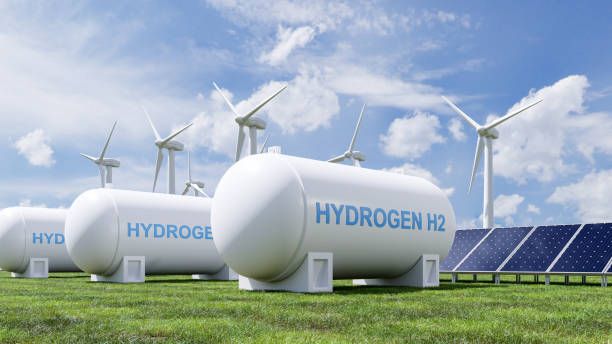
European Commission approves up to €1.4 billion for fourth major project of common European interest in the hydrogen value chain |
More information: Council of the European Union
Publicaciones relacionadas:
 European Union agrees to phase down fluorinated gases and ozone-depleting substances
 EU, Latin America and the Caribbean lead the charge for a Green and Just Transition
 Brazil: EIB lends €300 million to Banco Santander Brasil for small-scale solar energy investments
 Council approves gas and hydrogen market package
 EU, Latin America and Caribbean step up cooperation on environment
Leave a Reply