• Skip to primary navigation
  • Skip to main content
  • Skip to primary sidebar
  • Skip to footer
  • Bluesky
  • Facebook
  • Instagram
  • Twitter
  • YouTube
CDE Almería – Centro de Documentación Europea – Universidad de Almería

CDE Almería - Centro de Documentación Europea - Universidad de Almería

Centro de Documentación Europea de la Universidad de Almería

  • HOME
  • WHAT´S ON
    • EU NEWS
    • Activities
    • EU Calls and Awards
    • Radio Program «Europe with You»
  • DOCUMENTATION
    • EU Media Collection
      • Web Space
      • MEDIATHEQUE REPOSITORY
  • Europe on the net
    • Institutions
    • EU Representation in Spain
    • European information network of Andalusia
  • ABOUT US
    • Presentation
    • Services
    • People
    • Contact
  • Spanish
  • English

EU-funded project could incorporate touch sense into virtual reality

Inicio » Noticias UE » Investigación e Innovación » Technology » EU-funded project could incorporate touch sense into virtual reality

10 de March de 2023

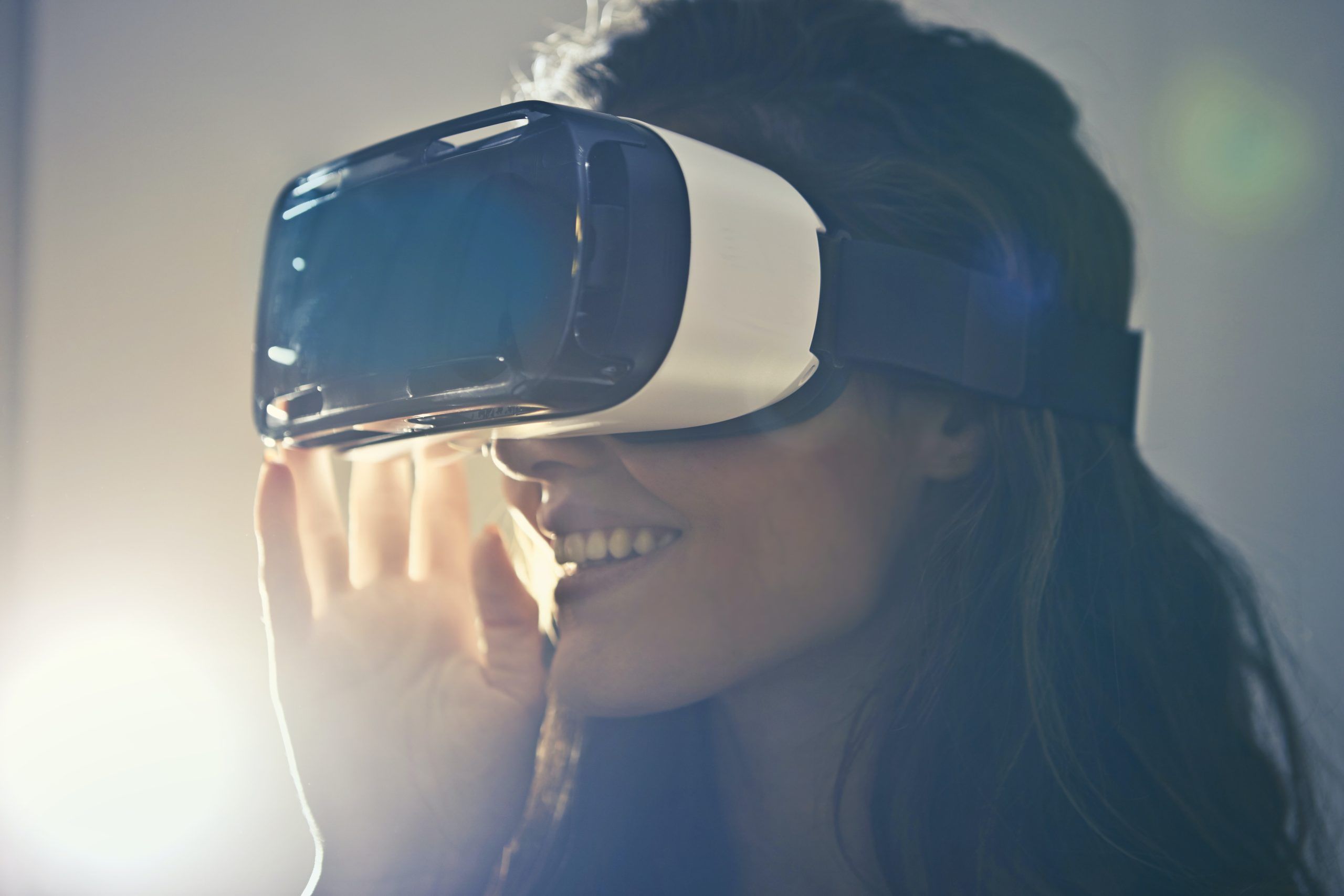
mujer con cascos de realidad virtual

New technologies can bring the sense of touch to virtual reality and create a more immersive experience.

Although virtual reality (VR) is often associated with gaming and the metaverse, it can have a huge impact on a variety of industries. For example, surgeons can use it to perform complex surgical techniques and even perform operations remotely.

Virtual reality can help people deal with phobias and support people with disabilities. Innovators use virtual reality to develop potentially revolutionary products, and engineers use it to test the safety of those products.

However, to reach its full potential, VR cannot be solely a visual experience; it must be immersive, which means that all senses, including touch, must be incorporated.

“Being able to mimic the characteristics of natural tactile feedback would substantially increase the quality of the immersive virtual reality experiences used locally or remotely,” says Thierry Keller, a neuro engineer at Tecnalia Research & Innovation.

With the support of the EU-funded TACTILITY project, Tecnalia is helping develop new technology that could add a sense of touch to the VR experience.

Five ways the European Parliament wants to protect online gamers

The right touch

At the heart of the project are two innovative solutions: an electronic skin that is worn on a prosthetic hand and a glove that can provide tactile feedback to the user. “Our ultimate goal is to create a technology that is able to not only perform the functions of a hand but, more importantly, also feel like a hand,” explains Keller.

By including an array of electrode pads, the TACTILITY glove looks to enable electrical stimulation for closed-loop tactile interaction within virtual environments. “We not only want the user to be able to push a virtual button, we want them to have the sensation of pushing the button,” adds Keller. “If the user wants to pet a virtual cat, we want them to not only see the act of petting the cat, but also actually feel the cat.”

There’s nothing virtual about these challenges

Of course, getting to this point is a long and tedious process, and one full of many unexpected challenges. One challenge researchers faced was designing a glove capable of accommodating different hand and finger sizes. “To work, the electrode pads must have skin contact with all points of one’s hand,” remarks Keller. “This means having a properly fitting glove is absolutely essential.”

Researchers also quickly discovered the importance of calibrating the solution’s different electro-tactile pads. “A good calibration of the 30 to 60 pads is crucial for a precise tactile experience,” notes Keller. “As a result, we invested a lot in developing procedures that can correctly calibrate the glove in less than three minutes.”

A surprisingly real experience

Following multiple iterations, designs and tests, the project ultimately succeeded at advancing the state of the art in virtual tactile capability. For instance, the TACTILITY glove surface is capable of feeling soft and rough surfaces. “In one demonstration, our solution gave the user a close-to-real-world experience of feeling cold rain falling onto their hands,” says Keller.

The glove can also provide users with a sensation of having to lightly or firmly push a virtual button. “The pressure feedback of a virtual button or spring is very natural and surprising to experience,” concludes Keller. “Such new experiences open the door to many innovative VR applications across many application domains.”

More information

CORDIS

Publicaciones relacionadas:

Scientists solve mysteries of the world’s oldest computer Default ThumbnailSmart materials help heal wounds Greek island Tilos picks up award for clean energy transition Up to 78 million batteries will be discarded daily by 2025, researchers warn Servidores digitalesNew world-class European supercomputer opens in Italy

EU News,  Research and Innovation,  Technology CORDIS,  Investigación,  project,  Research,  Technology,  virtual reality

“This is a space for debate. All comments, for or against publication, that are respectful and do not contain expressions that are discriminatory, defamatory or contrary to current legislation will be published”.

Reader Interactions

Leave a Reply Cancel reply

Your email address will not be published. Required fields are marked *

This site uses Akismet to reduce spam. Learn how your comment data is processed.

Primary Sidebar

Footer

  • CDE Almería
  • Biblioteca Nicolás Salmerón – Universidad de Almería
  • Planta: 1ª, Despacho: 1.05.0B.
  • Ctra. Sacramento s/n. Almería (Spain)
  • Teléfono: (+34) 950 015266

HOME
NEWS
DOCUMENTATION
EUROPE ON THE NET
ABOUT US

  • LEGAL NOTICE
  • PRIVACY POLICY
  • COOKIE POLICY
  • ACCESSIBILITY
  • SITEMAP

Copyright © 2026 CDE Almería · Creative Commons LicenseThis work is licensed under a Creative Commons Attribution-NonCommercial 4.0 International License.

<p>El Centro de Documentación Europea de la Universidad de Almería utiliza cookies propias y de terceros para facilitar al usuario la navegación en su página Web y el acceso a los distintos contenidos alojados en la misma. Asimismo, se utilizan cookies analíticas de terceros para medir la interacción de los usuarios con el sitio Web. Pinche el siguiente enlace si desea información sobre el uso de cookies y como deshabilitarlas. </p>

Politica de privacidad

El Centro de Documentación Europea de la Universidad de Almería utiliza cookies propias y de terceros para facilitar al usuario la navegación en su página Web y el acceso a los distintos contenidos alojados en la misma. Asimismo, se utilizan cookies analíticas de terceros para medir la interacción de los usuarios con el sitio Web. Pinche el siguiente enlace si desea información sobre el uso de cookies y como deshabilitarlas. <a href="/politica-de-cookies" rel="noopener" target="_blank">Más información</a>

Cookies estrictamente necesarias

Las cookies estrictamente necesarias tiene que activarse siempre para que podamos guardar tus preferencias de ajustes de cookies.

Básicamente la web no funcionara bien si no las activas.

Estas cookies son:

  • Comprobación de inicio de sesión.
  • Cookies de seguridad.
  • Aceptación/rechazo previo de cookies.
Cookies de terceros

Esta web utiliza Google Analytics, Google Tag Manager y Yandex Metrika para recopilar información anónima tal como el número de visitantes del sitio, o las páginas más populares.

Dejar estas cookies activas nos permite mejorar nuestra web.

Política de cookies

Pinche el siguiente enlace si desea información sobre el uso de cookies y como deshabilitarlas. Más información