• Skip to primary navigation
  • Skip to main content
  • Skip to primary sidebar
  • Skip to footer
  • Bluesky
  • Facebook
  • Instagram
  • Twitter
  • YouTube
CDE Almería – Centro de Documentación Europea – Universidad de Almería

CDE Almería - Centro de Documentación Europea - Universidad de Almería

Centro de Documentación Europea de la Universidad de Almería

  • HOME
  • WHAT´S ON
    • EU NEWS
    • Activities
    • EU Calls and Awards
    • Radio Program «Europe with You»
  • DOCUMENTATION
    • EU Media Collection
      • Web Space
      • MEDIATHEQUE REPOSITORY
  • Europe on the net
    • Institutions
    • EU Representation in Spain
    • European information network of Andalusia
  • ABOUT US
    • Presentation
    • Services
    • People
    • Contact
  • Spanish
  • English

EU donates financial and in-kind assistance due to the earthquake in Afghanistan

Inicio » EU News » Environmental Affairs » Natural disasters » EU donates financial and in-kind assistance due to the earthquake in Afghanistan

3 de September de 2025

Following the strong earthquake that hit north-eastern Afghanistan, the EU has approved €1 million in humanitarian emergency funding to address the most urgent needs of the affected population. This money will go to humanitarian partners that are already carrying out relief operations on the ground.
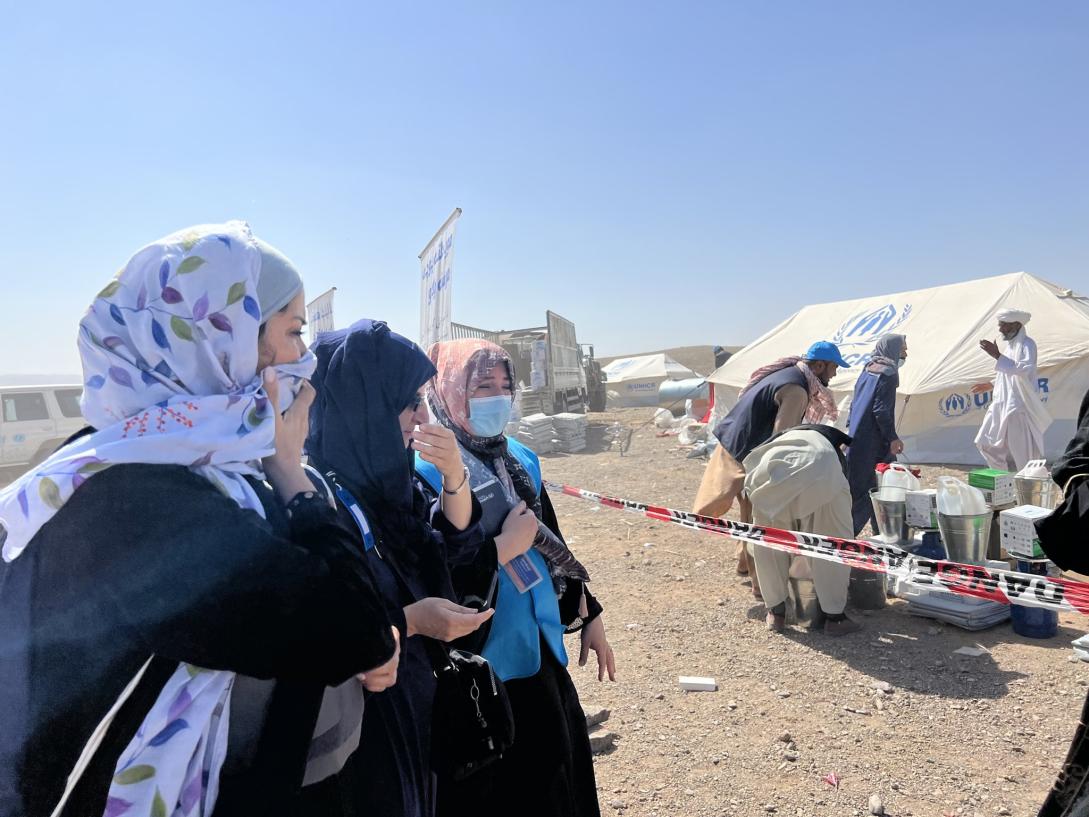
In addition, the EU will donate around 130 tonnes of relief supplies from its own humanitarian stocks. This includes essentials such as tents and other shelter items, clothes, medical supplies and material to purify water. The supplies will be delivered via two EU-funded humanitarian flights that are scheduled to arrive to Kabul later this week.

Furthermore, the EU has activated the Copernicus satellite service to produce emergency maps, which will help in the delivery of the aid.

This new assistance comes in addition to the €161 million in humanitarian aid already allocated in 2025 for humanitarian organisations in the country. EU humanitarian aid in Afghanistan is solely channelled through humanitarian partners.

The EU has been organising humanitarian flights to Afghanistan since 2021, including several following the deadly 2023 earthquake in Herat, which have already carried approximately 2000 tonnes of live-saving items.

Background

On 31 August, a magnitude-6 earthquake hit the north-eastern provinces of Kunar, Nangharhar and Laghman in Afghanistan. At least 800 people have died, according to existing reports, though these figures are likely to rise as further information becomes available.

Afghanistan remains one of the largest humanitarian crises in the world, with nearly 23 million people estimated to need humanitarian assistance this year. Some 12.6 million people are experiencing acute food insecurity, and mass repatriations of Afghans from neighbouring countries in past months have further increased the population’s needs. The EU has provided life-saving assistance to the population for decades, with approximately €2 billion in humanitarian funding since 1994.

More information: European Commission

Publicaciones relacionadas:
EU launches Humanitarian Air Bridge after Myanmar earthquake and provides further assistance The Commission pays an advance of EUR 100 million to Spain for the recovery after the DANA The EU prepares equipment and aircraft to fight forest fires. 2023 among the five worst years for wildfires in Europe, Commission report shows EU provides €2.5 million in initial emergency aid for people affected by the earthquake in Myanmar

Environmental Affairs,  EU News,  Natural disasters Afghanistan,  Earthquake,  European Commission,  European Union,  Financial Aid,  Humanitarian Aid,  in-kind assitance,  News

“This is a space for debate. All comments, for or against publication, that are respectful and do not contain expressions that are discriminatory, defamatory or contrary to current legislation will be published”.

Reader Interactions

Leave a Reply Cancel reply

Your email address will not be published. Required fields are marked *

This site uses Akismet to reduce spam. Learn how your comment data is processed.

Primary Sidebar

Footer

  • CDE Almería
  • Biblioteca Nicolás Salmerón – Universidad de Almería
  • Planta: 1ª, Despacho: 1.05.0B.
  • Ctra. Sacramento s/n. Almería (Spain)
  • Teléfono: (+34) 950 015266

HOME
NEWS
DOCUMENTATION
EUROPE ON THE NET
ABOUT US

  • LEGAL NOTICE
  • PRIVACY POLICY
  • COOKIE POLICY
  • ACCESSIBILITY
  • SITEMAP

Copyright © 2026 CDE Almería · Creative Commons LicenseThis work is licensed under a Creative Commons Attribution-NonCommercial 4.0 International License.

<p>El Centro de Documentación Europea de la Universidad de Almería utiliza cookies propias y de terceros para facilitar al usuario la navegación en su página Web y el acceso a los distintos contenidos alojados en la misma. Asimismo, se utilizan cookies analíticas de terceros para medir la interacción de los usuarios con el sitio Web. Pinche el siguiente enlace si desea información sobre el uso de cookies y como deshabilitarlas. </p>

Politica de privacidad

El Centro de Documentación Europea de la Universidad de Almería utiliza cookies propias y de terceros para facilitar al usuario la navegación en su página Web y el acceso a los distintos contenidos alojados en la misma. Asimismo, se utilizan cookies analíticas de terceros para medir la interacción de los usuarios con el sitio Web. Pinche el siguiente enlace si desea información sobre el uso de cookies y como deshabilitarlas. <a href="/politica-de-cookies" rel="noopener" target="_blank">Más información</a>

Cookies estrictamente necesarias

Las cookies estrictamente necesarias tiene que activarse siempre para que podamos guardar tus preferencias de ajustes de cookies.

Básicamente la web no funcionara bien si no las activas.

Estas cookies son:

  • Comprobación de inicio de sesión.
  • Cookies de seguridad.
  • Aceptación/rechazo previo de cookies.
Cookies de terceros

Esta web utiliza Google Analytics, Google Tag Manager y Yandex Metrika para recopilar información anónima tal como el número de visitantes del sitio, o las páginas más populares.

Dejar estas cookies activas nos permite mejorar nuestra web.

Política de cookies

Pinche el siguiente enlace si desea información sobre el uso de cookies y como deshabilitarlas. Más información