
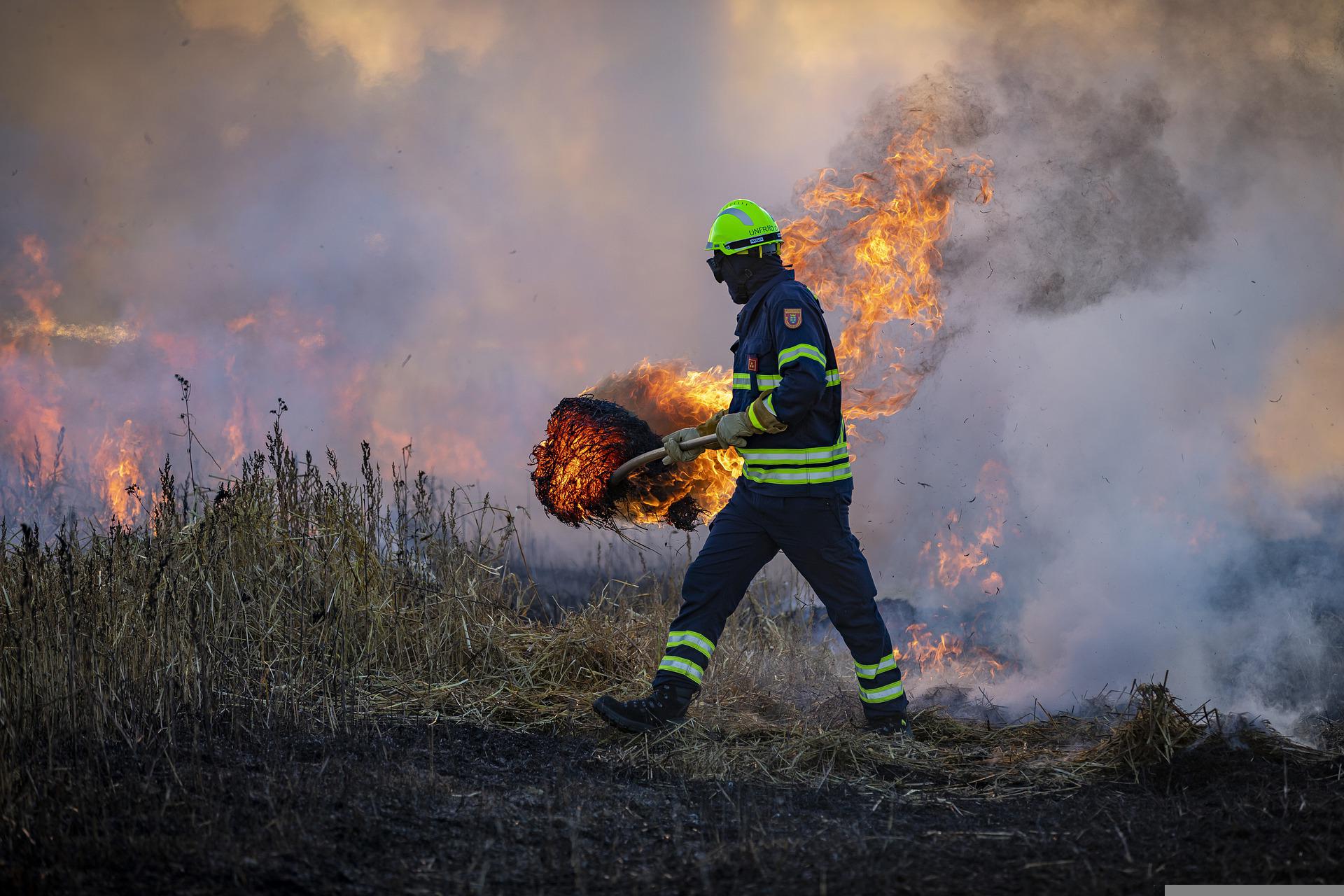
To prepare for the increased risk of forest fires during the coming summer months, the EU has formed teams of firefighters and aircraft to assist European countries that could be affected by forest fires.
To quickly support local fire brigades, some 650 firefighters from 14 European countries will be strategically positioned in key high-risk locations in France, Greece, Portugal and Spain during July and August. This will increase the number of firefighters in each country.
In addition, 22 firefighting aircraft and four helicopters will be stationed in ten Member States to intervene in case of need. These assets, coordinated and co-funded through the EU Civil Protection Mechanism, will help mitigate risks and allow for a faster and more robust crisis response. These assets are in addition to national capabilities.
Overview of the EU-supported summer fleet
-France: four medium amphibious aircraft and one helicopter.
-Greece: four medium amphibious aircraft.
-Croatia: two medium amphibious aircraft.
-Italy: two medium amphibious aircraft.
-Spain: two medium amphibious aircraft.
-Sweden: four light aircraft.
-Portugal: two light aircraft.
-Cyprus: two light aircraft.
-Czechia: two helicopters.
-Slovakia: one helicopter.
In addition, a further 19 ground firefighting teams (of about 30 firefighters each) and an advisory and assessment team are ready to be mobilised by the EU through the Mechanism, in close cooperation with Member States and participating States.
A dedicated forest fire support team will be set up in the EU 24/7 Emergency Response Coordination Centre to monitor risks and analyse scientific data.
This proactive approach underlines the EU’s commitment to pre-empt disasters – including those exacerbated by climate change – and to join forces to protect lives, homes and the environment.
Background
Wildfire prevention, preparedness and response go hand in hand in saving lives, protecting livelihoods and safeguarding the environment. Having experienced wildland fire experts, well-trained firefighters, effective information technologies and a variety of means of response in place quickly makes a real difference.
Any country in the world affected by forest fires can request assistance through the EU Civil Protection Mechanism (CPMU). Once activated, the EU 24/7 Emergency Response Coordination Centre coordinates and co-finances the provision of assistance, offered on a voluntary basis by EU Member States and ten other MPCU participating states (Iceland, Norway, Serbia, North Macedonia, Montenegro, Turkey, Bosnia and Herzegovina, Albania, Moldova and Ukraine).
In addition, the EU has established the European Civil Protection Group (ECPG) to have a critical number of civil protection capabilities readily available, allowing for a stronger, faster and more coherent collective response to disasters. It brings together resources from the 27 Member States and the ten MPCU participating States, ready to be deployed as soon as possible to the affected areas. These resources may include firefighting teams, experts or specialised equipment. The SPTF operates on voluntary contributions, which are then assessed and certified by the EU. The final decision to deploy these assets remains with the contributing countries.
In the event of an emergency requiring additional life-saving assistance, the EU’s own strategic reserve, rescEU, can step in to provide additional resources to respond to disasters affecting Europeans. RescEU includes, among others, a fleet of fire-fighting aircraft, medical evacuation planes, a stock of medical equipment and field hospitals. It works by providing grants to Member States to acquire these capabilities, with the European Commission taking the final decision on their deployment.
The EU’s Emergency Response Coordination Centre also monitors the evolution of forest fires with the support of early warning systems – such as the European Forest Fire Information System – while the EU’s Copernicus satellite mapping service complements operations with detailed information from space.
More information: European Commission
Publicaciones relacionadas:
 EU launches Humanitarian Air Bridge after Myanmar earthquake and provides further assistance
 Close to €1.6 billion of EU funds will help Spain recover from Valencia’s devastating floods
 Europe’s health and competitiveness are being undermined by the slow implementation of anti-pollution laws.
 The EU is sending aircraft and firefighters to tackle the devastating forest fires ravaging France and Spain
 2023 among the five worst years for wildfires in Europe, Commission report shows
Leave a Reply