
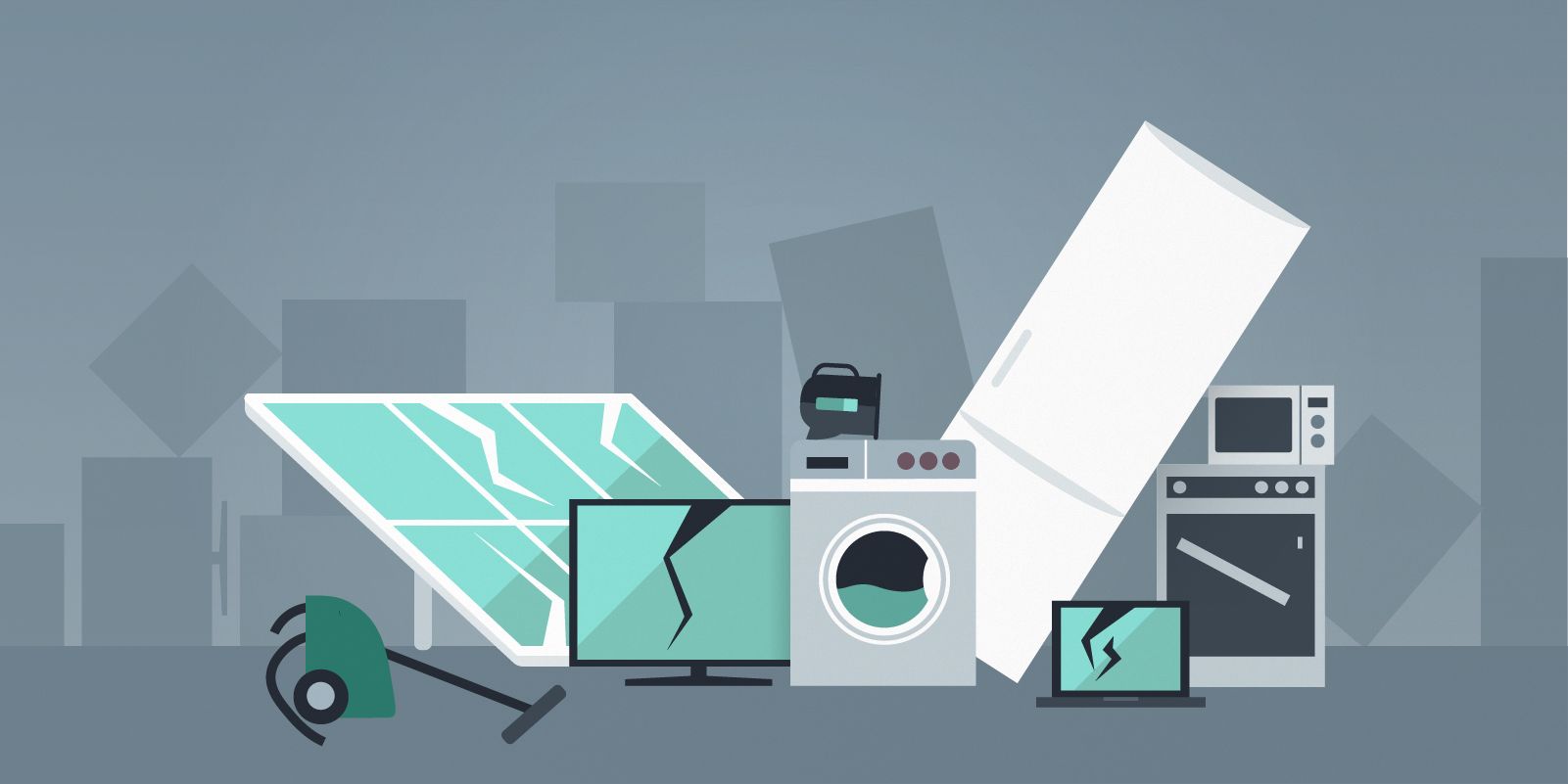
WEEE represents one of the fastest growing waste streams in the EU, and less than 40% of it is recycled.
Electronic and electrical devices define modern life: from washing machines and hoovers to smartphones and computers, it is hard to imagine life without them. Yet the waste they generate has become an obstacle to the EU’s efforts to reduce its ecological footprint.
What is e-waste?
Electronic and electrical waste, or e-waste, covers a variety of different products that are thrown away after use.
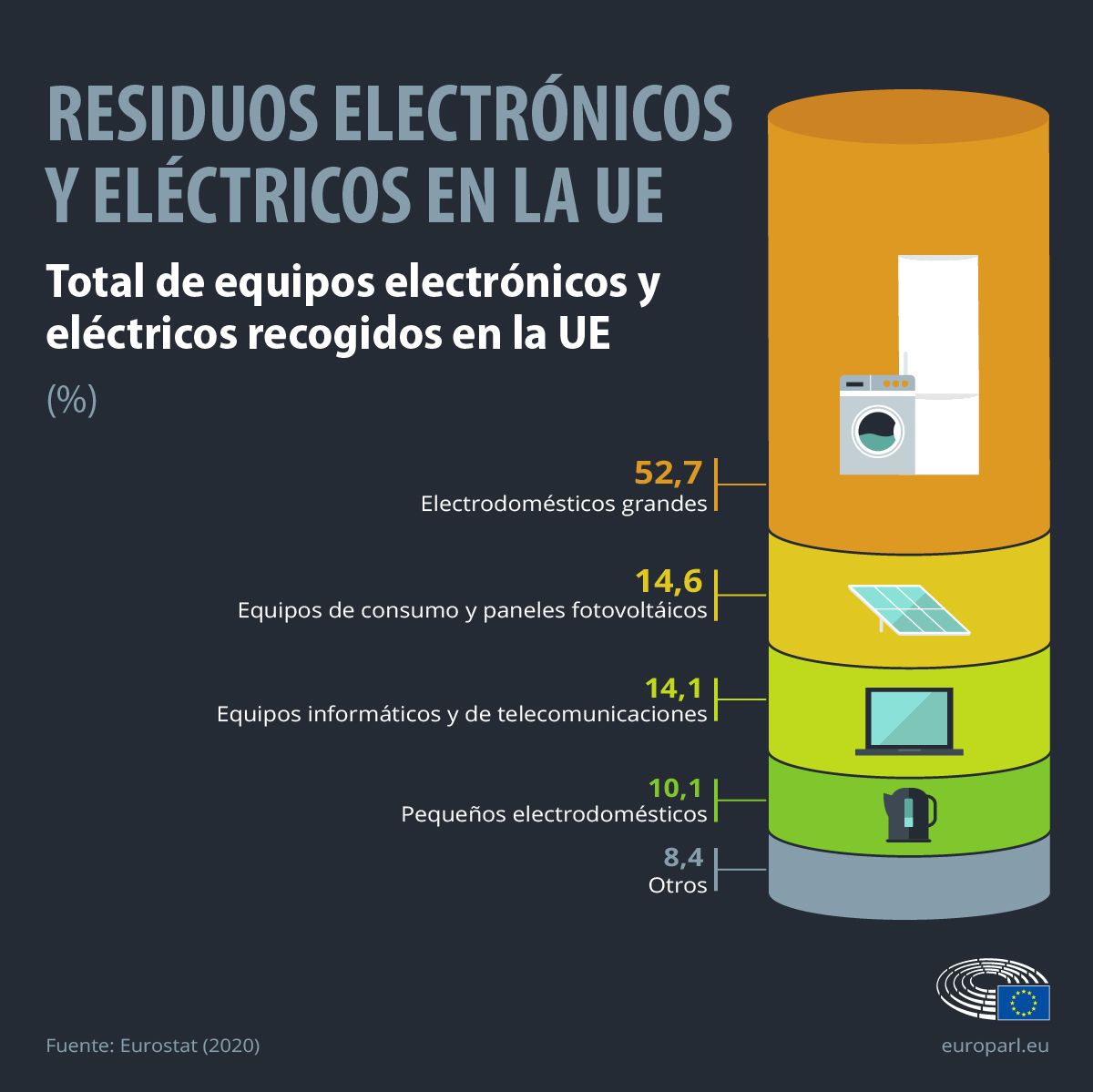
Large household appliances, such as washing machines and electric stoves, are the most collected, making up more than half of all collected e-waste.
This is followed by IT and telecommunications equipment (laptops, printers), consumer equipment and photovoltaic panels (video cameras, fluorescent lamps) and small household appliances (vacuum cleaners, toasters).
All other categories, such as electrical tools and medical devices, together make up just 7.2% of the collected e-waste.
E-waste recycling rate in the EU
Recycling practices vary among EU countries. In 2017, Croatia recycled 81% of all electronic and electrical waste, while in Malta, the figure was 21%.
In 2020, 10.3 kilos of electrical and electronic equipment waste were collected per inhabitant in the EU.
Why do we need to recycle electronic and electrical waste?
Discarded electronic and electrical equipment contains potentially harmful materials that pollute the environment and increase the risks for people involved in recycling e-waste. To counter this problem, the EU has passed legislation to prevent the use of certain chemicals, like lead.
Many rare minerals that are needed in modern technology come from countries that do not respect human rights. To avoid inadvertently supporting armed conflict and human rights abuses, MEPs have adopted rules requiring European importers of rare earth minerals to carry out background checks on their suppliers.

European Commission proposes reform of the EU electricity market set-up |
What is the EU doing do reduce e-waste?
In March 2020, the European Commission presented a new circular economy action plan that has as one of its priorities the reduction of electronic and electrical waste. The proposal specifically outlined immediate goals like creating the right to repair and improving reusability in general, the introduction of a common charger and establishing a rewards system to encourage recycling electronics.
USB Type-C will become the common charger for most electronic devices in the EU by the end of 2024. Laptops will have to be equipped with a USB Type-C port by 28 April 2026.
In March 2023, the Commission presented a new proposal to promote repairing and reusing goods. Within the legal guarantee It would require sellers to repair products unless it is cheaper to replace them. Beyond the guarantee, it would provide rights to make repairs easier and cheaper.
Parliament’s position
In February 2021, the Parliament adopted a resolution on the new circular economy action plan demanding additional measures to achieve a carbon-neutral, environmentally sustainable, toxic-free and fully circular economy by 2050, including tighter recycling rules and binding targets for materials use and consumption by 2030.
In the field of e-waste, MEPs want the EU to promote longer product life through reusability and reparability.
Dutch Renew Europe member Jan Huitema, the lead MEP on this issue, said it was important to approach the Commission’s action plan “holistically”: “Circularity principles need to be implemented throughout all stages of a value chain to make the circular economy a success.”
He said particular focus should be given to the e-waste sector, as recycling is lagging behind production. “In 2017, the world generated 44.7 million metric tonnes of e-waste and only 20% was recycled properly.”
Huitema also said that the action plan could help with the economic recovery. “Stimulating new innovative business models will in turn create the new economic growth and job opportunities Europe will need to recover.
More information
Publicaciones relacionadas:
 Council and Parliament agree to reduce limit values for the presence of persistent organic pollutants in waste
 EU action to reduce energy consumption
 European Parliament approves end of combustion cars by 2035
 Agreement between the European Parliament and Council to install more recharging and refuelling stations across Europe
 Covid-19: EU recovery plan should prioritise climate investment
Leave a Reply