
- 60 billion to strengthen Ukraine’s defence, 30 billion in macro-financial assistance and budgetary support.
- Ukraine must continue with democratic reforms and the fight against corruption.
- The loan will be financed by the issuance of common EU debt, and Ukraine will repay it once it receives war reparations from Russia.
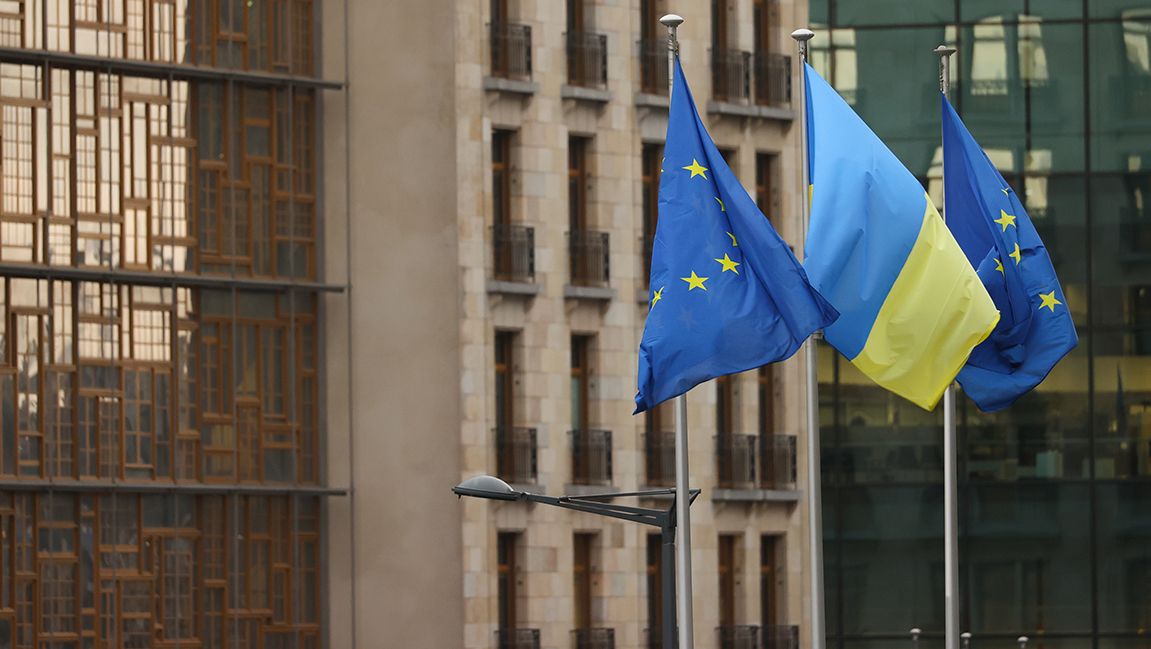
The plenary gave the green light to three legislative texts to grant Ukraine a loan of €90 billion and support it in its defence against Russia’s war of aggression.
In separate votes on Wednesday, Parliament approved a package to support Ukraine with an EU loan of €90 billion for 2026 and 2027. The credit will serve to meet Ukraine’s urgent financing needs amid Russia’s war of aggression, which is about to enter its fifth year.
Of this amount, €30 billion will be for macro-financial assistance or budget support through the EU’s Ukraine Facility. The remaining €60 billion will be used to strengthen Ukraine’s defence capabilities and purchase military equipment. The aim is to ensure access to critical defence products, in principle from the Ukrainian, EU and European Economic Area (EEA)/European Free Trade Association (EFTA) defence industries. The legislation provides for exceptions for purchases from other countries in the event that certain materials or equipment are not available for immediate delivery to Ukraine.
Financial assistance will be aligned with Ukraine’s financing needs, as set out in a financing strategy developed by Ukraine and assessed by the Commission. The strategy will require the approval of the Council.
All financing will be subject to strict conditions, including Ukraine’s continued commitment to democratic governance, the rule of law and the protection of human rights, including minority rights. This also includes ongoing efforts to combat corruption and strengthen democratic institutions.
To finance the loan to Ukraine, the EU will jointly tap the capital markets. The loan will be guaranteed by the ‘breathing space’ in the EU’s long-term budget, and the debt servicing costs will be covered by the EU’s annual budgets. The Commission estimates that debt servicing costs will amount to €1 billion by 2027 and around €3 billion per year from 2028 onwards. Ukraine will be responsible for repaying the principal of the loan once it receives war reparations from Russia.
The legislative texts articulating the financial support package were processed under the Parliament’s urgent procedure to ensure that the aid reaches Ukraine quickly. The proposal on the support loan received 458 votes in favour, 140 against and 44 abstentions. The amendment to the Ukraine Facility received 473 votes in favour, 140 against and 32 abstentions. Finally, the amendment to the EU’s long-term budget (MFF) for 2021-2027 was passed with 490 votes in favour, 130 against and 32 abstentions.
Next steps
The Council must also formally adopt the three laws so that the Commission can disburse the first payment at the beginning of the second quarter of 2026.
Background
The EU support loan was agreed at the European Council meeting in Brussels on 18 December 2025 and was presented by the European Commission on 14 January 2026. The €90 billion will cover two-thirds of Ukraine’s estimated financial needs for the period in question. As the Czech Republic, Hungary and Slovakia have opted out of supporting the loan, the agreement went ahead as enhanced cooperation, a mechanism that allows EU Member States to move forward in specific areas in the absence of unanimity.
More information: European Parliament.
Publicaciones relacionadas:
 Kyiv is under siege and so is democracy – President Metsola to Ukraine Speaker
 Disinformation: The harder you push, the harder they resist
 Ukraine’s financing gap and longer-term reconstruction
 EU renews individual sanctions against Russia
 Geopolitical consequences of Russia’s war of aggression against Ukraine
Leave a Reply