
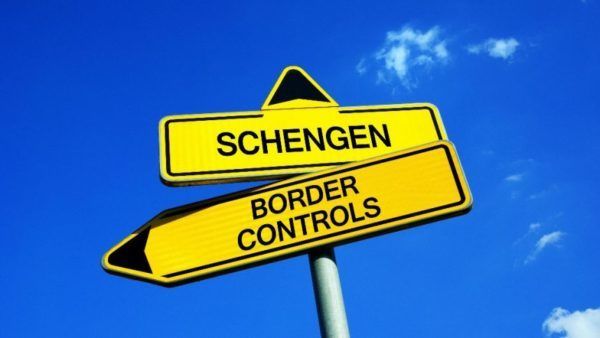
The Council has given its final approval to a new Schengen Borders Code, the EU’s rulebook that deals with the management of internal and external borders as well as the rules governing border control of persons crossing the external EU borders. The reform is instrumental in making the Schengen area more resilient to present and future crises at its external borders. It makes also sure that people living and travelling in the EU can fully enjoy the benefits of borderless travel.

The regulation introduces the possibility to adopt EU-wide measures that restrict the access of third-country nationals to the EU in the event of a large-scale public health emergency. It also puts in place a transfer procedure that will help tackle the secondary movement of migrants (from one member state to another) and offers solutions to situations of instrumentalisation of migration. Clarifications to the rules about the reintroduction of border controls will ensure they remain a measure of last resort.
Annelies Verlinden, Belgian Minister of the Interior, Institutional Reform and Democratic Renewal, declared: “Travelling in the Schengen zone without border checks is one of the main accomplishments of the EU. With today’s vote we have given member states tools at hand to maintain borderless travel within the Schengen area, while securing external borders, addressing irregular migration and public health risks.”
Main elements
In the event of a large-scale public health emergency the new rules grant the possibility – following a Council decision – to put in place harmonised temporary travel restrictions at the EU’s external border. During the COVID-19 pandemic, the EU was only able to issue non-binding recommendations as regards travel restrictions to member states. In addition to travel restrictions, the Council can also impose testing, quarantine and self-isolation and other health related measures for non-EU citizens entering the EU.
In order to fight the instrumentalisation of migration the amended Schengen Borders Code will offer member states the possibility to limit the number of border crossing points or reduce their opening hours and allows for enhanced border surveillance measures.
The revised Schengen Borders Code clarifies the existing framework for the reintroduction and prolongation of internal border controls, which is possible when there is a serious threat to public policy or internal security. Member states will need to assess the necessity and proportionality of this decision and assess whether the objectives pursued cannot be attained by other means.
European Commission publishes Schengen report setting out new priorities for the coming year |
Moreover, the revised regulation sets out the maximum duration during which these controls at the internal borders may be maintained. Internal border controls which have been notified to the Commission, member states and the European Parliament before being reintroduced may remain in place for a maximum duration of two years. In major exceptional situations, internal border controls may be prolonged by 6 additional months, renewable once for a total duration of one year.
The possibility to use alternative measures, typically consisting of police checks and cross-border cooperation, should encourage member states to substantially limit the reintroduction of temporary border controls. These measures must be clearly distinct from systematic checks on persons at external borders.
Additionally, a new transfer procedure will allow a member state to transfer third-country nationals apprehended in the border area and staying illegally in its territory to the member state from which they arrived directly. The apprehension should take place in the context of a bilateral cooperation framework.
Next steps
This regulation enters into force on the twentieth day following that of its publication in the Official Journal of the European Union. It is directly applicable in the EU countries.
Background
The proposal was presented on 14 December 2021 by the European Commission. The Council presidency and European Parliament (rapporteur Sylvia Guillaume) reached a provisional agreement on the final law on 6 February 2024.
More information: Council of the European Union
Publicaciones relacionadas:
 Council gives green light to single work and residence permit for third-country nationals
 International Day against Homophobia, Biphobia and Transphobia: Statement by the High Representative on behalf of the EU
 New rules for a responsible and transparent short-term rental sector
 Council approves gas and hydrogen market package
 European Parliament extends exemption to EU privacy rules that makes it easier to detect child sexual abuse content on the internet until 2026
Leave a Reply