• Skip to primary navigation
  • Skip to main content
  • Skip to primary sidebar
  • Skip to footer
  • Bluesky
  • Facebook
  • Instagram
  • Twitter
  • YouTube
CDE Almería – Centro de Documentación Europea – Universidad de Almería

CDE Almería - Centro de Documentación Europea - Universidad de Almería

Centro de Documentación Europea de la Universidad de Almería

  • HOME
  • WHAT´S ON
    • EU NEWS
    • Activities
    • EU Calls and Awards
    • Radio Program «Europe with You»
  • DOCUMENTATION
    • EU Media Collection
      • Web Space
      • MEDIATHEQUE REPOSITORY
  • Europe on the net
    • Institutions
    • EU Representation in Spain
    • European information network of Andalusia
  • ABOUT US
    • Presentation
    • Services
    • People
    • Contact
  • Spanish
  • English

Costa Rica launches the III National Integration Plan and the Protocol for the Protection and Assistance of Migrants

Inicio » EU News » Institutional Affairs » International Politics and Cooperation » Costa Rica launches the III National Integration Plan and the Protocol for the Protection and Assistance of Migrants

20 de April de 2023

The Costa Rican Directorate General of Migration and Foreigners (DGME) and the MIEUX+ team jointly organized an event in San José on April 13, 2023.

grupo de personas atienden una conferencia

The event was an opportunity to present the National Integration Plan 2023-2027 and the Migrant Protection and Assistance Protocol and to celebrate the upcoming closure of the fifth successful project between DGME and MIEUX+.

The collaboration with DGME has seen MIEUX+ support the Government of Costa Rica on migration issues with the development of now three National Integration Plans, the Protocol for assistance to migrants in emergency situations, and also a training course on Human Trafficking issues for more than 580 public officials and NGO staff.

The National Integration Plan 2023 – 2027

Costa Rica is a key transit country on the Central American route, with South-North flows to the U.S. and North-South flows from Nicaragua. In addition, its favorable economic development and political stability have made the country an attractive destination for migrants seeking to settle permanently, but also for seasonal and circular migrants, including women, children, and indigenous and Afro-descendant populations.

This variety of profiles requires holistic, data-driven and rights-based efforts to mobilize migratory movements as a force for development.
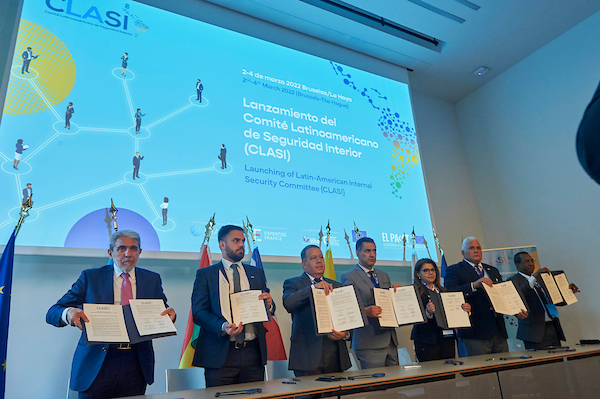
Ministers and Vice-Ministers from seven Latin American countries set up the Latin American Internal Security Committee

Costa Rica’s migration profile and the exceptional challenges intensified by Covid-19 prompted the national authorities to develop a new plan to ensure orderly, safe and regular migration, as well as a protocol for emergency situations, inspired by European and regional best practices, through their collaboration with the MIEUX+ initiative.

Over the past 12 months, the development of the III NIP brought together stakeholders from multiple sectors to address the integration challenges facing Costa Rica in light of an increasingly complex migration situation in recent years. Its priority was to reinforce the Plan’s holistic approach, based on diversity as a value and driver of socioeconomic development, while incorporating new stakeholders such as municipalities and the private sector.

Thus, the National Integration Plan 2023-2027 proposes to promote positive change by streamlining the integration of migrants and Costa Ricans through 6 strategic pillars: Education, Health, Maximizing diversity, Combating vulnerability and Strengthening inter-institutional coordination.

Similarly, the Protocol for the Protection and Assistance to Migrants in Crisis Situations will strengthen Costa Rica’s comprehensive response to protect and assist migrant populations, especially during crises, such as the COVID-19 emergency.

More information: European Union Delegation to Costa Rica

Publicaciones relacionadas:

EU-US: A new transatlantic agenda for global change EU statements on trials and sentences in Cuba consejo europeoExtraordinary European Council meeting: discussion on further assistance to Ukraine Schengen, migration, asylum and security in times of COVID-19 SOTEU Ursula Von der Leyen EuropaSOTEU 2020: President Von der Leyen sets the course for Europe

EU News,  Institutional Affairs,  International Politics and Cooperation Costa Rica,  Delegation,  EU,  European Union,  Migration

“This is a space for debate. All comments, for or against publication, that are respectful and do not contain expressions that are discriminatory, defamatory or contrary to current legislation will be published”.

Reader Interactions

Leave a Reply Cancel reply

Your email address will not be published. Required fields are marked *

This site uses Akismet to reduce spam. Learn how your comment data is processed.

Primary Sidebar

Footer

  • CDE Almería
  • Biblioteca Nicolás Salmerón – Universidad de Almería
  • Planta: 1ª, Despacho: 1.05.0B.
  • Ctra. Sacramento s/n. Almería (Spain)
  • Teléfono: (+34) 950 015266

HOME
NEWS
DOCUMENTATION
EUROPE ON THE NET
ABOUT US

  • LEGAL NOTICE
  • PRIVACY POLICY
  • COOKIE POLICY
  • ACCESSIBILITY
  • SITEMAP

Copyright © 2026 CDE Almería · Creative Commons LicenseThis work is licensed under a Creative Commons Attribution-NonCommercial 4.0 International License.

<p>El Centro de Documentación Europea de la Universidad de Almería utiliza cookies propias y de terceros para facilitar al usuario la navegación en su página Web y el acceso a los distintos contenidos alojados en la misma. Asimismo, se utilizan cookies analíticas de terceros para medir la interacción de los usuarios con el sitio Web. Pinche el siguiente enlace si desea información sobre el uso de cookies y como deshabilitarlas. </p>

Politica de privacidad

El Centro de Documentación Europea de la Universidad de Almería utiliza cookies propias y de terceros para facilitar al usuario la navegación en su página Web y el acceso a los distintos contenidos alojados en la misma. Asimismo, se utilizan cookies analíticas de terceros para medir la interacción de los usuarios con el sitio Web. Pinche el siguiente enlace si desea información sobre el uso de cookies y como deshabilitarlas. <a href="/politica-de-cookies" rel="noopener" target="_blank">Más información</a>

Cookies estrictamente necesarias

Las cookies estrictamente necesarias tiene que activarse siempre para que podamos guardar tus preferencias de ajustes de cookies.

Básicamente la web no funcionara bien si no las activas.

Estas cookies son:

  • Comprobación de inicio de sesión.
  • Cookies de seguridad.
  • Aceptación/rechazo previo de cookies.
Cookies de terceros

Esta web utiliza Google Analytics, Google Tag Manager y Yandex Metrika para recopilar información anónima tal como el número de visitantes del sitio, o las páginas más populares.

Dejar estas cookies activas nos permite mejorar nuestra web.

Política de cookies

Pinche el siguiente enlace si desea información sobre el uso de cookies y como deshabilitarlas. Más información