• Skip to primary navigation
  • Skip to main content
  • Skip to primary sidebar
  • Skip to footer
  • Bluesky
  • Facebook
  • Instagram
  • Twitter
  • YouTube
CDE Almería – Centro de Documentación Europea – Universidad de Almería

CDE Almería - Centro de Documentación Europea - Universidad de Almería

Centro de Documentación Europea de la Universidad de Almería

  • HOME
  • WHAT´S ON
    • EU NEWS
    • Activities
    • EU Calls and Awards
    • Radio Program «Europe with You»
  • DOCUMENTATION
    • EU Media Collection
      • Web Space
      • MEDIATHEQUE REPOSITORY
  • Europe on the net
    • Institutions
    • EU Representation in Spain
    • European information network of Andalusia
  • ABOUT US
    • Presentation
    • Services
    • People
    • Contact
  • Spanish
  • English

Commission publishes new guidelines for more clarity on air passenger rights

Inicio » EU News » Law » Commission publishes new guidelines for more clarity on air passenger rights

24 de July de 2024

The Commission is publishing revised interpretative guidelines on air passenger rights that will facilitate compliance with regulations and harmonise enforcement by national bodies. Since 2016, the Commission has been providing guidelines to address common concerns raised by national enforcement bodies, passengers and their associations, and industry representatives. Today’s revision notably takes into account rulings by the Court of Justice since 2016 that clarify certain provisions, allowing for more effective and consistent enforcement of the rules. A new section on massive travel disruptions has also been added.
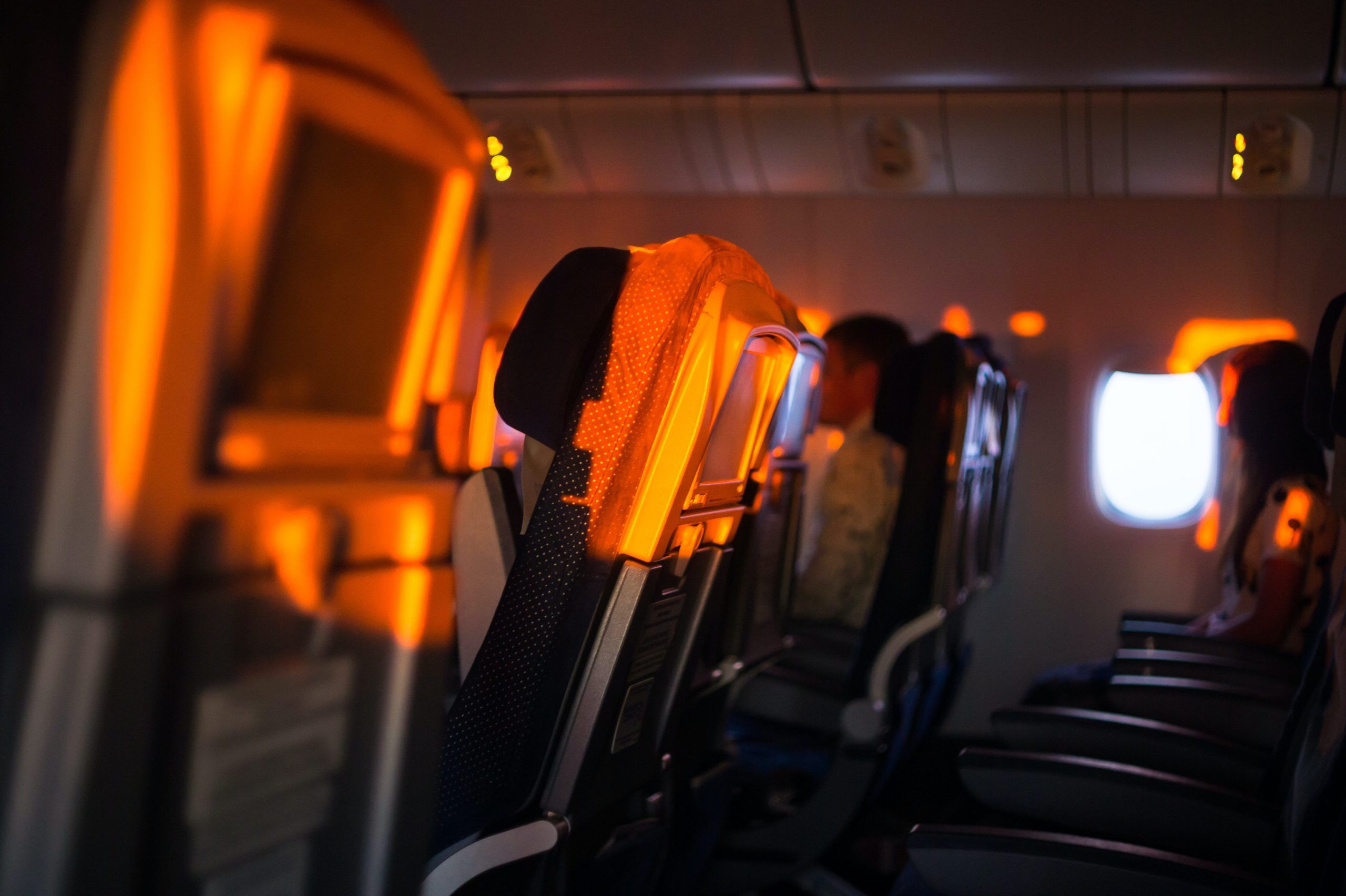
Interior de la cabina de un avión iluminada por la luz del atardecer

Revised interpretative guidelines on the rights of persons with disabilities and persons with reduced mobility when travelling by air have also been published.

Passenger rights defined at EU level are applied by transport providers and enforced by national bodies. Disparities between national practices can create confusion for passengers when they face challenges during their journey, especially if it spans EU borders. It can also be difficult for passengers to understand the necessary steps and find appropriate assistance. Today’s guidelines will help improve implementation and complement the Commission’s efforts to raise awareness of passenger rights, including through regular online awareness-raising campaigns, the Your Europe web pages and a passenger rights mobile app.

Passengers in need of more information about their rights

Today’s guidelines come together with the release of a new Eurobarometer survey, which highlights that most Europeans still feel that they lack sufficient information on their passenger rights, even if awareness increased compared to five years ago.

Results highlight that respondents were most likely to feel well informed about passenger rights for travel by rail (33%), followed by air (30%), coach (27%) and then ship/ferry (16%). The survey also shows that 84% of respondents requesting assistance for persons with disabilities or reduced mobility were satisfied with the response.

35% of travellers have seen information about passenger rights, up 13 percentage points since 2019. Most commonly, this was in railway stations (9%, +5). 75% of plane passengers received pre-travel information on their rights, compared to 61% for rail, 51% for coaches, and 54% for ships/ferries. Awareness-raising remains extremely important.

Satisfaction with how significant disruptions were handled is highest for flights (66%, +12 pp, followed by ships/ferries (53%, -3 pp), rail (52%, +8 pp), and coaches (50%, +8 pp).

Use of single tickets for multimodal journeys remains limited at 11% (unchanged), with rail/coach (39%, +9 pp) and air/rail (25%, +1 pp) the most common combinations. 32% (+7 pp) faced issues, 13% (+4 pp) almost missed a connection, and 11% (+3 pp) actually missed a connection.

Next steps

The guidelines can now be used by operators and national enforcement bodies. In addition, the results of the Eurobarometer survey, as well as the guidelines, are available to the co-legislators as they consider the two Commission proposals of November 2023 on enforcing passenger rights and on passenger rights in the context of multimodal journeys, as well as the Commission’s 2013 legislative proposal on air passenger rights.

Background

The EU is the only area in the world where passengers are protected by a full set of rights – whether they travel by air, rail, ship or bus and coach. Passenger rights are based on three cornerstones: non-discrimination; accurate, timely and accessible information; immediate and proportionate assistance. This protection is unique in the world.

Eurobarometer is the polling instrument used by EU institutions and agencies to regularly monitor the state of public opinion in Europe on issues related to the European Union as well as attitudes on subjects of political or social nature. This Eurobarometer survey was conducted between 12 January and 4 February 2024, with interviews of 26,601 citizens.

For More Information: European Commission

Communication to the Commission on air passenger rights

Revised interpretative guidelines on air passenger rights

Communication to the Commission on the rights of persons with disabilities and persons with reduced mobility when travelling by air

Revised interpretative guidelines on the rights of persons with disabilities and persons with reduced mobility when travelling by air

Results: Special Eurobarometer 543

Information on EU passenger rights is available in all official languages of the EU on the Your Europe web pages and via the EU passenger rights app.

Publicaciones relacionadas:

Know your EU passenger rights before you travel derechos de las victimasCommission proposes to strengthen the rights of victims of crime abogadas, juicioNew measures to simplify the resolution of disputes out of court and boost consumer rights European Parliament extends exemption to EU privacy rules that makes it easier to detect child sexual abuse content on the internet until 2026 European Parliament approves new rules to improve working conditions for delivery drivers and other employees of digital platforms




EU News,  Law,  Social Affairs air passenger,  European Commission,  new guidelines,  Passenger Rights

“This is a space for debate. All comments, for or against publication, that are respectful and do not contain expressions that are discriminatory, defamatory or contrary to current legislation will be published”.

Reader Interactions

Leave a Reply Cancel reply

Your email address will not be published. Required fields are marked *

This site uses Akismet to reduce spam. Learn how your comment data is processed.

Primary Sidebar

Footer

  • CDE Almería
  • Biblioteca Nicolás Salmerón – Universidad de Almería
  • Planta: 1ª, Despacho: 1.05.0B.
  • Ctra. Sacramento s/n. Almería (Spain)
  • Teléfono: (+34) 950 015266

HOME
NEWS
DOCUMENTATION
EUROPE ON THE NET
ABOUT US

  • LEGAL NOTICE
  • PRIVACY POLICY
  • COOKIE POLICY
  • ACCESSIBILITY
  • SITEMAP

Copyright © 2026 CDE Almería · Creative Commons LicenseThis work is licensed under a Creative Commons Attribution-NonCommercial 4.0 International License.

<p>El Centro de Documentación Europea de la Universidad de Almería utiliza cookies propias y de terceros para facilitar al usuario la navegación en su página Web y el acceso a los distintos contenidos alojados en la misma. Asimismo, se utilizan cookies analíticas de terceros para medir la interacción de los usuarios con el sitio Web. Pinche el siguiente enlace si desea información sobre el uso de cookies y como deshabilitarlas. </p>

Politica de privacidad

El Centro de Documentación Europea de la Universidad de Almería utiliza cookies propias y de terceros para facilitar al usuario la navegación en su página Web y el acceso a los distintos contenidos alojados en la misma. Asimismo, se utilizan cookies analíticas de terceros para medir la interacción de los usuarios con el sitio Web. Pinche el siguiente enlace si desea información sobre el uso de cookies y como deshabilitarlas. <a href="/politica-de-cookies" rel="noopener" target="_blank">Más información</a>

Cookies estrictamente necesarias

Las cookies estrictamente necesarias tiene que activarse siempre para que podamos guardar tus preferencias de ajustes de cookies.

Básicamente la web no funcionara bien si no las activas.

Estas cookies son:

  • Comprobación de inicio de sesión.
  • Cookies de seguridad.
  • Aceptación/rechazo previo de cookies.
Cookies de terceros

Esta web utiliza Google Analytics, Google Tag Manager y Yandex Metrika para recopilar información anónima tal como el número de visitantes del sitio, o las páginas más populares.

Dejar estas cookies activas nos permite mejorar nuestra web.

Política de cookies

Pinche el siguiente enlace si desea información sobre el uso de cookies y como deshabilitarlas. Más información