• Skip to primary navigation
  • Skip to main content
  • Skip to primary sidebar
  • Skip to footer
  • Bluesky
  • Facebook
  • Instagram
  • Twitter
  • YouTube
CDE Almería – Centro de Documentación Europea – Universidad de Almería

CDE Almería - Centro de Documentación Europea - Universidad de Almería

Centro de Documentación Europea de la Universidad de Almería

  • HOME
  • WHAT´S ON
    • EU NEWS
    • Activities
    • EU Calls and Awards
    • Radio Program «Europe with You»
  • DOCUMENTATION
    • EU Media Collection
      • Web Space
      • MEDIATHEQUE REPOSITORY
  • Europe on the net
    • Institutions
    • EU Representation in Spain
    • European information network of Andalusia
  • ABOUT US
    • Presentation
    • Services
    • People
    • Contact
  • Spanish
  • English

Can dumping iron in the sea slow climate change?

Inicio » EU News » Environmental Affairs » Can dumping iron in the sea slow climate change?

25 de September de 2023

Scientists and entrepreneurs have proposed geoengineering projects to modify Earth’s environment. Our expert Marion Fourquez weighs in on the value of tipping metal shavings into the sea.

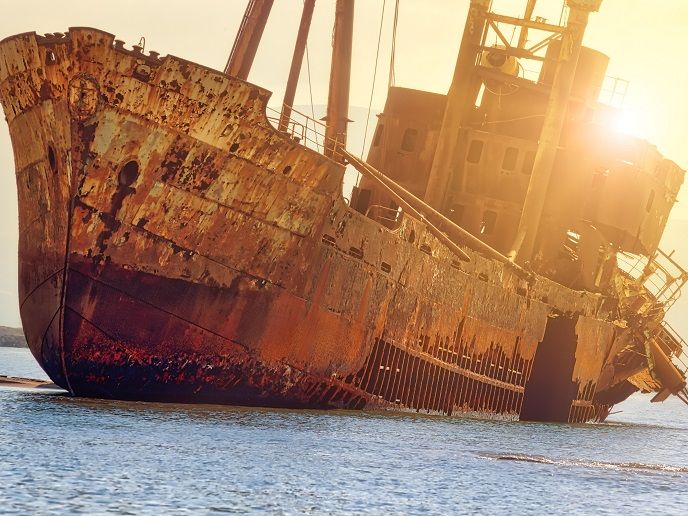
© bennymarty/stock.adobe.com

“The answer is both yes and no, and it should not be tested again,” says Fourquez, a polar oceanographer at the Mediterranean Institute of Oceanography in France.

The ‘iron hypothesis’ proposes that sprinkling huge amounts of iron into the ocean will boost growth of photosynthetic algae at the ocean surface, drawing carbon out of the atmosphere, and in doing so, lower global temperatures. The idea of using metal fillings in this way was first suggested by oceanographer John Martin in 1988, who said: “Give me a half tanker of iron, and I will give you an ice age.”

Early experiments proved the iron hypothesis held water – fertilising the oceans with iron did increase algal growth. Since then, there have been over a dozen experiments in the ocean to test its impact, though these have generated controversy as the scientific consensus has solidified against the idea.

“We’ve learned that dumping iron into the ocean actually helps to absorb CO2 from the atmosphere,” adds Fourquez. But she says it’s far more complicated than that. Experiments measuring how much carbon has fallen into the deep ocean from these artificial fertilisations have consistently shown that the maths simply doesn’t add up.

Natural and unnatural iron

Humans aren’t the only ones putting iron into the sea. In the Southern Ocean for example, iron comes from upwelling, as well as sea ice and surface ice melt. These nutrients are a key factor maintaining the ecosystem’s health. “A lot of sources are a lot more efficient at stimulating phytoplankton compared to iron dumped into the ocean,” Fourquez explains.

In fact, much of the artificially added metallic iron simply rusts and sinks far from sunlight, where there are no phytoplankton to make use of it. Iron from natural sources, by contrast, is effectively bound to certain types of molecules that help to keep it soluble in surface waters. Yet the extent to which phytoplankton can access this type of iron is not well understood.

In the EU-funded BULLE project, Fourquez and her colleagues researched the ratio of the CO2 consumed and produced in the world’s oceans, to help improve estimations of oceanic carbon capture.

The team discovered that the amount of iron available greatly impacts CO2 levels in microbial respiration. In July this year, Fourquez published a new study in ‘Science Advances’ highlighting the extreme complexity of iron bioavailability to phytoplankton in seawater. This research supports the idea that the iron found in nature and that used in fertilisation projects are not at all equivalent.

Attempting to engineer this natural cycle could end in failure – or worse, have a catastrophic impact on the natural ecosystem. “We can’t recreate the complexity of what nature offers at the moment,” says Fourquez. That’s why she says that while in theory it’s possible iron fertilisation could geoengineer the planet, it’s best we don’t test it any more in the ocean – not for a long time, and possibly never.

Source: Press release – CORDIS

Publicaciones relacionadas:
Is a cow’s stomach the answer to breaking down hard-to-recycle plastic? Greek island Tilos picks up award for clean energy transition Lend a helping hand with drying river networks CO2 the culprit in southern hemisphere temperature drop millions of years ago emisiones de gases contaminantes en una ciudadHow much have different countries contributed to climate change since 1850?



Environmental Affairs,  EU News CO2,  CORDIS,  enviornment,  Investigación,  iron,  sea

“This is a space for debate. All comments, for or against publication, that are respectful and do not contain expressions that are discriminatory, defamatory or contrary to current legislation will be published”.

Reader Interactions

Leave a Reply Cancel reply

Your email address will not be published. Required fields are marked *

This site uses Akismet to reduce spam. Learn how your comment data is processed.

Primary Sidebar

Footer

  • CDE Almería
  • Biblioteca Nicolás Salmerón – Universidad de Almería
  • Planta: 1ª, Despacho: 1.05.0B.
  • Ctra. Sacramento s/n. Almería (Spain)
  • Teléfono: (+34) 950 015266

HOME
NEWS
DOCUMENTATION
EUROPE ON THE NET
ABOUT US

  • LEGAL NOTICE
  • PRIVACY POLICY
  • COOKIE POLICY
  • ACCESSIBILITY
  • SITEMAP

Copyright © 2026 CDE Almería · Creative Commons LicenseThis work is licensed under a Creative Commons Attribution-NonCommercial 4.0 International License.

<p>El Centro de Documentación Europea de la Universidad de Almería utiliza cookies propias y de terceros para facilitar al usuario la navegación en su página Web y el acceso a los distintos contenidos alojados en la misma. Asimismo, se utilizan cookies analíticas de terceros para medir la interacción de los usuarios con el sitio Web. Pinche el siguiente enlace si desea información sobre el uso de cookies y como deshabilitarlas. </p>

Politica de privacidad

El Centro de Documentación Europea de la Universidad de Almería utiliza cookies propias y de terceros para facilitar al usuario la navegación en su página Web y el acceso a los distintos contenidos alojados en la misma. Asimismo, se utilizan cookies analíticas de terceros para medir la interacción de los usuarios con el sitio Web. Pinche el siguiente enlace si desea información sobre el uso de cookies y como deshabilitarlas. <a href="/politica-de-cookies" rel="noopener" target="_blank">Más información</a>

Cookies estrictamente necesarias

Las cookies estrictamente necesarias tiene que activarse siempre para que podamos guardar tus preferencias de ajustes de cookies.

Básicamente la web no funcionara bien si no las activas.

Estas cookies son:

  • Comprobación de inicio de sesión.
  • Cookies de seguridad.
  • Aceptación/rechazo previo de cookies.
Cookies de terceros

Esta web utiliza Google Analytics, Google Tag Manager y Yandex Metrika para recopilar información anónima tal como el número de visitantes del sitio, o las páginas más populares.

Dejar estas cookies activas nos permite mejorar nuestra web.

Política de cookies

Pinche el siguiente enlace si desea información sobre el uso de cookies y como deshabilitarlas. Más información