• Skip to primary navigation
  • Skip to main content
  • Skip to primary sidebar
  • Skip to footer
  • Bluesky
  • Facebook
  • Instagram
  • Twitter
  • YouTube
CDE Almería – Centro de Documentación Europea – Universidad de Almería

CDE Almería - Centro de Documentación Europea - Universidad de Almería

Centro de Documentación Europea de la Universidad de Almería

  • HOME
  • WHAT´S ON
    • EU NEWS
    • Activities
    • EU Calls and Awards
    • Radio Program «Europe with You»
  • DOCUMENTATION
    • EU Media Collection
      • Web Space
      • MEDIATHEQUE REPOSITORY
  • Europe on the net
    • Institutions
    • EU Representation in Spain
    • European information network of Andalusia
  • ABOUT US
    • Presentation
    • Services
    • People
    • Contact
  • Spanish
  • English

Anonymised references for preliminary rulings lodged from 1 January 2023 to be allocated a fictional name

Inicio » EU News » Law » Anonymised references for preliminary rulings lodged from 1 January 2023 to be allocated a fictional name

12 de January de 2023

This measure seeks to facilitate the designation and identification of cases that have been anonymised for reasons relating to the protection of personal data.
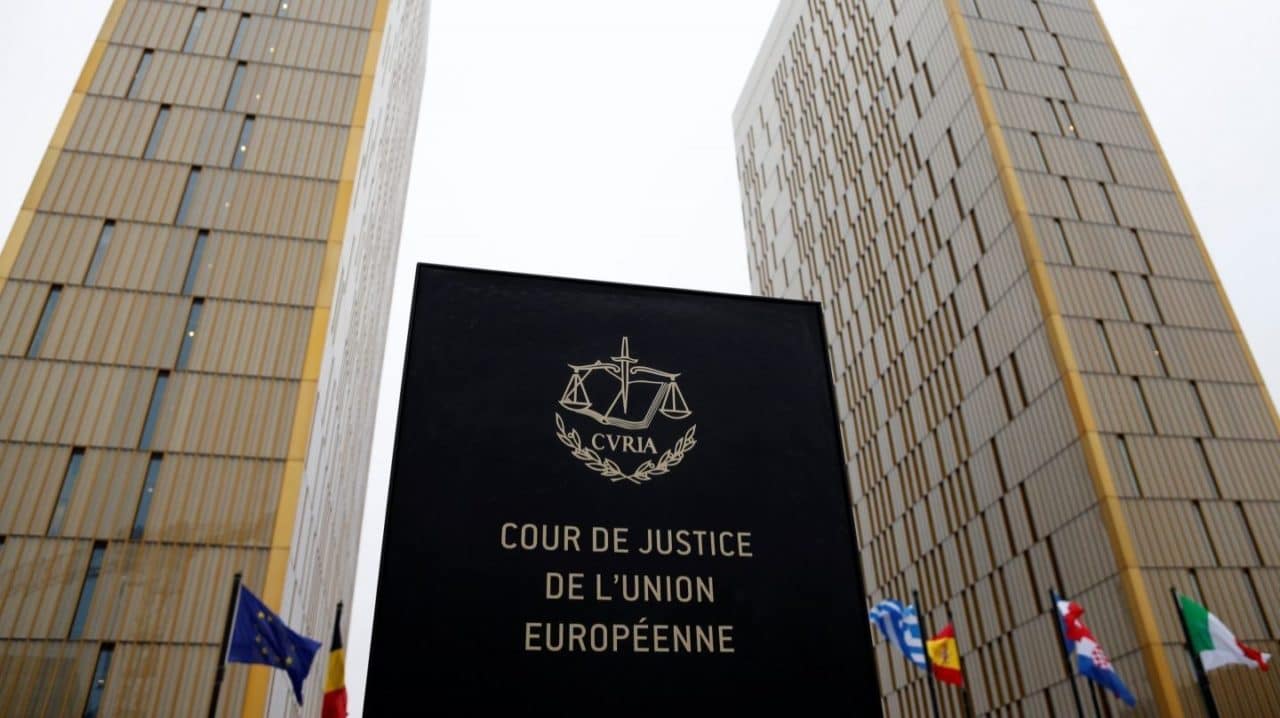
Tribunal de Justicia de la Unión Europea

From 1 January 2023, all new anonymised cases involving proceedings between natural persons (whose names have, since 1 July 2018, been replaced with initials for reasons relating to the protection of personal data) or proceedings between natural persons and legal persons that do not have a distinctive name, are to be allocated a fictional name suggested by a computerised automatic name generator. This initiative has been introduced in order to make it easier to identify anonymised cases. The measure will make it easier to recall the names of those cases and cite them both in case-law and elsewhere.

The allocation of fictional names does not affect:

  • References for preliminary rulings in which the name of the legal person is sufficiently distinctive (the name of that legal person will be used as the name of the case);
  • Direct actions (the Court of Justice will continue to allocate a conventional name to those cases, which will appear in brackets after the usual name of the case);
  • Requests for opinions;
  • Appeals;
  • Cases before the General Court.

CJEU ruling C-389/20 of February 2022: Domestic workers will be entitled to unemployment benefit in Spain

Fictional names will not correspond to the real name of any party to the proceedings and will not, in principle, be an existing name. They will appear in the header of the judgment and on the first page after the case number.

The fictional name generator works by dividing words into syllables, which are then randomly combined to produce fictional names. There is a generator for each official language of the European Union and additional generators will be developed, where necessary, for languages of third countries.

Source: Press release – Curia

Publicaciones relacionadas:

New practice directions for parties in cases before the Court Judgment of the ECJ on the imposition of compensation claims for flight delays Poland, Hungary and the Czech Republic have failed to fulfil their obligations under European Union law peones de ajedrez en grupo y peón solitarioJudgment of the CJEU on homophobic discrimination in the workplace miniatura de coche estilo "Mini", de color verde, sobre el suelo exteriorJudgment of the CJEU on the sale of vehicles unlawfully manipulated by the manufacturer




EU News,  Law Court of Justice,  Curia,  protection of personal data.

“This is a space for debate. All comments, for or against publication, that are respectful and do not contain expressions that are discriminatory, defamatory or contrary to current legislation will be published”.

Reader Interactions

Leave a Reply Cancel reply

Your email address will not be published. Required fields are marked *

This site uses Akismet to reduce spam. Learn how your comment data is processed.

Primary Sidebar

Footer

  • CDE Almería
  • Biblioteca Nicolás Salmerón – Universidad de Almería
  • Planta: 1ª, Despacho: 1.05.0B.
  • Ctra. Sacramento s/n. Almería (Spain)
  • Teléfono: (+34) 950 015266

HOME
NEWS
DOCUMENTATION
EUROPE ON THE NET
ABOUT US

  • LEGAL NOTICE
  • PRIVACY POLICY
  • COOKIE POLICY
  • ACCESSIBILITY
  • SITEMAP

Copyright © 2026 CDE Almería · Creative Commons LicenseThis work is licensed under a Creative Commons Attribution-NonCommercial 4.0 International License.

<p>El Centro de Documentación Europea de la Universidad de Almería utiliza cookies propias y de terceros para facilitar al usuario la navegación en su página Web y el acceso a los distintos contenidos alojados en la misma. Asimismo, se utilizan cookies analíticas de terceros para medir la interacción de los usuarios con el sitio Web. Pinche el siguiente enlace si desea información sobre el uso de cookies y como deshabilitarlas. </p>

Politica de privacidad

El Centro de Documentación Europea de la Universidad de Almería utiliza cookies propias y de terceros para facilitar al usuario la navegación en su página Web y el acceso a los distintos contenidos alojados en la misma. Asimismo, se utilizan cookies analíticas de terceros para medir la interacción de los usuarios con el sitio Web. Pinche el siguiente enlace si desea información sobre el uso de cookies y como deshabilitarlas. <a href="/politica-de-cookies" rel="noopener" target="_blank">Más información</a>

Cookies estrictamente necesarias

Las cookies estrictamente necesarias tiene que activarse siempre para que podamos guardar tus preferencias de ajustes de cookies.

Básicamente la web no funcionara bien si no las activas.

Estas cookies son:

  • Comprobación de inicio de sesión.
  • Cookies de seguridad.
  • Aceptación/rechazo previo de cookies.
Cookies de terceros

Esta web utiliza Google Analytics, Google Tag Manager y Yandex Metrika para recopilar información anónima tal como el número de visitantes del sitio, o las páginas más populares.

Dejar estas cookies activas nos permite mejorar nuestra web.

Política de cookies

Pinche el siguiente enlace si desea información sobre el uso de cookies y como deshabilitarlas. Más información